
IYH: Healthcare Dashboard For September 2025
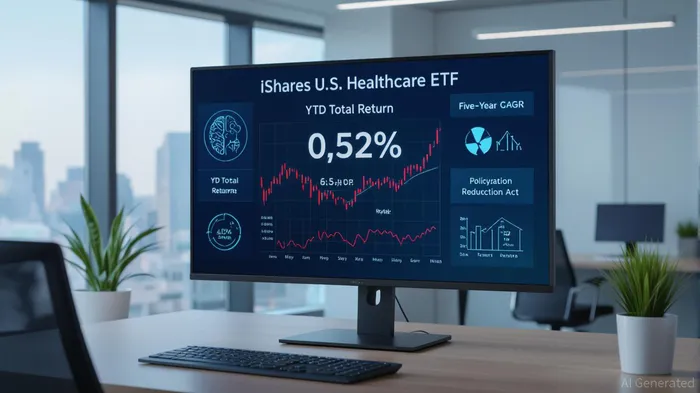
The healthcare sector, long a refuge for investors seeking resilience amid macroeconomic turbulence, finds itself at a crossroads in 2025. The iShares U.S. Healthcare ETF (IYH), a concentrated barometer of the industry's fortunes, has delivered mixed returns this year, with a year-to-date total return of 0% and a trailing twelve-month decline of -10.74%[1]. Yet, beneath this surface-level volatility lies a sector poised for near-term outperformance, driven by demographic tailwinds, technological disruption, and policy-driven structural shifts. For investors, the question is not whether healthcare will recover, but how to position for the forces reshaping it.
A Sector at the Intersection of Demographics and Innovation
The aging U.S. population remains a defining megatrend. By 2030, all baby boomers will be over 65, a demographic shift that will exponentially increase demand for chronic disease management, long-term care, and advanced therapies[3]. This creates a natural tailwind for IYH's holdings, which include pharmaceutical giants, medical device manufacturers, and biotech innovators. For instance, companies like UnitedHealth GroupUNH-- and CVS Health—both significant components of the ETF—are uniquely positioned to capitalize on the rising prevalence of conditions such as diabetes and Alzheimer's.
Simultaneously, artificial intelligence is reshaping the industry's cost structure and delivery model. Generative AI tools are streamlining administrative workflows, reducing clinician burnout, and improving diagnostic accuracy[2]. A 2024 McKinsey survey found that 85% of healthcare leaders had either adopted or were actively exploring generative AI, with early adopters reporting measurable ROI[2]. For IYH, this means exposure to firms leveraging AI to cut costs and enhance patient outcomes—a critical edge in an era of constrained reimbursement growth.
Policy Tailwinds and Unintended Consequences
The Inflation Reduction Act (IRA), enacted in 2022, continues to cast a long shadow over the sector. While its Medicare drug price negotiations have pressured small-molecule pharmaceutical firms, they have also redirected capital toward biologics and gene therapies—areas where IYH's holdings are increasingly concentrated[1]. This reallocation reflects a strategic pivot by investors toward therapies less vulnerable to price controls, such as CAR-T cell treatments and CRISPR-based gene editing.
However, the IRA's impact is not uniformly positive. The 2025 amendments to the law, including accelerated sunsets for clean energy tax credits and stricter compliance rules, have introduced uncertainty for healthcare providers reliant on these incentives[3]. For example, hospitals and clinics investing in energy-efficient infrastructure may now face tighter timelines to secure tax benefits, potentially straining operating margins. Yet, for IYH, this volatility could create buying opportunities in undervalued subsectors, particularly those with strong cash flows and pricing power.
Valuation Metrics and Analyst Sentiment
Despite its recent underperformance, IYH remains attractively positioned from a valuation perspective. The ETF trades at a price-to-earnings ratio of 21.75 and a price-to-book ratio of 4.17[3], metrics that suggest modest overvaluation relative to historical averages but are in line with the sector's growth prospects. Analysts have assigned the ETF a “Moderate Buy” rating, with 80% of covered companies earning positive outlooks[2]. The consensus price target of $57.75 aligns with its current closing price, indicating a market that expects stability rather than explosive growth.
What sets IYH apart is its dividend yield of 12.5%, a rare feature in a sector often criticized for prioritizing reinvestment over shareholder returns[3]. This yield, combined with its low 0.40% expense ratio, makes the ETF an appealing option for income-focused investors seeking exposure to a sector with durable cash flows.
Strategic Positioning: Navigating Risks and Opportunities
The path forward for IYH—and by extension, its investors—hinges on managing two key risks: regulatory overreach and technological obsolescence. The potential for further IRA amendments, particularly under a hypothetical Trump administration in 2025, could disrupt the sector's financial equilibrium[3]. Similarly, the rapid pace of AI adoption means that firms unable to integrate these tools risk falling behind.
Yet, these risks also represent opportunities. IYH's concentration in large-cap healthcare providers offers a buffer against the volatility afflicting smaller, niche players. Its exposure to biotechnology and digital health startups—while riskier—positions it to benefit from breakthroughs in areas like personalized medicine and telehealth.
Conclusion: A Sector in Transition
The healthcare sector is no longer a passive beneficiary of demographic trends; it is an active participant in shaping the future of medicine. For IYH, this means navigating a landscape where policy, technology, and demographics converge to create both headwinds and tailwinds. While its recent performance has been lackluster, the ETF's strategic alignment with innovation and its resilient dividend profile make it a compelling candidate for investors willing to look beyond short-term volatility.
As the sector enters the final quarter of 2025, the question for IYH is not whether it can outperform, but how quickly it can adapt to the forces redefining healthcare itself.





Comentarios
Aún no hay comentarios