
Ivory Coast's Cocoa Port Congestion and Cash Constraints Impact Global Cocoa Supply Chains
Regulatory Interventions and Logistical Bottlenecks
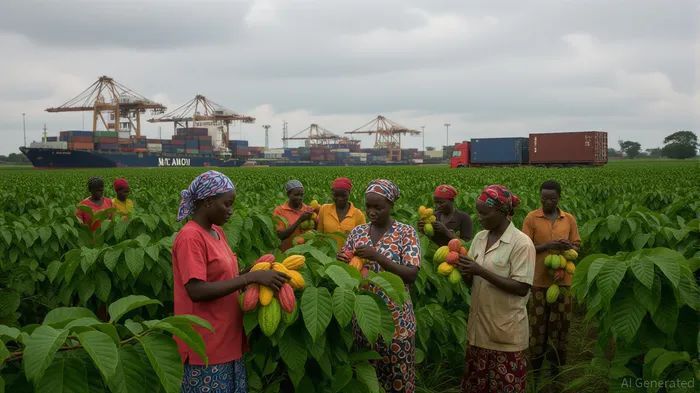
In 2025, Ivory Coast's cocoa regulator implemented a critical measure to alleviate port congestion by restricting transport permits to the ports of Abidjan and San Pedro, aligning deliveries with factory unloading capacities. This action reduced delays in cocoa sales, enabling farmers to avoid discounted sales and expedite payments. However, the broader cocoa season has been marked by a sharp decline in main crop sales, with only 1.3 million tons of contracts sold in 2025/26, down from 1.4 million tons in the prior year. This drop underscores structural challenges, including insufficient farmer investment, aging cocoa farms, crop diseases like the Cocoa Swollen Shoot Virus (CSSV), and erratic weather patterns as research shows.
Production Shortfalls and Global Supply Chain Pressures
The ripple effects of these domestic issues extend far beyond Ivory Coast. Global cocoa production is projected to fall short by over 1 million metric tons in 2025, driven by climate disruptions and disease outbreaks in West Africa, which accounts for 60% of global output. This deficit has pushed end-of-season stocks to a 45-year low, with a stocks-to-grindings ratio of 27.0%. Meanwhile, industrial demand has weakened, as cocoa grindings declined by 7.2% year-on-year in Europe, 16% in Asia, and 2.8% in North America according to market data. The mismatch between supply and demand has created a volatile environment, with cocoa prices peaking at $12,000 per ton in late 2024 before correcting to under $5,800 per ton in 2025.
Investor Positioning and Market Volatility
Investor strategies have shifted in response to this volatility. Speculative capital has exited the market to secure profits, exacerbating price swings and liquidity constraints. This shift has left cocoa prices more dependent on physical market fundamentals, though structural headwinds-such as climate disruptions and trade policies-remain. Meanwhile, chocolate manufacturers like Hershey and Lindt have adopted a cautious approach, prioritizing margin stability over volume recovery and signaling no immediate price reductions despite improved supply conditions.
Ivory Coast's government, however, continues to attract foreign investment through its 2025-2030 National Development Plan, which emphasizes private-sector participation. Yet structural challenges, including bureaucratic inefficiencies and tax reform needs, persist as risks to long-term investor confidence.
Cash-Flow Constraints and Consumer Market Adjustments
Cash-flow issues are reverberating through the supply chain. Retail chocolate prices have risen by 15-25% since early 2024, as manufacturers employ strategies like shrinkflation and premium branding to offset higher cocoa costs. Consumers, particularly in price-sensitive markets, are responding with declining volumes, favoring private-label products over branded alternatives. These adjustments highlight the fragility of cocoa's value chain, where price volatility impacts not only producers and processors but also end consumers and global supply chain resilience.
Investment Risks and Strategic Considerations
For investors, the cocoa market presents a dual-edged sword. While short-term volatility offers speculative opportunities, the long-term outlook is clouded by persistent supply-side constraints. Key risks include:
1. Climate and Disease Vulnerability: Aging cocoa farms and CSSV outbreaks threaten output stability.
2. Demand Destruction: Weak industrial demand, particularly in Europe and Asia, could prolong price pressures.
3. Policy Uncertainty: Structural reforms in Ivory Coast and Ghana, such as farmgate price hikes, may alter cost structures and trade flows.
Conversely, opportunities exist for investors hedging against inflationary pressures in agricultural commodities or capitalizing on diversification strategies, such as cocoa butter equivalents (CBEs) and alternative sourcing.
Conclusion
Ivory Coast's cocoa port congestion and cash constraints are symptomatic of a broader crisis in global agricultural supply chains. While regulatory interventions have provided temporary relief, the underlying issues of production shortfalls, climate risks, and demand imbalances will likely keep cocoa prices structurally elevated. Investors must navigate this landscape with caution, balancing short-term volatility with long-term structural risks. As the market grapples with these challenges, the cocoa sector serves as a stark reminder of the interconnectedness of commodity markets and the fragility of global food systems.







Comentarios
Aún no hay comentarios