
Ivory Coast's Cocoa Market Turmoil and Its Global Implications for Commodity Investors
The cocoa market is at a pivotal juncture, with Côte d'Ivoire-the world's largest producer-experiencing a confluence of supply chain bottlenecks, regulatory interventions, and price volatility that could redefine global commodity dynamics. For investors, this turmoil presents both risks and opportunities, particularly as government actions and structural challenges in the Ivorian cocoa sector intersect with broader macroeconomic trends.
Government Intervention: A Double-Edged Sword
Côte d'Ivoire's government has taken an assertive stance in managing its cocoa sector, raising the farmgate price from $3.40 to $4.50 per kilogram in 2024–2025 to address inequities and stabilize rural incomes. This intervention, while laudable in intent, has introduced new complexities. By injecting liquidity into the sector, the government has temporarily alleviated farmer anxieties but also exacerbated cash flow constraints for licensed exporters who now struggle to meet forward contracts amid falling global prices. The suspension of cocoa futures sales further underscores the state's growing role in market stabilization, a move that risks distorting price signals and reducing liquidity for international traders.
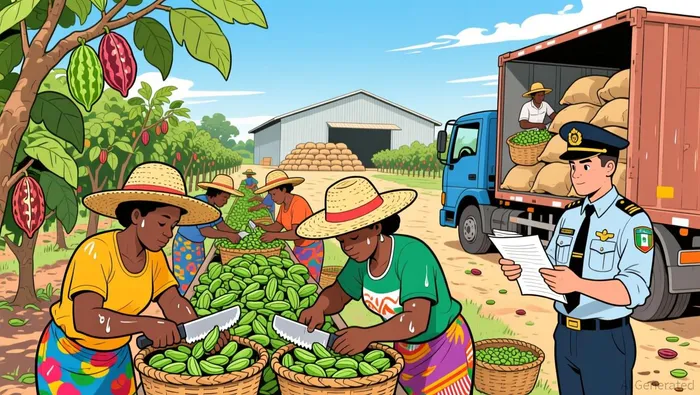 Historically, Côte d'Ivoire's dominance in global cocoa supply-nearly 40% of output-has allowed it to act as a de facto price setter. However, this power is being tested by a perfect storm of aging cocoa farms, erratic weather patterns, and insufficient farmer investment, which are expected to reduce intermediate crop production by 25–30%. The government's stock checks and purchase limits aim to mitigate these shocks, but their effectiveness will depend on balancing short-term stability with long-term structural reforms.
Supply Chain Bottlenecks: A Test of Resilience
Port congestion in Abidjan and San Pedro has become a critical flashpoint. Weekly cocoa arrivals have surged past 100,000 tons, with 120,000 tons still languishing in warehouses due to delayed delivery notes and cash-strapped exporters. The Conseil Café-Cacao (CCC) has responded by restricting truck entry based on unloading capacity and intermittently shutting down its tracking system-a blunt but necessary measure to prevent gridlock. These bottlenecks not only delay exports but also amplify price volatility, as traders grapple with uncertainty over supply availability.
Compounding the issue is the CCC's crackdown on price manipulation, including arrests for below-minimum-price offers and weight skimming. While these actions reinforce regulatory credibility, they also highlight systemic weaknesses in a sector where defaults and opportunistic behavior have long been tolerated. For global investors, the interplay between physical supply constraints and regulatory enforcement creates a high-stakes environment where timing and risk management are paramount.
Price Volatility and Strategic Entry Points
The cocoa market's volatility has been stark. Global prices surged from $3,000 to $11,000 per metric ton in April 2024 but have since more than halved, reflecting shifting expectations about surpluses and demand. This whipsaw effect is unlikely to abate, given Côte d'Ivoire's dual challenges: a near-term surplus from delayed exports and a looming production shortfall in the next harvest cycle.
For investors, this volatility opens strategic entry points. Cocoa-linked assets-such as futures contracts, ETFs, or equities in processing firms-could benefit from both short-term spikes driven by port disruptions and longer-term trends tied to supply constraints. However, hedging strategies will be critical. For instance, producers and traders exposed to price swings might use futures to lock in margins, while investors seeking directional bets could capitalize on the sector's divergence between raw commodity exports and higher-value processing. According to Statista, this trend is likely to persist.
Global Implications and the Path Forward
Côte d'Ivoire's turmoil has global reverberations. As the linchpin of the West African cocoa bloc, its policies and bottlenecks directly affect chocolate manufacturers and commodity traders worldwide. The sector's reliance on raw exports-despite the country's processing ambitions-means that Côte d'Ivoire remains vulnerable to price shocks and supply chain disruptions. Yet, this also creates opportunities for investors to support-or profit from-efforts to diversify into downstream value chains.
In conclusion, the Ivorian cocoa crisis is a microcosm of broader challenges in commodity markets: the tension between state intervention and market forces, the fragility of supply chains, and the interplay of short-term volatility with long-term structural trends. For those willing to navigate these complexities, the cocoa market offers a compelling case study in resilience and reinvention.







Comentarios
Aún no hay comentarios