
ITRI's Role in Catalyzing Taiwan's Tech and Green Innovation Ecosystem
In the race to decarbonize global supply chains and secure technological leadership, Taiwan's Industrial Technology Research Institute (ITRI) has emerged as a pivotal catalyst. By strategically aligning cross-domain innovation with net-zero ambitions, ITRI is not only reshaping Taiwan's industrial landscape but also positioning itself as a critical node in Asia's green technology ecosystem. For investors, this represents a compelling case for strategic capital allocation in future-ready industries.
Strategic Partnerships: Bridging Sectors for Systemic Innovation
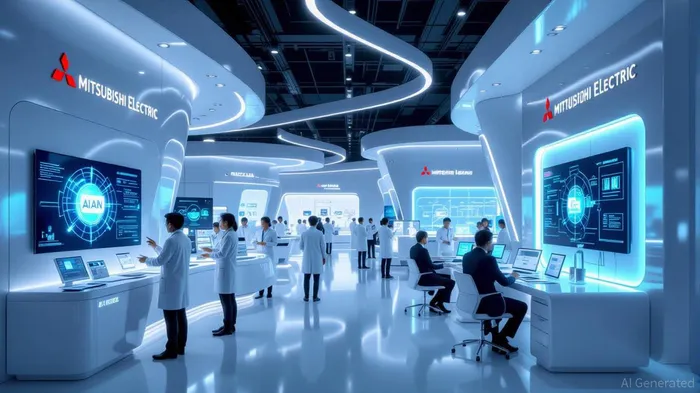
ITRI's 2025 Innovation Week underscored its commitment to dismantling silos between technology domains. The institute's collaboration with Mitsubishi Electric—a Master Collaboration Agreement (MCA) focused on carbon capture, distributed energy systems, and low-carbon hydrogen—exemplifies this approach. By pooling expertise in AI semiconductors and energy management, the partnership aims to develop scalable solutions for industries ranging from manufacturing to transportation [1]. Such alliances are not merely technical collaborations but strategic investments in systemic innovation, enabling ITRI to address complex challenges like energy efficiency and supply chain resilience.
The economic implications are significant. According to a report by Digitimes, ITRI's 2035 technology roadmap emphasizes sustainable development as a cornerstone for long-term growth, with cross-sector R&D expected to drive productivity gains and reduce operational costs for Taiwanese manufacturers [2]. For instance, ITRI's AI-based cooling systems, showcased at Net Zero Day 2025, could cut energy consumption in data centers by up to 30%, a sector projected to grow exponentially as AI adoption accelerates [2].
Green Technology: From Lab to Market
ITRI's green innovation pipeline is equally impressive. The institute's VOC-3R System and HEAD-Matrix ALD+ System, which earned 2023 R&D 100 Awards, demonstrate its ability to commercialize cutting-edge solutions. The VOC-3R System, for example, recycles volatile organic compounds (VOCs) into reusable materials, addressing both environmental and economic pain points for the chemical industry [4]. Such technologies are not just incremental improvements but foundational shifts toward circular economies.
The institute's focus on hydrogen-ammonia energy platforms further illustrates its forward-looking strategy. By integrating AI-driven optimization tools, ITRI is reducing the cost barriers for hydrogen adoption—a critical step for industries reliant on heavy fuels. As stated by ITRI President Liu Wen-hsiung, energy efficiency is the “first fuel” for net-zero goals, and Taiwan's renewable energy potential, combined with ITRI's innovations, could make it a regional leader in green hydrogen production [2].
Talent and Industrial Restructuring: Sustaining the Momentum
A less-discussed but equally vital aspect of ITRI's strategy is its emphasis on cultivating green-collar talent. Through partnerships with academic institutions and industry leaders, the institute is addressing Taiwan's power demand gap by training a workforce adept in smart grid technologies and sustainable manufacturing [3]. This human capital investment is critical for scaling innovations and ensuring that Taiwan's industrial base remains competitive in a decarbonizing world.
Research from ScienceDirect highlights that collaborative management of pollution reduction and carbon emissions—facilitated by institutions like ITRI—can accelerate industrial restructuring. For investors, this means lower regulatory risks and higher returns in sectors aligned with global sustainability standards [3].
The Investment Case: Future-Ready Industries
For capital allocators, ITRI's ecosystem offers multiple entry points. The institute's cross-domain approach reduces the risk of sector-specific obsolescence, while its focus on green technologies taps into trillion-dollar markets for carbon-neutral solutions. A data visualization query could illustrate the growth trajectory of ITRI's partnerships and the projected economic impact of its sustainable technologies by 2035:
While specific 2024–2025 economic impact figures remain undisclosed, the long-term potential is clear. ITRI's 2035 roadmap, which integrates AI, robotics, and net-zero technologies, is designed to future-proof Taiwan's economy against global disruptions. For investors, this represents a strategic bet on resilience and innovation—a rare combination in today's volatile markets.
Conclusion
ITRI's role in catalyzing Taiwan's tech and green innovation ecosystem is not accidental but a calculated strategy to align with global megatrends. By investing in cross-domain partnerships, scalable green technologies, and talent development, the institute is building a foundation for sustained economic growth. For those seeking to capitalize on the next wave of industrial transformation, ITRI's ecosystem offers a blueprint—and a compelling opportunity.







Comentarios
Aún no hay comentarios