
Itochu's Earnings Resilience and Strategic Diversification Beyond Commodity Volatility
A Strategic Reorientation: From Commodity Cycles to Merchant-Driven Value
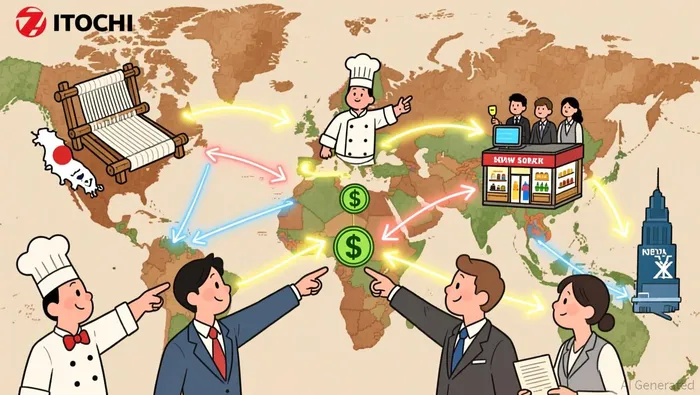
Itochu's 2024 Integrated Report outlines a strategic framework centered on the "Merchant" Value Creation Cycle, leveraging its historical strengths in trade and distribution to unlock growth in non-resource sectors Integrated Report 2024. This approach emphasizes shifting profit opportunities downstream, a move that aligns with broader trends in global supply chains. The CFO's message in the report underscores a deliberate focus on diversification and capital accumulation, signaling a departure from the volatility of raw material markets Integrated Report 2024.
This strategic reorientation is not merely aspirational. In the first half of fiscal 2026, Itochu's non-commodity businesses delivered record results, with textiles, food, and retail segments outperforming expectations. For instance, , fueled by the acquisition of the remaining stake in DESCENTE and improved manufacturing efficiency in Asia, as noted in the Seeking Alpha article. Similarly, the food segment benefited from strong demand, with Fuji Oil, Dole, and Hylife driving higher volumes and margins, as noted in the Seeking Alpha article.
High-Impact Investments: Strengthening the Diversification Thesis
Itochu's 8th Company, a dedicated growth engine, has made strategic investments to solidify its non-commodity footprint. , as noted in the Seeking Alpha article. These investments not only diversify revenue streams but also align with Japan's aging population and digital transformation trends.
The convenience retail segment, anchored by FamilyMart, further illustrates Itochu's ability to capitalize on consumer demand. , FamilyMart's expansion into Southeast Asia and North America has provided a stable, recurring revenue stream insulated from commodity price swings, as noted in the Seeking Alpha article.
Mitigating Volatility: A Structural Advantage
The trading house model has traditionally been exposed to commodity price fluctuations, but Itochu's 2025 initiatives demonstrate a structural shift toward resilience. By prioritizing sectors with predictable cash flows-such as textiles and food-the company reduces its reliance on cyclical markets. This is particularly relevant in 2025, as energy prices remain volatile amid Middle East tensions and China's uneven recovery.
Moreover, Itochu's downstream strategy-focusing on branding, distribution, and customer relationships-creates moats that are harder for competitors to replicate. The "Brand-new Deal" initiative, for example, emphasizes value-added services over raw material trading, enhancing profit margins and customer loyalty, as noted in the Integrated Report 2024.
Re-Rating Potential: Why the Market May Be Undervaluing Itochu
Despite these strengths, Itochu's stock trades at a discount to its historical average, reflecting lingering concerns about resource exposure. However, , a figure that is projected to rise as investments mature, as noted in the Seeking Alpha article. Analysts at Seeking Alpha argue that the market has underestimated the scalability of these businesses, particularly in textiles and food, which could drive earnings growth of 15–20% annually over the next three years, as noted in the Seeking Alpha article.

Conclusion: A Case for Strategic Conviction
Itochu's strategic diversification is not just a defensive maneuver-it is a proactive repositioning for long-term value creation. By leveraging its merchant expertise in high-growth, low-volatility sectors, the company is building a business model that transcends traditional trading house limitations. For investors seeking exposure to a Japanese conglomerate with a clear path to re-rating, Itochu's non-commodity segments offer a compelling case.
As the global economy navigates uncertainty, Itochu's ability to adapt and innovate may prove to be its greatest asset.







Comentarios
Aún no hay comentarios