
Italy's Industrial Sector: A Cautionary Signal for European Investors?
Italy's industrial sector, long a cornerstone of its economy, has entered a period of renewed scrutiny for European investors. Recent data reveals a contraction in industrial output for Q3 2025, with a value-added growth rate of -0.3%, despite a brief rebound in September reported in the Reuters article. This volatility underscores deeper structural challenges that have plagued the sector for over a decade. For investors weighing long-term exposure to Italy, the question is not merely about short-term fluctuations but whether the country's manufacturing base can adapt to evolving global and domestic pressures.
Structural Weaknesses: A Legacy of Fragmentation and Stagnation
Italy's industrial sector has faced persistent headwinds since 2015, driven by a fragmented structure dominated by small and micro enterprises. These firms, while agile in niche markets, lack the scale to compete with larger European manufacturers in high-value-added sectors. Productivity growth has lagged, exacerbated by underinvestment in intangible assets such as intellectual property and digital infrastructure. Meanwhile, the sector's reliance on medium- and low-technology industries-such as textiles and basic machinery-has left it vulnerable to global shifts.
Compounding these issues are external factors. Declining global demand, particularly from the U.S., and the lingering effects of energy and geopolitical crises have eroded export volumes. A one-time distortion from cruise ship deliveries in earlier quarters further muddied the data, masking a broader trend of stagnation. These challenges are compounded by demographic headwinds: Italy's shrinking and aging population threatens to limit labor supply and innovation capacity in the coming decades.
Recent Performance: A Mixed Picture
While September 2025 saw a 2.8% surge in industrial production compared to August according to Reuters, the quarterly data tells a different story. The -0.3% contraction in Q3 2025 contrasts with a 0.1% GDP growth for the quarter according to ISTAT, highlighting the sector's diminishing contribution to overall economic resilience. This divergence suggests that while Italy's broader economy may be stabilizing, its industrial base remains a drag on long-term growth.
Investor Strategies: Navigating Risk and Opportunity
European investors are recalibrating their approaches to Italy's manufacturing sector. The Italian government's expanded Golden Power law, which now extends FDI screening to sectors like AI and digital infrastructure, has forced investors to integrate regulatory due diligence into deal execution. For instance, a Sino-Italian aerospace joint venture was blocked in 2025 over dual-use technology concerns, illustrating the heightened scrutiny. Investors are increasingly prioritizing early engagement with regulators and structuring transactions to avoid post-closing complications.
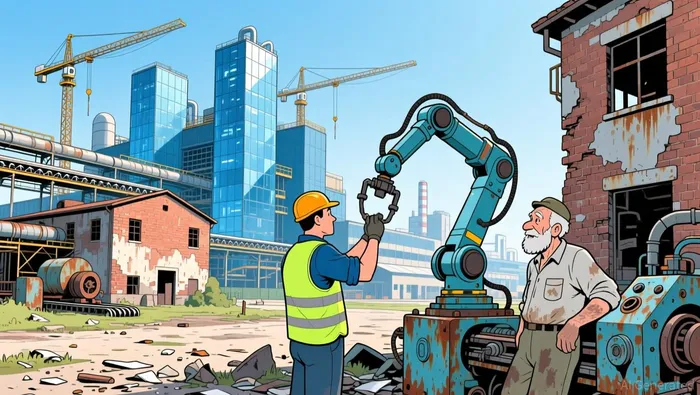 Capital allocation is also shifting. The National Recovery and Resilience Plan has drawn interest for its focus on digital and green transitions, with European funds supporting construction and digital infrastructure projects according to EU economic surveillance. However, these opportunities are tempered by the sector's structural weaknesses. Private equity firms are favoring strategic value creation, such as bolt-on acquisitions and sector consolidation, over purely financial returns, while real estate investors are capitalizing on "sticky" manufacturing leases.
### Long-Term Implications: A Test of Resilience
For Italy's industrial sector to regain its competitive edge, systemic reforms are essential. Confindustria's 2025 report emphasizes the need for innovation in leading firms, supply chain integration, and a shift toward high-value sectors. Yet progress remains uneven, with southern regions lagging in productivity and capital investment. Without addressing these disparities, Italy risks falling further behind Germany and France in manufacturing competitiveness.
European investors must weigh these challenges against strategic advantages: Italy's geographic position, skilled workforce, and access to the EU market according to Robert Schuman. However, the sector's long-term viability hinges on resolving its structural bottlenecks. As one analyst notes, "Italy's manufacturing sector is a paradox-resilient in its diversity yet fragile in its fragmentation" according to Confindustria's report.
Conclusion: A Cautionary Signal, Not a Death Knell
Italy's industrial sector is not in freefall, but its trajectory raises legitimate concerns for investors. While the country's strategic assets and EU integration offer opportunities, the sector's structural weaknesses and regulatory uncertainties demand careful navigation. For European investors, the key lies in balancing short-term pragmatism-such as leveraging NRRP-funded projects-with long-term bets on innovation and consolidation. In a world where manufacturing resilience is paramount, Italy's ability to adapt will determine whether it remains a cautionary signal or a comeback story.







Comentarios
Aún no hay comentarios