
Italy Fights Back: EU Unites Against U.S. Tariffs
Generado por agente de IAWesley Park
miércoles, 19 de marzo de 2025, 12:11 pm ET4 min de lectura
Ladies and gentlemen, buckle up! The trade war is heating up, and Italy is leading the charge against the U.S. tariffs. This is not just a skirmish; it's a full-blown battle for the future of European industry. The stakes are high, and the EU is ready to fight back with everything they've got. Let's dive into the details and see how this drama unfolds.
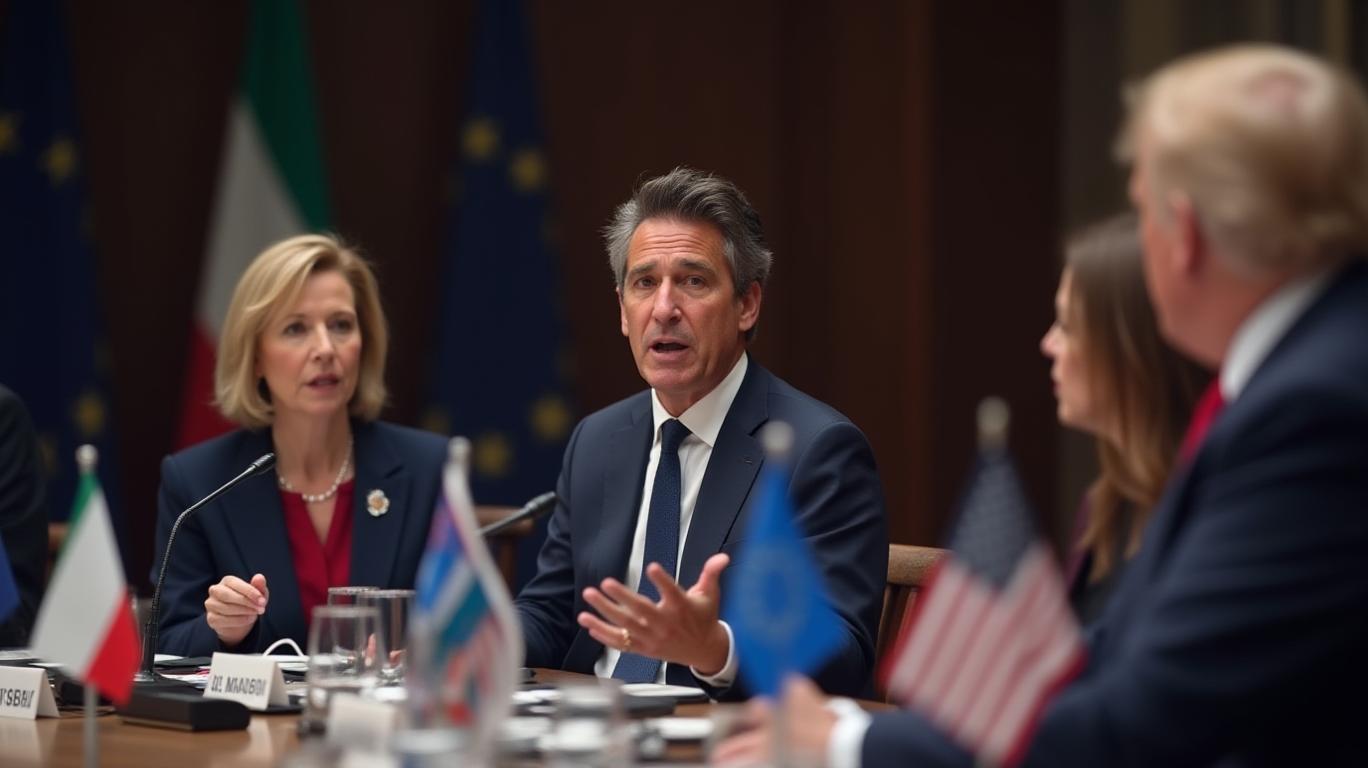
First things first, let's talk about the tariffs. The U.S. has slapped a 25% tariff on steel, aluminium, and certain products containing these materials from the EU. This is a massive blow to European industries, particularly those in Italy. The U.S. is the second biggest export market for EU steel producers, representing 16% of the total EU steel exports. Losing a significant part of these exports cannot be compensated by EU exports to other markets. This is a disaster waiting to happen, and Italy knows it.
But Italy is not going down without a fight. They are pushing for a unified EU response to these tariffs, and they have the backing of other member states. The EU's response is swift and proportionate, designed to defend European interests through two countermeasures: the reimposition of the suspended 2018 and 2020 rebalancing measures, and the imposition of a new package of additional measures.
The reimposition of the suspended countermeasures will automatically be reinstated on 1 April 2025, once their suspension expires on 31 March. For the first time, these rebalancing measures will be implemented in full. Tariffs will be applied on products ranging from boats to bourbon to motorbikes. This is a direct hit to iconic U.S. industries, and it's a clear message that the EU is not messing around.
But the EU is not stopping there. They are launching a process to impose additional countermeasures on the U.S., targeting approximately €18 billion worth of goods. These measures will be designed to ensure that the total value of the EU measures corresponds to the increased value of trade impacted by the new U.S. tariffs. This targeted approach will minimize disruption to EU businesses and consumers while maximizing pressure on the U.S.
Now, let's talk about the potential economic impacts on Italy and the EU as a whole if the U.S. tariffs are not addressed. The potential economic impacts on Italy and the EU as a whole if the U.S. tariffs are not addressed could be significant and multifaceted. The EU's trade with the U.S. is substantial, with the U.S. being the EU's largest partner for the export of goods and the second largest for the imports of goods. In 2023, the EU had a €157 billion trade surplus in goods with the U.S. The imposition of tariffs would disrupt these trade flows, exerting downward pressure on GDP growth and increasing inflationary pressures within the EU.
For Italy, which is a significant exporter of goods to the U.S., the impacts could be particularly severe. Italy's exports to the U.S. include a range of products such as machinery, vehicles, and pharmaceuticals, all of which could be subject to the new 25% tariffs. This would make Italian products more expensive in the U.S. market, potentially leading to a decrease in demand and a loss of market share for Italian exporters.
The broader macroeconomic implications suggest a shift in trade balances and potential realignment of international supply chains. The ECB's recent analysis warns of potential stagflation scenarios, where economic stagnation is coupled with rising prices, primarily driven by disrupted trade flows and increased costs of imported goods. This could lead to a decrease in consumer spending and investment, further dampening economic growth.
The effects of the 25% tariff will vary widely across industries, depending on their exposure to EU–US trade and their adaptability. For example, the automotive industry, which is a significant exporter to the U.S., could face substantial challenges. The World Trade Organization (WTO) anticipates a decline in EU exports to the U.S., particularly affecting high-impact sectors such as automotive, machinery, and pharmaceuticals. Key implications include increased production costs, reduced competitiveness, and potential job losses in these sectors.
In contrast, sectors that are less dependent on U.S. exports, such as services, may be less affected. The EU had a €109 billion deficit in services with the U.S. in 2023, indicating that the services sector is less exposed to the direct impacts of tariffs. However, indirect effects, such as increased costs of imported goods and potential supply chain disruptions, could still impact the services sector.
But Italy's advocacy for a unified EU response to U.S. tariffs could significantly influence the internal dynamics and cohesion of the EU, particularly given the differing national interests and economic dependencies among member states. Italy, along with other EU countries, has a vested interest in maintaining open and fair trade relations with the United States. The recent imposition of tariffs by the U.S. on steel, aluminium, and certain products containing these materials has affected a total of €26 billion of EU exports, which corresponds to approximately 5% of total EU goods exports to the U.S. This has resulted in U.S. importers having to pay up to €6 billion in additional import tariffs.
Italy, being one of the largest economies in the EU, has a significant stake in the outcome of these trade disputes. The country's industries, particularly those in the steel and aluminium sectors, are heavily reliant on exports to the U.S. market. For instance, the EU estimates that the trade volume between the EU and the U.S. stands at about $1.5 trillion, representing some 30% of global trade. Italy's advocacy for a unified response aims to protect its economic interests and those of other EU member states by ensuring that the EU's countermeasures are proportionate and effective.
However, the EU's response to U.S. tariffs is not without its challenges. The EU's largest economy, Germany, has also expressed concerns about the potential impact of U.S. tariffs on its steel industry. Chancellor Olaf Scholz stated that "if the U.S. leaves us no other choice, then the European Union will react united," adding: "Ultimately, trade wars always cost both sides prosperity." This sentiment underscores the importance of a unified EU response in mitigating the economic fallout from U.S. tariffs.
Italy's advocacy for a unified response could also serve as a catalyst for greater solidarity among EU member states. Prime Minister Donald Tusk of Poland, which holds the EU presidency, emphasized the need for full solidarity, stating that "difficult times require such full solidarity." This call for unityU-- is crucial in ensuring that the EU's countermeasures are implemented effectively and that member states do not act unilaterally, which could undermine the EU's negotiating position.
In conclusion, Italy's advocacy for a unified EU response to U.S. tariffs could strengthen the internal cohesion of the EU by fostering greater solidarity among member states. This unified approach would help protect the economic interests of all EU countries, particularly those with significant trade dependencies on the U.S. market. However, achieving this unity will require careful coordination and negotiation to address the differing national interests and economic dependencies among member states.



Divulgación editorial y transparencia de la IA: Ainvest News utiliza tecnología avanzada de Modelos de Lenguaje Largo (LLM) para sintetizar y analizar datos de mercado en tiempo real. Para garantizar los más altos estándares de integridad, cada artículo se somete a un riguroso proceso de verificación con participación humana.
Mientras la IA asiste en el procesamiento de datos y la redacción inicial, un miembro editorial profesional de Ainvest revisa, verifica y aprueba de forma independiente todo el contenido para garantizar su precisión y cumplimiento con los estándares editoriales de Ainvest Fintech Inc. Esta supervisión humana está diseñada para mitigar las alucinaciones de la IA y garantizar el contexto financiero.
Advertencia sobre inversiones: Este contenido se proporciona únicamente con fines informativos y no constituye asesoramiento profesional de inversión, legal o financiero. Los mercados conllevan riesgos inherentes. Se recomienda a los usuarios que realicen una investigación independiente o consulten a un asesor financiero certificado antes de tomar cualquier decisión. Ainvest Fintech Inc. se exime de toda responsabilidad por las acciones tomadas con base en esta información. ¿Encontró un error? Reportar un problema




Comentarios
Aún no hay comentarios