
Italy's Banking Consolidation and Strategic Reinvestment in Generali
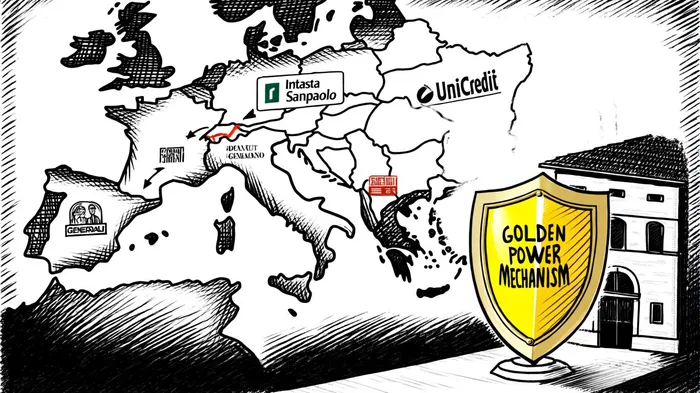
The Italian banking sector is undergoing a seismic shift in 2025, driven by a confluence of regulatory pressure, market volatility, and strategic ambition. At the heart of this transformation are Intesa Sanpaolo and UniCredit, the country's two largest banks, whose consolidation strategies are reshaping the financial landscape-and with it, the future of Generali, Italy's largest insurer. As Rome tightens its grip on the sector through mechanisms like the "Golden Power" law, the interplay between these institutions is not just a matter of corporate strategy but a test of national economic resilience.
The Consolidation Imperative
Intesa Sanpaolo has positioned itself as a model of efficiency, with a 2022–2025 business plan centered on structural cost reduction, digital innovation, and ESG commitments, according to Intesa Sanpaolo's strategy. Its recent profit revision to €9 billion for 2025, fueled by a 38% cost-income ratio in the first half of the year, as detailed in a GlobeNewswire release, underscores its dominance. Meanwhile, UniCredit's proposed €10.10 billion acquisition of Banco BPM-a deal requiring the divestiture of €22.2 billion in southern Italian loans, according to a CorpDev analysis-highlights the regulatory hurdles and strategic risks inherent in Italy's fragmented banking system. These moves reflect a broader trend: the need for scale to compete in a post-pandemic, post-EU recovery landscape.
The Italian government, however, is not a passive observer. Vice Premier Matteo Salvini and Industry Minister Adolfo Urso have made it clear that consolidation must serve national interests, particularly in safeguarding Italy's fiscal stability. This is where Generali enters the picture.
Generali at the Crossroads
Generali, with its 13% stake held by Mediobanca and a 2% stake recently reduced by UniCredit, according to a MarketScreener report, is a linchpin in Italy's financial ecosystem. The insurer's partnership with Natixis to create a €1.9 trillion asset management entity, according to a Generali statement, has drawn sharp criticism from Rome, which fears a dilution of Generali's commitment to Italian sovereign debt. The government's concerns are not unfounded: France's historical dominance in Italian finance, coupled with rising borrowing costs, has made Generali's bond holdings a strategic asset.
UniCredit's gradual exit from Generali-framed as a "pure financial investment" by CEO Andrea Orcel, according to Reuters-further complicates the dynamics. While the bank's reduced stake minimizes direct influence, it leaves a vacuum that other players, including Intesa Sanpaolo, may seek to fill.
Intesa's Strategic Gambit
Intesa Sanpaolo, under CEO Carlo Messina, has taken a more cautious approach. The bank has rejected large-scale mergers, calling the current M&A environment "a wild West," as Reuters reported, but its ambitions are clear. A potential alliance with Generali-envisioned as a €1.5 trillion financial powerhouse in an Italia News report-could redefine Italy's competitive position in European wealth management. Such a partnership would leverage Intesa's digital infrastructure and Generali's asset management expertise, creating synergies in cross-selling, international expansion, and ESG-driven products.
However, regulatory scrutiny looms. The Golden Power mechanism, which allows the government to block or impose conditions on strategic transactions, according to the CELIS Country Note, remains a wildcard. Recent interventions, such as the forced divestiture of UniCredit's Banco BPM stake, as reported in an EdgarIndex report, signal Rome's willingness to prioritize national interests over market logic.
Rome's Calculus
The Italian government's strategy is twofold: to ensure financial stability and to prevent foreign entities from gaining undue influence. This is evident in its opposition to Generali's Natixis partnership and its scrutiny of a potential UniCredit-Commerzbank merger, as Politico reported. By using Golden Power to impose conditions on cross-border deals, Rome is effectively rewriting the rules of consolidation, favoring domestic champions over foreign acquirers.
For Generali, this means reinvestment plans must align with Rome's priorities. Generali's statement also outlined a €15 billion commitment to its Natixis alliance, while that commitment, though lucrative, risks alienating policymakers. Conversely, a closer alignment with Intesa Sanpaolo-or even Mediobanca's bid to acquire Banca Generali, argued in an Economist article-could secure regulatory approval and access to state-backed capital.
The Path Forward
The coming months will test the resilience of Italy's financial sector. Intesa Sanpaolo's focus on organic growth and digital transformation positions it as a long-term winner, but its ability to partner with Generali will depend on navigating regulatory hurdles. UniCredit's retreat from Generali may signal a shift in priorities, but its Commerzbank ambitions could still reshape the sector.
For investors, the key takeaway is clear: Italy's banking consolidation is not just about scale-it's about control. As Rome tightens its grip, the winners will be those who align with its vision of financial sovereignty. Generali, caught between foreign partnerships and domestic pressures, must choose its allies wisely.







Comentarios
Aún no hay comentarios