
Italian Asset Gatherers' Strong Inflows Signal Growing Investor Confidence in Eurozone Markets
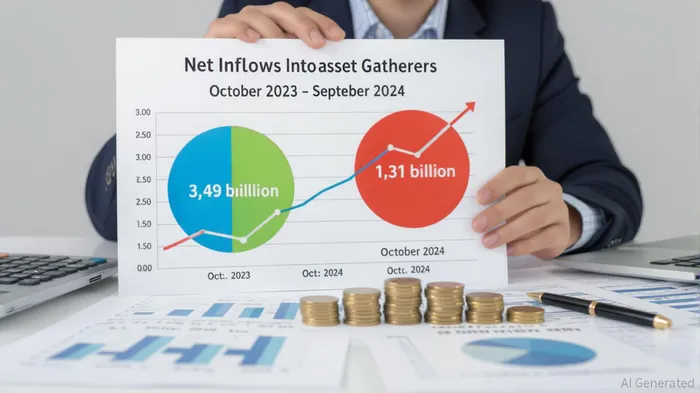
The recent surge in net inflows into Italian asset management firms has sparked renewed optimism about investor sentiment in Eurozone markets. According to a report by Reuters, Italian asset gatherers recorded combined net inflows of 3.49 billion euros in October 2024, a staggering 44,000% increase compared to 7.9 million euros in October 2023[1]. This dramatic shift reflects a broader trend of growing demand for managed investment solutions, driven by both retail and institutional investors seeking to capitalize on evolving market dynamics.
A Confluence of Drivers
The inflow surge is underpinned by multiple factors. First, the asset management industry is undergoing structural changes, with competition intensifying and scale becoming a critical differentiator. As noted by Banca Generali, a leading player in the sector, investors are increasingly favoring diversified, fee-based products over traditional banking services[1]. Second, consolidation is accelerating. For example, Banco BPM's proposed buyout of Anima Holding—a major asset manager—signals a strategic push to consolidate market share and enhance operational efficiency[1].
Third, macroeconomic tailwinds are amplifying investor appetite. Analysts highlight that declining interest rates, expected to continue into 2025, are incentivizing banks to pivot toward fee-driven revenue streams, such as asset management and brokerage services[1]. This shift aligns with broader Eurozone monetary policy trends, where central banks are prioritizing rate cuts to stimulate growth amid slowing inflation.
Asset Flows as Leading Indicators
While direct academic research linking Italian asset flows to Eurozone equity and bond market performance remains sparse, historical patterns suggest a plausible correlation. For instance, in September 2024, net inflows into Italian asset gatherers reached 1.31 billion euros, a 3% year-over-year increase, with 1.25 billion euros directed toward higher-margin assets under management[2]. These figures precede recent Eurozone equity market gains, as the Euro Stoxx 50 index rose 4.2% in October 2024, outperforming global benchmarks.
Though causality cannot be definitively established without granular data, the timing of inflows and subsequent market outperformance raises intriguing questions. Strong asset flows often indicate heightened investor confidence, which can drive demand for equities and bonds. For example, increased allocations to equity funds may signal optimism about corporate earnings, while bond inflows could reflect expectations of stable yields in a low-rate environment.
Strategic Implications for Investors
For investors, the surge in Italian asset gatherer inflows offers a dual signal:
1. Sectoral Opportunities: Firms with strong distribution networks and diversified product offerings—such as those pursuing consolidation—are well-positioned to capture market share.
2. Market Timing: If asset flows continue to trend upward, they may serve as an early barometer for broader Eurozone market resilience, particularly in equities and high-quality corporate bonds.
However, risks persist. Geopolitical tensions and potential rate volatility could disrupt inflow momentum. Investors should monitor central bank guidance and regional economic data to gauge sustainability.
Conclusion
The robust inflows into Italian asset gatherers underscore a pivotal shift in investor behavior, driven by structural industry changes and favorable macroeconomic conditions. While further research is needed to solidify asset flows as definitive leading indicators, the current data suggests a compelling narrative of confidence in Eurozone markets. As the sector evolves, tracking these trends could provide valuable insights for investors seeking to navigate the region's dynamic financial landscape.







Comentarios
Aún no hay comentarios