
Israeli military: Targets included Revolutionary Guards, Basij militia, intelligence and cyber warfare headquarters in eastern Tehran
Israeli military: Targets included Revolutionary Guards, Basij militia, intelligence and cyber warfare headquarters in eastern Tehran
Israeli Military Targets Iranian Security Infrastructure, Escalating Regional Tensions
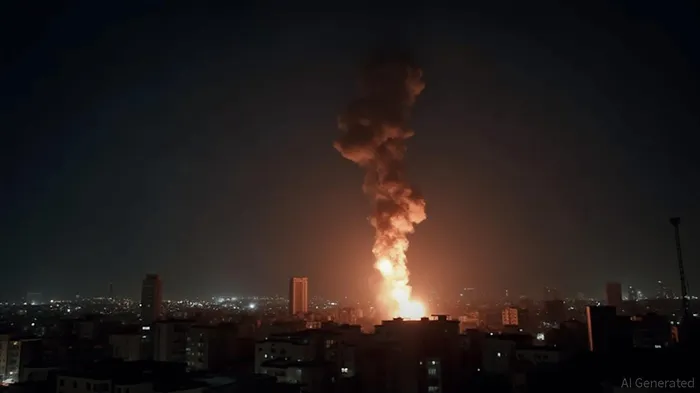
The Israeli Defense Forces (IDF) conducted a series of strikes targeting Iranian security infrastructure in eastern Tehran, focusing on headquarters of the Islamic Revolutionary Guard Corps (IRGC), Basij militia, and intelligence and cyber warfare facilities. The operation, conducted in coordination with the U.S. Air Force, aimed to disrupt the Iranian regime's ability to suppress domestic protests and coordinate military operations. Key targets included the Interior Ministry, which oversaw nationwide suppression efforts, and the Tharallah headquarters, central to operations in Tehran.
The strikes followed a significant cyberattack that paralyzed Iran's critical infrastructure, including government communications, energy systems, and aviation networks. Reports indicated internet connectivity in Iran dropped to 4% of normal levels, with official news sites and security systems rendered inoperable. This digital disruption, part of Operation "Roar of the Lion," was designed to hinder IRGC coordination and prevent retaliatory drone or missile launches.
The combined kinetic and cyber operations reflect a strategic shift in Israel's approach to countering Iran, leveraging advanced intelligence and algorithm-driven targeting. Years of surveillance, including hacked Tehran traffic cameras, enabled precise strikes on high-value targets, including Ayatollah Ali Khamenei and senior IRGC officials. The assassination of Khamenei, confirmed by Israeli authorities, marked a pivotal escalation, with the IDF citing the need to dismantle Iran's security command structure.
Financial markets have reacted to the heightened regional tensions, with defense and cybersecurity sectors experiencing increased volatility. Analysts warn that Iran's retaliatory cyber capabilities, though historically inconsistent, could target U.S. and Israeli critical infrastructure, prompting heightened vigilance among investors. Meanwhile, the U.S. government faces scrutiny over underfunded cyber defenses, with agencies like CISA operating at reduced capacity amid political gridlock.
The conflict underscores the growing intersection of military, cyber, and economic strategies in modern geopolitical crises. As hostilities continue, investors are advised to monitor developments in defense contracting, cybersecurity investments, and regional energy markets, where instability could further impact global prices.






Comentarios
Aún no hay comentarios