
IsoEnergy's Strategic Move in Uranium: Resource Diversification and Geopolitical Positioning in the Energy Transition
The global energy transition is reshaping the uranium market, and IsoEnergyISOU-- is emerging as a pivotal player through a dual strategy of resource diversification and geopolitical positioning. As nuclear energy reasserts its role in decarbonization and energy security, the company's multi-jurisdictional approach-spanning Canada, the United States, and Australia-positions it to capitalize on both near-term production opportunities and long-term resource expansion.
Resource Diversification: A Core Four Strategy
IsoEnergy's acquisition of Toro Energy in 2025, which added the 75-million-pound Wiluna uranium project in Western Australia, marked a strategic pivot toward portfolio diversification. This move solidified the company's "Core Four" strategy, which spans four key jurisdictions to mitigate single-asset risk and regulatory volatility according to reports. The Wiluna project complements IsoEnergy's existing assets in Canada's Athabasca Basin and the U.S. uranium belt, creating a geographically balanced portfolio.
In Canada, the company is aggressively exploring the Athabasca Basin, a historically rich uranium region. The 2025 exploration program includes 11,000 meters of diamond drilling across the Dorado and Aurora projects, targeting the Larocque Trend and shallow unconformity-hosted deposits according to company plans. Recent drilling at the Hurricane South Trend intersected 1.61% U3O8 over 0.5 meters, underscoring the basin's potential according to industry analysis. This focus on high-grade, near-surface deposits aligns with the industry's shift toward cost-efficient, low-impact mining methods.
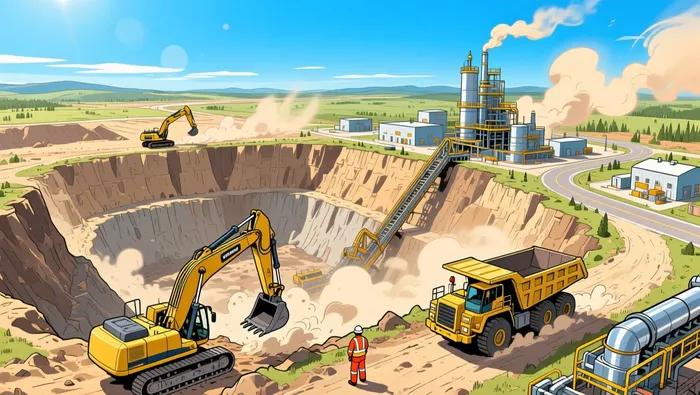 Meanwhile, in the U.S., IsoEnergy is advancing the Flatiron project in southeast Utah, adjacent to its past-producing Tony M mine. The project, situated in the historically productive Henry Mountains district, leverages historical data from the 1980s while employing modern techniques to identify uranium mineralization in the Salt Wash Member of the Morrison Formation. The company's operational readiness studies at Tony M, including ore sorting and evaporation optimization, aim to reduce costs and accelerate potential restart timelines. These efforts highlight IsoEnergy's ability to balance exploration with near-term production readiness.
Geopolitical Positioning: Energy Security in a Fragmented World
The geopolitical landscape for uranium is increasingly defined by energy security concerns. The U.S. designated uranium as a critical mineral in 2025 according to government policy, while the European Union's inclusion of nuclear energy in its sustainable investment taxonomy spurred global policy support. Canada and Australia, both major uranium producers, are reinforcing their roles in the energy transition by prioritizing domestic supply chains.
IsoEnergy's U.S. projects, particularly Flatiron and Tony M, align with Washington's push to reduce reliance on foreign uranium. The company's ownership of all major permits for its U.S. mines provides regulatory flexibility, a critical advantage as the ADVANCE Act streamlines advanced nuclear technology approvals according to policy analysis. Similarly, in Canada, the company's Athabasca Basin projects benefit from a robust regulatory framework and technological expertise, ensuring compliance with stringent environmental standards according to government guidelines.
Australia's Wiluna project further diversifies IsoEnergy's geopolitical footprint. With the country's uranium industry adopting innovations like in-situ recovery (ISR) to minimize environmental impact according to industry reports, IsoEnergy is well-positioned to meet global demand while adhering to sustainability benchmarks. This tri-jurisdictional approach not only mitigates geopolitical risks but also aligns with the energy security priorities of key markets, including China, which is expanding its nuclear capacity according to market analysis.
Market Dynamics and Investment Implications
The uranium market is tightening as demand outpaces supply. According to the World Nuclear Association, uranium demand is projected to rise 28% by 2030, driven by nuclear capacity expansion and the adoption of Small Modular Reactors (SMRs) according to market projections. However, supply constraints persist due to years of underinvestment, with production lagging behind demand. IsoEnergy's exploration programs and operational readiness studies are designed to bridge this gap, particularly as the spot price climbed from $63.50 to $79 per pound in 2025.
Investor sentiment reflects this optimism. Uranium-focused stocks have outperformed broader markets, and IsoEnergy's strategic acquisitions and exploration results have attracted institutional capital. The company's focus on low-cost, high-conviction projects-such as the shallow unconformity deposits in Canada and the Salt Wash Formation in the U.S.-positions it to benefit from both price appreciation and production growth.
Conclusion
IsoEnergy's strategic moves in uranium underscore its alignment with the energy transition's dual imperatives: decarbonization and energy security. By diversifying its resource base across Canada, the U.S., and Australia, the company mitigates geopolitical and regulatory risks while tapping into jurisdictions with strong policy support. As the uranium market tightens and nuclear energy gains momentum, IsoEnergy's balanced approach to exploration, production readiness, and geopolitical positioning makes it a compelling investment for those seeking exposure to the nuclear renaissance.





Comentarios
Aún no hay comentarios