
Islamic Fintech Expansion in Southeast Asia: Fasset's Strategic Advantages and Growth Potential
The Islamic fintech sector in Southeast Asia is undergoing a transformative phase, driven by a confluence of digital adoption, regulatory innovation, and a growing demand for ethical financial solutions. At the forefront of this movement is Fasset, a fintech firm recently granted a provisional banking license in Malaysia to launch what it claims is the world's first stablecoin-powered Islamic digital bank. This development not only underscores the region's potential but also highlights Fasset's unique positioning to capitalize on the $5 trillion global Islamic finance industry, according to a Coindesk report.
A Booming Market with Strategic Tailwinds
Southeast Asia's Islamic fintech market is expanding at an unprecedented pace. By 2025, the broader Southeast Asian fintech sector is projected to grow at a compound annual growth rate (CAGR) of 11.1%, fueled by a young, tech-savvy population and supportive regulatory frameworks, as noted in the Coindesk report. Specifically, the Islamic fintech segment is expected to surge at a CAGR of 13.6%, reaching $306 billion by 2028, according to Business Research Insights. Malaysia, Indonesia, and Singapore have emerged as key hubs, with Malaysia's Islamic finance assets alone exceeding $290 billion in 2025, based on a LinkedIn analysis.
This growth is underpinned by structural demand. Over 280 million Southeast Asians identify as Muslim, creating a vast market for halal-compliant financial products, according to a Fortune article. Traditional Islamic finance has long focused on asset-backed solutions, but digital innovation is now enabling scalable, inclusive services. For instance, digital Sukuk (Islamic bonds), automated Zakat calculations, and real-time account management are gaining traction, as reported by Business Research Insights.
Fasset's Strategic Edge: Stablecoins, Blockchain, and Regulatory Agility
Fasset's provisional license in Malaysia positions it to exploit these trends. The company's model leverages stablecoins and tokenized assets to offer Shariah-compliant services such as savings, financing, and cross-border payments, according to the Coindesk report. By operating within Malaysia's Labuan Financial Services Authority (FSA) sandbox, Fasset benefits from a regulatory environment that balances innovation with compliance. This sandbox approach is critical in a sector where evolving interpretations of Shariah law and regulatory fragmentation pose challenges, as observed in the LinkedIn analysis.
Fasset's strategic advantages extend beyond its technological stack. The firm already holds licenses in the UAE, Indonesia, Turkey, and the EU, enabling it to scale its services across Muslim-majority regions, per the Coindesk report. Its planned Visa-linked crypto debit card and Ethereum Layer 2 network (Own) further differentiate it by addressing pain points in liquidity and settlement efficiency. For example, the LayerLAYER-- 2 network aims to tokenize real-world assets, enabling seamless on-chain transactions for gold, U.S. stocks, and other assets-a feature that aligns with Islamic finance's emphasis on tangible value, as highlighted in the LinkedIn analysis.
Market Positioning and Competitive Landscape
Fasset's entry into Malaysia's Islamic fintech space is timely. The country's five licensed digital banks are targeting 15% of the retail banking market by 2025, with a focus on Shariah-compliant solutions, according to the LinkedIn analysis. Competitors include established players like Bank Islam Malaysia and digital innovators such as Bank Jago in Indonesia. However, Fasset's use of stablecoins and blockchain technology creates a unique value proposition. Unlike traditional Islamic banks, which rely on centralized systems, Fasset's model offers transparency, speed, and global interoperability-critical factors for cross-border trade and remittances, as noted in the Coindesk report.
The firm's focus on financial inclusion also aligns with regional priorities. Southeast Asia's unbanked Muslim population remains underserved, particularly in rural areas of Indonesia and the Philippines. Fasset's zero-interest banking model and asset-backed products could bridge this gap, mirroring the success of Islamic microfinance initiatives in Bangladesh and Egypt, as discussed in the Fortune article.
Risks and Opportunities
While Fasset's strategy is compelling, challenges persist. Regulatory sandboxes, though supportive, are still experimental, and scaling from a pilot to a full-fledged bank requires navigating complex compliance frameworks. Additionally, the lack of standardized Shariah interpretations across jurisdictions could complicate cross-border operations, a concern raised in the LinkedIn analysis.
However, the potential rewards are substantial. If Fasset successfully executes its vision, it could capture a significant share of the $306 billion Islamic fintech market by 2028, according to Business Research Insights. Its existing $6 billion annualized transaction volume, reported by Coindesk, suggests a scalable infrastructure, while its partnerships with global institutions (e.g., Visa) indicate strong market credibility.
Conclusion: A Catalyst for Islamic Finance 2.0
Fasset's stablecoin-powered Islamic digital bank represents more than a fintech innovation-it is a catalyst for redefining Islamic finance in the digital age. By combining blockchain's efficiency with Shariah principles, the firm is addressing both the ethical and operational needs of a $5 trillion industry. For investors, this initiative offers exposure to a high-growth sector with strong tailwinds: demographic demand, regulatory experimentation, and technological convergence.
As Southeast Asia continues to lead the Islamic fintech revolution, Fasset's ability to scale its model across Asia and Africa could determine its long-term success. The coming years will test its agility, but the potential to reshape financial inclusion for millions of Muslims is undeniable. 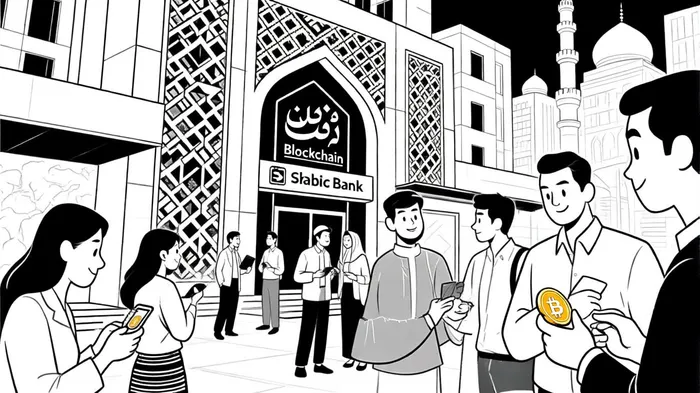






Comentarios
Aún no hay comentarios