
Iron Ore's Treadmill: Stuck in the Middle of a Sino-US Trade War?
The iron ore market is caught in a high-stakes game of tug-of-war. On one side: China’s insatiable (but increasingly fragile) appetite for steel. On the other: a Sino-US trade war that’s gone full-on nuclear, with tariffs now hitting 145% and reciprocal sanctions turning supply chains into minefields. The result? Iron ore prices stuck in a rangebound limbo—trading between $90 and $120 per tonne for months. This isn’t a bull or bear market—it’s a “bull-bear hybrid” where every dip gets bought on hope and every rally gets sold on fear. Let’s unpack why investors should tread carefully here.
China’s Steel Demand: A Spark in a Damp Fire
China remains the 800-pound gorillaGRRR-- in the iron ore market, accounting for 60% of global demand. But here’s the rub: Beijing’s economy is sputtering. The latest data shows steel production flatlining at 900 million tonnes annually—a far cry from the 1.4 billion-tonne peak in 2014. Why? Trade wars, yes, but also a structural shift. China’s infrastructure boom is over, and its “dual circulation” policy prioritizes domestic consumption over exports.
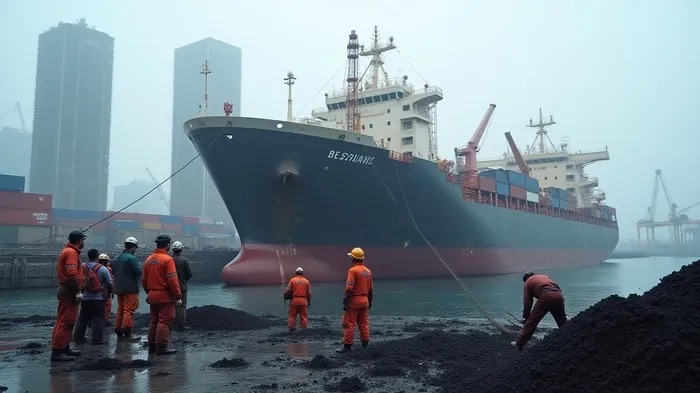
But here’s the twist: Beijing is fighting to keep demand afloat. The State Council’s April 9 stimulus pledges—better financing for businesses, debt relief for exporters—could stabilize steel mills. Yet, the private sector isn’t buying it. “China’s steel capacity utilization is now 78%, down from 85% in 2020,” says one analyst. “Without real infrastructure spending, this sector is on life support.”
The Trade War’s Hidden Hand: How 145% Tariffs Kill Demand
The Sino-US tariff war isn’t just about semiconductors or electric cars—it’s gutting the logistics backbone of global trade. The US’s 145% tariffs on Chinese goods (plus China’s 125% retaliation) have created chaos:
- Cargo collapse: Shipments from Asia to the US fell 60% in April (Bloomberg).
- De minimis destruction: The US’s new 90% duty on low-value parcels is crushing e-commerce, but it’s also squeezing industrial supply chains. Smaller players can’t afford to ship anything—let alone bulk commodities.
- Sanctions on rare earths and tech: China’s export controls on samarium and gadolinium (critical for magnets in EVs) are forcing companies like Tesla () to source alternatives, but that’s a long-term play.
The ripple effect hits iron ore indirectly. If US retailers can’t restock shelves, they’ll cut orders for Chinese-made steel products. And if China’s factories slow, they’ll burn less iron ore. It’s a death spiral.
The Rangebound Reality: Why $90–$120 Is Here to Stay
The numbers tell the story. Iron ore futures are stuck because traders are hedging two conflicting bets:
- Bull case: China’s stimulus + US inflation cooling = rebound in construction.
- Bear case: Trade wars + deindustrialization = permanent demand contraction.
The middle ground? Rangebound. Let’s look at the math:
- Supply: Australia and Brazil (which account for 60% of global exports) are producing flat-out. Vale’s Brazilian mines hit a record 400 million tonnes in 2024, while BHP () is expanding its Pilbara operations.
- Demand: China’s steel output needs to hit 950 million tonnes to push prices above $120. Unlikely.
- Trade friction: Every 1% tariff increase on Chinese goods shaves 0.2% off global iron ore demand. At 145%, that’s a 29% drag.
Investor Playbook: Buy the Dips, but Stay Nimble
This isn’t a “buy and hold” market. Here’s how to play it:
- Short-term: Bet on volatility. Use options to profit from swings. A $10 move in iron ore translates to 10% gains on futures contracts.
- Long-term: Focus on miners with flexibility. Companies like Rio Tinto (RIO) and Fortescue (FMG) have hedged positions and can pivot to EV battery metals (like lithium) if steel demand craters.
- Avoid Chinese steel stocks. Baosteel and Shougang are at the mercy of Beijing’s trade policies—too much risk, too little upside.
Conclusion: Iron Ore’s Fate Hinges on One Number
The breaking point? China’s steel output. If Beijing can’t push production above 920 million tonnes this year, prices will slide toward $80. But if stimulus spending ignites a mini-boom? $130 is possible. The data to watch:
- Steel production data (out every 10 days from China’s National Bureau of Statistics).
- US-China tariff talks. If Trump’s “substantial concessions” on TikTok lead to tariff cuts, iron ore could rally. If not? More pain.
Right now, the scales are tipped toward stagnation. Stay rangebound—until one side wins this war.







Comentarios
Aún no hay comentarios