
IRFC's Leadership Transition: How Sunil Kumar Goel's Financial Acumen Could Steer Railway Infrastructure Funding
The Indian Railway Finance Corporation Limited (IRFC) has long been the backbone of India's infrastructure ambitions, managing billions in debt to fund the expansion and modernization of the nation's railways. In May 2023, the corporation marked a pivotal leadership shift with the appointment of Sunil Kumar Goel as its Chief Financial Officer (CFO), succeeding Shelly Verma. This transition raises critical questions: How does Goel's decades-long finance career position IRFC to meet its towering funding demands? And what does this mean for investor confidence in a sector grappling with rising costs and complex capital structures?
A CFO with Global Finance Muscle
Sunil Kumar Goel brings a résumé steeped in financial discipline. With over 40 years in finance, accounting, and international business consulting, Goel's career spans roles as diverse as founder of SandMartin—a leader in finance and accounting outsourcing—and CFO of Dwarikesh Sugar Industries. His credentials include a PhD in Finance and Accounting, All India Rank 1 in the Chartered Accountancy exams, and 20 years at NTPC Limited, India's largest power generator, where he honed skills in large-scale project financing.
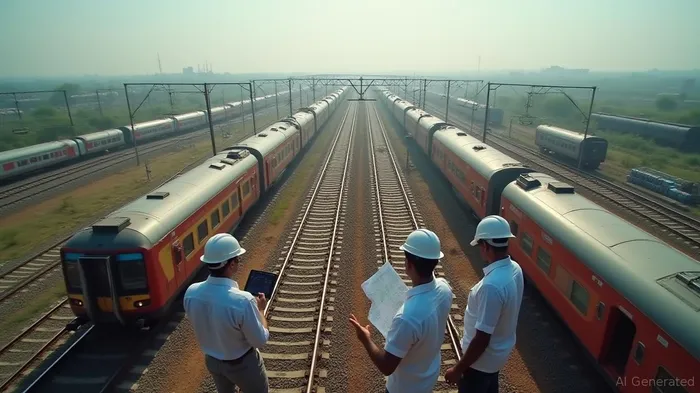
Goel's expertise in structuring complex financial models, managing cross-border transactions, and optimizing operational efficiency makes him a standout choice for IRFC. His appointment signals a strategic pivot toward leveraging private-sector financial acumen in a state-owned entity.
Why IRFC Needs Goel Now
IRFC's mandate is monumental: it raised ₹1.35 trillion ($16.3 billion) in FY2023 alone to fund projects like the Dedicated Freight Corridor and the Western Rail Corridor. With India's railways targeting $100 billion in investments by 2030, the corporation must navigate a treacherous landscape of rising interest rates, inflation, and competition for capital.
Goel's track record in optimizing capital allocation and reducing costs could be transformative. At NTPC, he managed billions in power plant financing; at SandMartin, he streamlined global finance processes for clients in insurance and retirement planning. These skills are directly transferable to IRFC's challenge of balancing debt affordability with aggressive expansion.
The Verma-Google Transition: A Shift in Governance Philosophy
Shelly Verma, who previously held the roles of CEO and CFO, oversaw IRFC's rise as a AAA-rated debt issuer. Her tenure focused on maintaining liquidity and creditworthiness. Goel's arrival introduces a more aggressive, private-sector mindset.
The implications are two-fold:
1. Enhanced Operational Efficiency: Goel's experience in outsourcing and process optimization could reduce IRFC's administrative costs, freeing up capital for infrastructure projects.
2. Debt Market Credibility: His reputation for fiscal conservatism may reassure global investors wary of emerging-market debt risks.
Investors should monitor whether IRFC's cost of borrowing narrows further under Goel. A tighter spread would signal improved credit confidence, potentially unlocking cheaper funding for railways.
Risks and Opportunities for Investors
While Goel's appointment is a positive signal, risks remain. India's railways face delays in project execution, and geopolitical tensions could disrupt global commodity markets, raising construction costs.
For equity investors, IRFC's stock has historically been correlated with government spending and bond yields. However, as a non-listed entity, its equity isn't directly tradable. Instead, investors can engage via:
- Debt Instruments: IRFC bonds offer higher yields than government securities, with Goel's leadership potentially reducing default risks.
- Infrastructure Funds: Exposure to IRFC-backed projects via ETFs or mutual funds tracking infrastructure debt.
Final Analysis: A Strategic Move for Long-Term Stability
Goel's appointment is more than a leadership change—it's a vote of confidence in India's financial governance reforms. By infusing IRFC with private-sector rigor, he could bridge the gap between ambitious infrastructure targets and fiscal sustainability.
For investors, this transition underscores a compelling opportunity in India's debt markets. IRFC's role as the sole AAA-rated infrastructure financier positions it to benefit from rising demand for ESG-aligned debt. While short-term volatility remains, Goel's track record suggests the corporation is primed to deliver long-term value.
Investment Takeaway: Consider overweighting IRFC's bonds in a diversified debt portfolio. Monitor its cost of capital metrics closely; a narrowing yield gap with government debt could signal a buy signal.
In an era where infrastructure funding determines a nation's growth, Goel's leadership may just be the catalyst IRFC—and India—needs.







Comentarios
Aún no hay comentarios