
Iraq's Wheat Self-Sufficiency: A Boon for Regional Agricultural Investment and Global Market Stability
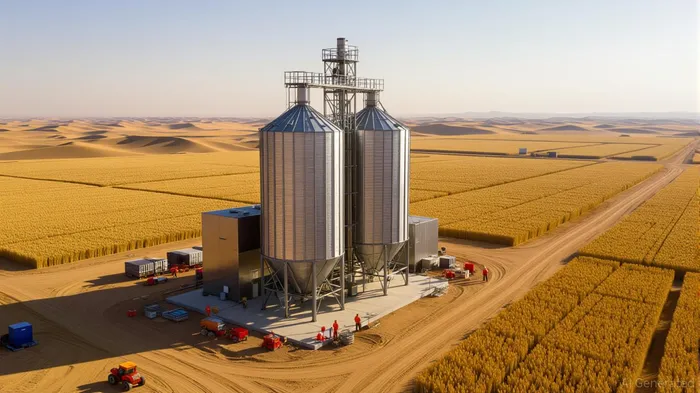
Iraq's journey from a chronic wheat importer to a self-sufficient producer is reshaping the geopolitics of global grain markets. For the first time in three decades, the country has achieved surplus production—exceeding 5.1 million tons in 2025—and built strategic reserves of 5.5 million tons, sufficient to meet annual domestic demand. This transformation, driven by aggressive government subsidies, advanced irrigation systems, and climate-adaptive agriculture, is not just a national milestone but a catalyst for investment in the Middle East's agricultural infrastructure. For investors, the implications are twofold: a reconfiguration of global wheat trade dynamics and a surge in demand for logistics, storage, and agro-tech solutions in a region historically constrained by water scarcity and political instability.
Geopolitical Shifts and Market Volatility
Iraq's self-sufficiency has disrupted traditional trade flows. Imports from Turkey, once a dominant supplier, fell by 40% in 2025 as Baghdad pivoted to Russian wheat, importing 150,000–200,000 tons monthly. This shift has weakened Turkey's leverage in regional grain trade and introduced new volatility into Black Sea wheat markets. Meanwhile, Iraq's strategic reserves act as a buffer against global price shocks—a critical asset in a world where climate-driven supply disruptions are becoming the norm.
However, the surplus also poses a risk. If Iraq begins exporting wheat at prices below global benchmarks, it could destabilize markets in neighboring countries and pressure futures trading. This dynamic mirrors the post-2014 oil glut, where oversupply led to prolonged price wars. For now, the government has opted to store the surplus rather than flood the market, but this strategy is fiscally unsustainable.
Fiscal Challenges and the Case for Infrastructure Investment
The cost of Iraq's self-sufficiency is steep. The government spent $6 billion in 2024 procuring wheat at prices double the global average (AUD$960 per ton), a subsidy that strains a budget already weakened by declining oil revenues. Yet, the long-term benefits—reduced import dependency, price stability, and a model for arid regions—justify the investment.
The true opportunity lies in the infrastructure required to sustain this success. Iraq's storage capacity of 5.5 million tons is already maxed out, with surplus wheat expected to grow. This has spurred partnerships with global agro-logistics firms. A prime example is the Swiss Bühler Group, which, in collaboration with Egypt's Samco Company, is constructing a 60,000-ton grain silo in Kirkuk. Equipped with advanced monitoring systems and ventilation technology, the facility is part of a $663 million initiative to build five such silos nationwide.
High-Conviction Investment Opportunities
- Agro-Storage and Logistics Firms: Companies like Bühler and Saudi-based Almarai are positioned to benefit from Iraq's storage needs. Almarai, which has expanded into grain logistics, could secure contracts to manage surplus distribution. Turkish infrastructure firms, with expertise in silo construction, also present opportunities.
- Agricultural Technology Providers: Drought-resistant seeds and precision irrigation systems are critical to maintaining yields amid climate decline. Firms like John DeereDE-- (DE) and Bayer (BAYRY) are supplying the tools to boost productivity.
- Regional Wheat Exporters: As Iraq seeks to monetize its surplus, regional exporters in the Black Sea or North Africa may secure long-term contracts. Turkish and Russian firms with established trade routes to Iraq are well-positioned.
- Milling and Processing Equipment Makers: With the government selling wheat to local millers at AUD$509 per ton, demand for milling equipment and packaging solutions is surging.
Risks and Mitigation
The primary risk is climate resilience. Iraq has seen a 30% decline in rainfall since 1990, and soil degradation threatens long-term yields. However, the government's investment in desert land cultivation and water-efficient crops could mitigate this. Investors should prioritize firms with expertise in climate-adaptive agriculture.
Conclusion: A Strategic Window for Investors
Iraq's wheat surplus is a structural shift with enduring implications. While the fiscal costs are high, the strategic gains—enhanced food security, reduced import dependency, and a blueprint for arid regions—justify the investment. For investors, the key is to act swiftly in infrastructure and agro-tech before the market becomes saturated. The Middle East's agricultural renaissance is underway, and those who plant early will reap the rewards.







Comentarios
Aún no hay comentarios