
Iranians Protest for Fourth Day as Clashes Spread Beyond Capital
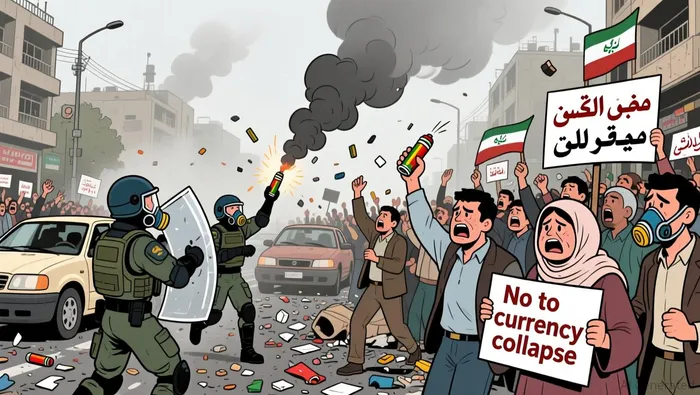
Protests in Iran have entered their fourth day, with demonstrations spreading beyond the capital to cities like Isfahan, Shiraz, and Mashhad. The unrest was sparked by a record low in the value of Iran's currency, the rial, which dropped to 1.38 million to the U.S. dollar. The devaluation has exacerbated inflation, with food prices rising 72% year-on-year.
The protests began in Tehran's largest mobile phone markets, where traders and shopkeepers closed their businesses and took to the streets. Anti-government slogans were chanted, and in some areas, police used tear gas to disperse crowds. Similar demonstrations were reported in other major cities, marking the biggest such unrest since 2022.
The government appointed Abdolnasser Hemmati as the new central bank governor following the resignation of Mohammad Reza Farzin. Hemmati will be tasked with addressing inflation and stabilizing the currency. His appointment comes as the country faces a severe economic crisis and widespread public dissatisfaction.
Why Did This Happen?
The rial's rapid depreciation has been driven by a combination of domestic mismanagement and international sanctions. The U.S. and its allies have imposed heavy sanctions on Iran over its nuclear program, limiting access to global financial systems and increasing economic pressure. The currency was trading at 32,000 rials to the dollar in 2015, before the nuclear deal collapsed.
Inflation is currently at 42.2% year-on-year, with food and health items seeing the largest price increases. A proposed tax hike for the Iranian new year has further fueled public anxiety. The government has also introduced higher gasoline prices in recent weeks, adding to the financial burden on households.
What Are Analysts Watching Next?
The protests have coincided with a significant development in Iran's space program. On Sunday, the country launched three domestically built satellites into space from Russia, a move that may intensify regional tensions. The satellites—Zafar-2, Paya, and Kowsar 1.5—were launched using a Russian Soyuz rocket from the Vostochny Cosmodrome.
Paya, Iran's most advanced imaging satellite, uses artificial intelligence to improve image resolution and is designed for environmental and agricultural monitoring. The launch is a demonstration of Iran's growing aerospace capabilities despite Western sanctions. Moscow has been a key partner in Iran's satellite program, with prior launches including the Nahid-2 satellite in July.
The protests and the satellite launch are occurring against a backdrop of heightened geopolitical tension. U.S. President Donald Trump has warned of potential new strikes on Iran if it attempts to rebuild its nuclear program following U.S. attacks in June. Trump's meeting with Israeli Prime Minister Benjamin Netanyahu is expected to focus on Iran's missile and nuclear activities.
Iranian President Masoud Pezeshkian has denied claims that Iran is rebuilding its nuclear program and has warned of a harsh response to any attack. However, Israel remains deeply concerned about Iran's conventional missile stockpile and its potential to disrupt the region. The ongoing economic and political crisis in Iran could have broader implications for global markets.
As the new year begins, investors and policymakers are closely monitoring how the situation in Iran evolves. The interplay between economic conditions, international relations, and regional security remains a key area of focus for global markets.







Comentarios
Aún no hay comentarios