
The Iranian Internet Blackout and the Resilience of Decentralized Technologies
The 2025 Iranian internet blackout, which severed access to both international and domestic networks, exposed the fragility of centralized communication systems while accelerating the adoption of decentralized alternatives. Amid this crisis, tools like Bitchat-a Bluetooth-based mesh network developed by Jack Dorsey-surged in popularity, with downloads spiking by 437,900 over a single week and 43,000 daily. This surge underscores a critical shift: when traditional infrastructure fails, decentralized systems become lifelines for connectivity, information sharing, and even financial transactions. For investors, the blackout highlights a growing market for resilient, censorship-resistant technologies-and the under-the-radar projects poised to capitalize on this demand.
Bitchat and the Rise of Mesh Networks
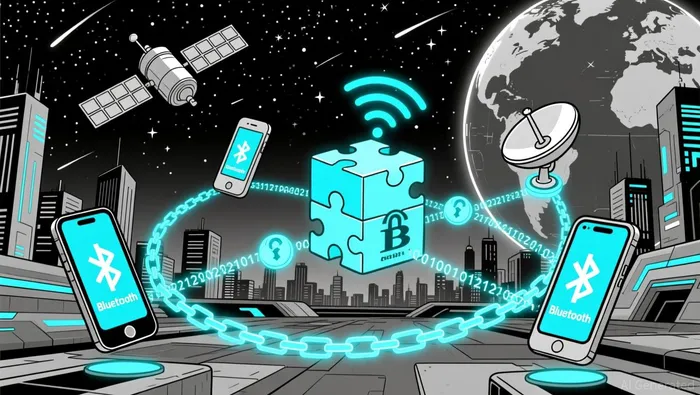
Bitchat's rapid adoption during the blackout demonstrates the viability of Bluetooth mesh networks in maintaining communication without internet access. By enabling encrypted peer-to-peer messaging and relaying Bitcoin transaction data, the app became a critical tool for Iranians navigating restricted connectivity. Its hybrid architecture-combining Bluetooth Low Energy (BLE) for efficient peer discovery and Bluetooth Classic (BR/EDR) for high-throughput data transfer- offers a blueprint for decentralized communication infrastructure. While Bitchat's user base in Iran remains unquantified, its 1.4 million total downloads since launch suggest a global audience increasingly prioritizing offline resilience.
This trend aligns with broader market dynamics. As governments and corporations centralize control over digital infrastructure, decentralized alternatives are gaining traction. For investors, Bitchat's success signals a need for further innovation in mesh networking, particularly in regions prone to internet shutdowns. Startups developing similar tools-such as Darkwire and Machankura, which enable offline Bitcoin transactions-represent untapped opportunities.
Starlink and the Satellite Internet Frontier
While Bitchat thrived in proximity-based networks, satellite internet services like Starlink emerged as another critical layer of resilience. Unconfirmed reports suggest Starlink was deployed in Iran as early as June 2025, with speculation of renewed activation during the 2026 blackout. Elon Musk's satellite network, which bypasses terrestrial infrastructure, offers a dual-purpose solution: restoring internet access and enabling on-chain transaction confirmations for crypto users. However, Starlink's reliance on satellite coverage and regulatory hurdles in authoritarian regimes means it cannot fully replace decentralized mesh networks. Instead, it complements them, creating a hybrid ecosystem where users can switch between Bluetooth and satellite connectivity as needed.
The satellite internet market itself is a growth vector. With global demand for off-grid connectivity rising, companies developing low-cost satellite terminals or integrating blockchain with satellite data transmission could attract significant capital. For example, Blockstream's satellite network, which allows one-way Bitcoin data transmission, illustrates how blockchain and space tech can intersect to create resilient infrastructure.
Off-Grid Crypto Tools: Beyond Bitchat
The blackout also spotlighted the need for crypto tools that function in extreme connectivity scenarios. While Bitchat and Starlink address communication, projects like DeepSnitch AI are redefining risk management in decentralized finance. This AI-powered crypto presale, which monitors whale activity, sentiment shifts, and rug pulls, has already seen an 88% token price increase and raised $814K in its presale. By providing real-time analytics for retail traders, DeepSnitch AI addresses a critical gap in the crypto ecosystem-making it a compelling investment for those seeking exposure to AI-driven DeFi tools.
Other under-the-radar projects include Zynk, a stablecoin-enabled cross-border payments platform that raised $5 million in seed funding, and Shodai Network, which focuses on blockchain-based cybersecurity. These startups reflect a broader trend: institutional investors are increasingly prioritizing crypto infrastructure that bridges traditional finance and decentralized systems.
Market Trends and Investment Opportunities
The 2025-2026 period has seen $25 billion raised in blockchain startups, with 40% of surveyed projects planning public listings or structural moves in 2026. This growth is driven by three key factors:
1. Regulatory Clarity: Clearer frameworks in the U.S. and EU are attracting institutional capital to crypto infrastructure.
2. Multi-Chain Integration: Projects leveraging EthereumETH--, SolanaSOL--, and BNBBNB-- Chain to expand interoperability are gaining traction.
3. AI-Driven Fundraising: Predictive analytics and automated tools are optimizing ICOs and token sales, enabling data-driven investment strategies.
For investors, the focus should be on projects that combine these trends. For instance, DeepSafe-a cybersecurity startup that raised $3 million-uses blockchain to secure decentralized networks, while Zynk's liquidity-free infrastructure model could disrupt cross-border payments.
Conclusion
The Iranian internet blackout of 2025 was not an isolated event but a harbinger of a larger shift toward decentralized systems. As governments increasingly weaponize internet shutdowns, the demand for resilient communication and financial tools will only grow. Bitchat's surge, Starlink's deployment, and the rise of off-grid crypto projects like DeepSnitch AI and Zynk illustrate a market in transition-one where censorship-resistant infrastructure is no longer a niche interest but a strategic necessity. For investors, the key lies in identifying projects that address both immediate needs (e.g., offline messaging) and long-term trends (e.g., AI-driven DeFi). The future of decentralized communication is not just about surviving blackouts; it's about redefining the very architecture of global connectivity.






Comentarios
Aún no hay comentarios