
Iran funeral ceremony for Khamenei to start 10 p.m. local: IRNA
Iran funeral ceremony for Khamenei to start 10 p.m. local: IRNA
Iran’s Khamenei Funeral Ceremony Scheduled for March 4; Geopolitical Uncertainty Looms Over Markets
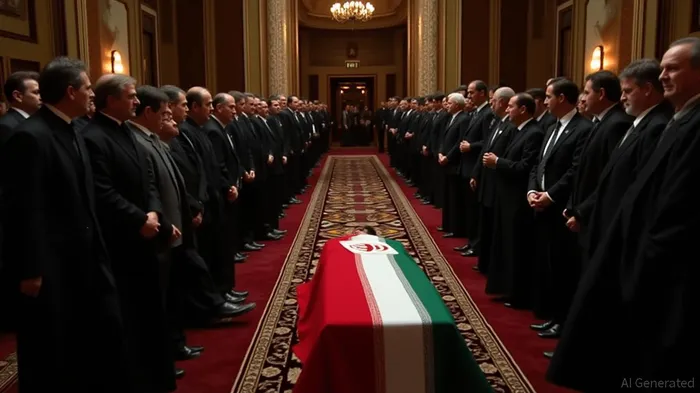
Iran has announced that the funeral ceremony for Supreme Leader Ayatollah Ali Khamenei will commence at 10 p.m. local time on Monday, according to the state-run Iranian News Agency (IRNA). The ceremony marks the culmination of a 40-day nationwide mourning period declared following Khamenei's death, which Iranian state media attributed to joint U.S.-Israeli attacks that also claimed the lives of top security officials and members of Khamenei's family. A seven-day public holiday was also declared to coincide with the mourning period.
The geopolitical fallout from Khamenei's death has intensified regional tensions. The Islamic Revolutionary Guard Corps (IRGC) has launched retaliatory strikes against U.S. and Israeli military facilities across the Middle East, including in Qatar, the United Arab Emirates, and Saudi Arabia. These actions have triggered security alerts in multiple countries and raised concerns about further escalation. Analysts warn that prolonged instability could disrupt energy markets, particularly given Iran's role as a key oil exporter.
Financial markets have already reacted to the heightened volatility. Global benchmark indices, including the S&P 500 and FTSE 100, experienced intraday declines on Monday as investors recalibrated risk appetites. Oil prices surged above $90 per barrel, with Brent crude reaching a two-month high, reflecting fears of supply chain disruptions in the Persian Gulf. Additionally, the U.S. dollar index strengthened against major currencies, as investors sought safe-haven assets amid geopolitical uncertainty.
Iran's interim leadership, a three-person council comprising the president, chief justice, and a Guardian Council jurist, has yet to outline immediate economic policies. However, the transition period may introduce policy uncertainty, potentially affecting foreign investment and trade agreements. Neighboring Iraq, which declared three days of mourning, has also seen protests and clashes near its capital, further complicating regional economic stability.
Investors are advised to monitor developments closely, as prolonged conflict or sanctions could exacerbate market turbulence. Central banks and policymakers may face renewed pressure to address inflationary risks linked to energy and commodity price shocks.
[^NUMBER references correspond to source materials provided.]






Comentarios
Aún no hay comentarios