
Iran's Bitcoin Mining Amid Political and Economic Turmoil: Assessing Resilience and Risk for Crypto Investments
In 2025, Iran's BitcoinBTC-- mining sector stands at the intersection of geopolitical volatility, energy scarcity, and strategic defiance of international sanctions. For investors evaluating crypto-related opportunities in unstable markets, the Iranian case offers a stark lesson in resilience-and a cautionary tale about systemic risk. The country's mining infrastructure, dominated by state-aligned actors and fueled by energy subsidies, has become both a lifeline for circumventing economic isolation and a catalyst for domestic energy crises.
State Control and IRGC Dominance: A Double-Edged Sword
Iran's Bitcoin mining operations are deeply entangled with the Islamic Revolutionary Guard Corps (IRGC), which controls large-scale facilities often exempt from energy bills or operating on dedicated power lines. These operations, concentrated in special economic zones or IRGC-controlled territories, consume an estimated 2,000 megawatts of electricity-equivalent to the power needs of millions of households. While this allows Iran to generate hard currency by selling mined Bitcoin abroad, it exacerbates energy shortages, forcing cities to implement rolling blackouts and even shorten work hours to conserve power.
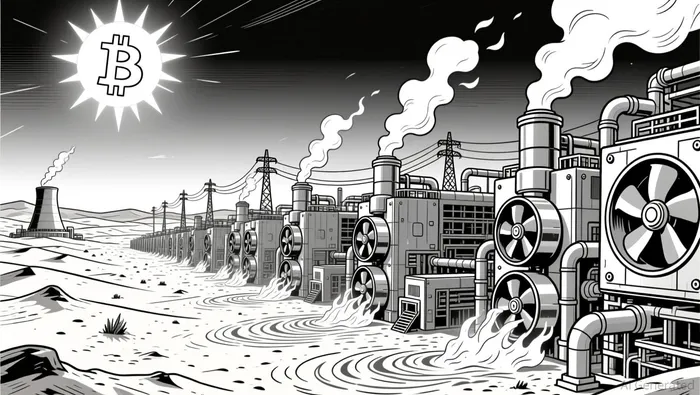
The government's initial strategy-offering cheap electricity to attract mining investment-has backfired. By 2023, over 180,000 mining devices were operational, with 100,000 controlled by state or state-affiliated entities. Despite official crackdowns on unlicensed miners, IRGC-linked operations remain untouched, revealing a stark enforcement gap that undermines regulatory credibility. For investors, this highlights a critical risk: reliance on a sector where profitability is subordinated to political and military priorities.
Sanctions, Capital Flight, and the Crypto Workaround
International sanctions have pushed Iran to treat Bitcoin as a strategic asset. By converting oil and gas reserves into electricity for mining, the regime bypasses banking restrictions and generates revenue in a global market. Between January and July 2025, Iranian entities funneled USD 3.7 billion through cryptocurrency channels, though this marked an 11% decline from 2024 due to geopolitical tensions, including a 12-day conflict with Israel and stalled nuclear negotiations.
This duality-using crypto to evade sanctions while destabilizing domestic energy systems-creates a fragile equilibrium. A report by the Carnegie Endowment notes that Iran's energy infrastructure is already strained, with over 70% of natural gas consumption marred by inefficiencies. The added burden of mining operations risks triggering broader economic collapse, a scenario that could render crypto assets volatile or illiquid during crises.






Comentarios
Aún no hay comentarios