
IPO Market Resilience During Regulatory Uncertainty: Strategic Entry Points for Long-Term Capital in Post-Shutdown Recovery
The U.S. IPO market has long been a barometer of economic confidence, but regulatory uncertainty-exemplified by government shutdowns-introduces volatility that tests the resilience of both issuers and investors. The 2025 government shutdown, which furloughed 90% of the SEC staff, underscored this tension. Yet, companies navigated the crisis using the 20-day registration rule, a mechanism that allows IPOs to proceed without SEC approval by setting prices 20 days in advance, as Reuters explains. This strategy, first tested during the 2018 shutdown, became a lifeline for firms in biotech, energy, and SPACs, enabling them to bypass regulatory gridlock while managing risks tied to incomplete disclosures, a Sullivan & Cromwell memo noted.
Sector-Specific Resilience: Lessons from 2018 and 2025
Historical data reveals that certain sectors exhibit greater resilience during regulatory disruptions. During the 2018 shutdown, biotech firms like Gossamer BioGOSS-- and energy companies such as New Fortress EnergyNFE-- leveraged the 20-day rule to maintain fundraising momentum, Finance & Commerce reported. Similarly, in 2025, tech and cryptocurrency firms-including Circle Internet Group and Klarna-posted strong performances despite the shutdown, raising $31 billion across 163 deals, Kiplinger reported. These cases highlight a pattern: sectors with high growth potential and predictable pricing models (e.g., SPACs) are better positioned to thrive under such constraints.
However, long-term performance remains mixed. A 2010–2020 study found that two-thirds of IPOs underperformed the market after three years, though top-performing firms in technology and finance achieved market-adjusted returns exceeding 300%, a Nasdaq analysis found. This dichotomy suggests that while regulatory uncertainty creates short-term opportunities, sustained success hinges on sector fundamentals and pre-IPO financial health.
Regulatory Risks and Investor Sentiment
The 20-day rule, while a pragmatic workaround, carries inherent risks. Without SEC oversight, errors in registration statements can lead to post-listing scrutiny, as Skadden noted. Post-shutdown, investor confidence may also wane, particularly if market conditions deteriorate. For instance, the 2025 shutdown coincided with a December slowdown in IPO activity, a trend historically linked to seasonal declines, Yahoo Finance reported.
Strategic Entry Points for Long-Term Capital
For investors seeking to capitalize on post-shutdown recoveries, sector selection and timing are critical.
1. Biotech and Energy: These industries demonstrated resilience in 2018 and 2025, driven by innovation cycles and demand for energy transition solutions. However, investors should prioritize firms with robust pre-IPO revenue and clear value propositions, a FactSet analysis advises.
2. SPACs: Their structure aligns well with the 20-day rule, as pricing can be predetermined. Post-2025, SPACs that completed mergers during the shutdown may offer undervalued entry points, provided their business models are defensible, TickerNerd's list of 2018 IPOs illustrates.
3. Technology and Crypto: These sectors attracted capital during the 2025 shutdown, reflecting their appeal in a digital-first economy. Long-term gains will depend on regulatory clarity and macroeconomic stability, a PwC report notes.
A data visualization query could further illuminate these trends:
Conclusion
The IPO market's ability to adapt to regulatory uncertainty is a testament to its resilience, but success requires a nuanced understanding of sector dynamics and risk management. While the 20-day rule provides a temporary solution, long-term capital should focus on industries with strong fundamentals and strategic flexibility. As the 2025 shutdown recedes, investors who align their portfolios with these principles may uncover compelling opportunities in the post-recovery landscape.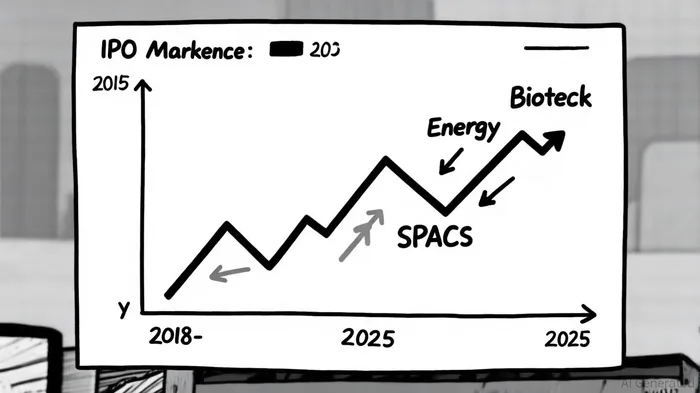





Comentarios
Aún no hay comentarios