
Can the iPhone 17 Launch Drive a Sustained Apple (AAPL) Stock Rally?
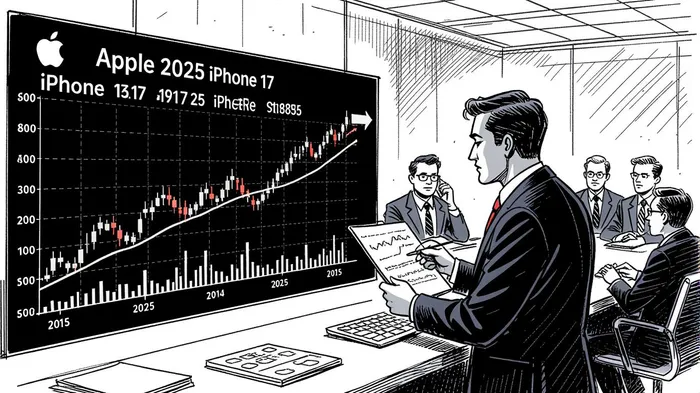
Apple's September 2025 “Awe-Dropping” event, which unveiled the iPhone 17 lineup, AppleAAPL-- Watch Series 11, and AirPods Pro 3, has sparked a critical question for investors: Can this product cycle catalyze a sustained rally in AAPLAAPL-- stock, or will it reinforce concerns about the company's innovation trajectory? The answer hinges on a nuanced interplay of market sentiment, institutional behavior, and Apple's long-term strategic positioning.
Market Sentiment: Incremental Upgrades and AI Concerns
The iPhone 17 launch was met with a muted response, with AAPL shares slipping 0.24% to $237.31 post-event, reflecting investor skepticism about the product's transformative potential[1]. Analysts characterized the upgrades—such as real-time translation in AirPods Pro 3 and the ultra-thin iPhone 17 Air—as evolutionary rather than revolutionary[2]. This aligns with a broader trend: Apple's stock has historically exhibited a “buy the rumor, sell the news” pattern, with gains pre-launch often unwinding afterward[3].
A key concern is Apple's lag in AI development. Despite unveiling features like enhanced health monitoring, the company delayed major Siri upgrades until 2026, raising questions about its ability to compete with rivals like GoogleGOOGL-- and Samsung[1]. MorningstarMORN-- analysts noted that even the iPhone 17 Air's design improvements are unlikely to significantly boost sales, citing longer consumer refresh cycles and market saturation[2].
Historical Context: Mixed Outcomes and Strategic Timing
Historical data underscores the unpredictability of Apple's stock around major launches. For instance, the iPhone 11 drove a 14.25% stock surge, while the iPhone 12 correlated with a -0.74% decline[3]. The iPhone 17's potential to buck this trend depends on factors like pricing strategy and AI progress. Wedbush analysts projected price hikes of $50–$100 for the Pro models, which could offset production shifts to India and rising tariffs[4]. However, these increases risk alienating price-sensitive consumers in a competitive smartphone market.
For investors, timing remains critical. The “sell-the-news” dynamic suggests that entering post-launch may involve navigating short-term volatility, while pre-launch buying could capitalize on speculative momentum[5]. Yet, Apple's ecosystem strength—anchored by services like Apple Music and iCloud—provides a buffer against hardware-driven downturns[2].
Institutional Investor Behavior: Diverging Views
Post-launch, institutional investor activity revealed a split in sentiment. Fiduciary Family Office LLC significantly increased its AAPL holdings, now owning 445,379 shares worth $98.93 million, while others, like Sierra Summit Advisors LLC, trimmed positions[6]. Analyst ratings also diverged: EvercoreEVR-- ISI maintained an Outperform rating with a $250 price target, whereas UBSUBS-- set a Neutral rating at $220[7].
This fragmentation reflects broader uncertainties. While Morgan Stanley's Erik Woodring highlighted Apple's potential to disrupt the AI space, he cautioned about valuation risks given the stock's “priced for perfection” status[7]. Meanwhile, regulatory pressures—such as U.S. antitrust actions targeting Apple's default search engine partnership with Google—add another layer of complexity[7].
Long-Term Catalysts: AI and Ecosystem Resilience
Despite near-term headwinds, Apple's long-term prospects remain anchored to its ecosystem and services division, which now accounts for 25% of revenue[2]. The October 23 earnings report will be pivotal, offering insights into whether the iPhone 17 can drive holiday sales and justify optimism about AI integration. Analysts like Daniel Ives of Wedbush speculate that Apple could bridge its AI gap through partnerships or acquisitions, potentially reshaping investor sentiment[4].
For strategic investors, the key lies in balancing short-term volatility with long-term fundamentals. While the iPhone 17's incremental upgrades may not spark an immediate rally, Apple's resilience in services and its pivot toward AI could underpin a gradual recovery. As one analyst noted, “The stock's trajectory will ultimately depend on whether Apple can rekindle its magic—or if the market demands a new chapter in its innovation story.”[7]
Conclusion
The iPhone 17 launch has not delivered the seismic shift investors hoped for, but it has not derailed Apple's long-term narrative. A sustained stock rally will require a confluence of factors: strong holiday sales, clarity on AI strategy, and a favorable regulatory environment. For now, the stock's performance appears to hinge on whether Apple can transform its ecosystem advantages into a compelling value proposition for a market increasingly focused on AI-driven differentiation.





Comentarios
Aún no hay comentarios