
IperionX: A Strategic Play in the Critical Minerals and Clean Energy Revolution
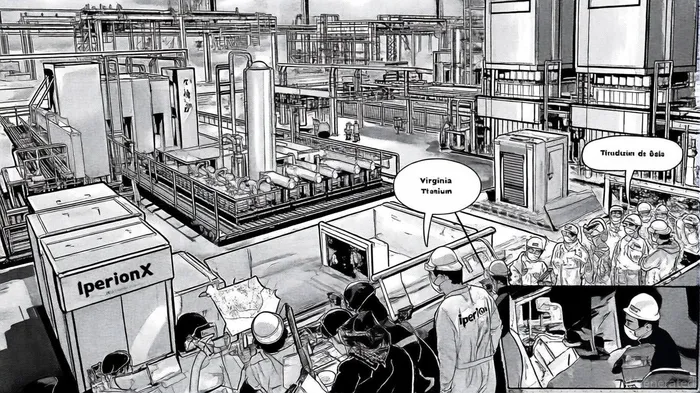
The recent announcement that IperionXIPX-- has secured an additional $25 million in U.S. government funding—bringing its total support to $42.5 million—marks a pivotal moment for the company and the broader critical minerals sector. This injection of capital, announced on September 26, 2025, is not just a vote of confidence in IperionX's operational capabilities but a strategic move by the U.S. government to fortify domestic supply chains in defense, aerospace, and advanced manufacturing. With the goal of scaling titanium production to 1,400 metric tons annually at its Virginia facility, IperionX is positioning itself at the intersection of clean energy innovation and national security[1].
The U.S. Government's Critical Minerals Gambit
The U.S. government's aggressive funding of critical minerals projects reflects a broader, multi-billion-dollar strategy to reduce reliance on foreign suppliers, particularly China, which dominates global refining and processing of rare earth elements and titanium. A nearly $1 billion initiative announced in 2025, led by the Department of Energy, aims to bolster domestic production of battery materials, rare earths, and semiconductor inputs[2]. This aligns perfectly with IperionX's dual focus on titanium and rare earth elements (REEs) through its Titan Critical Minerals Project in Tennessee.
The Titan Project, the largest JORC-compliant titanium, rare earth, and zircon mineral sands resource in the U.S., is currently undergoing a Definitive Feasibility Study (DFS) funded by a $47.1 million government award. This project is not just about titanium—it also hosts significant quantities of dysprosium and terbium, REEs critical for high-performance magnets in wind turbines and electric vehicles (EVs). As stated by a report from Rare Earth Exchanges, the U.S. has historically lacked refining capacity for these materials, making IperionX's vertically integrated model—from mineral extraction to metal production—a rare asset[3].
Technological Innovation as a Competitive Edge
IperionX's competitive advantage lies in its proprietary technologies, which are directly supported by government R&D funding. The company's Hydrogen-Assisted Metallothermic Reduction (HAMR™) and Hydrogen Sintering and Phase Transformation (HSPT™) processes eliminate traditional chlorination and vacuum distillation steps, slashing energy use and carbon emissions by over 50% compared to conventional methods[4]. These innovations, funded in part by a $12.5 million DoD obligation under its $47.1 million contract, enable IperionX to produce high-purity titanium at lower costs while meeting stringent defense and aerospace standards[5].
The Department of Defense's Industrial Base Analysis and Sustainment (IBAS) program has explicitly prioritized IperionX's work, recognizing that a resilient titanium supply chain is essential for national security. As noted in a 3D Printing Industry analysis, the U.S. currently imports over 70% of its titanium sponge, much of it from China and Russia. IperionX's ability to scale production to 1,000+ metric tons annually by 2025 directly addresses this vulnerability[6].
Clean Energy Synergies and Market Differentiation
Beyond defense, IperionX's projects are deeply intertwined with the clean energy transition. The Titan Project's rare earth elements are indispensable for EV motors and wind turbine generators, sectors projected to grow exponentially as the U.S. aims for a 100% clean electricity grid by 2050[7]. By securing a domestic source of these materials, IperionX is not only reducing supply chain risks but also enabling the decarbonization of critical industries.
The company's recent $70 million private placement, combined with government funding, further underscores its strategic appeal. This capital infusion is expected to unlock an additional $42.1 million in DoD funding, creating a total capital pool of nearly $88 million for expansion. As highlighted by Panabee, this hybrid funding model—leveraging both public and private capital—positions IperionX to outpace competitors reliant solely on market volatility[8].
A Long-Term Investment Thesis
For investors, IperionX represents a rare convergence of geopolitical tailwinds, technological innovation, and clean energy demand. The U.S. government's targeted approach to critical minerals—focusing on high-risk, high-impact materials like titanium and rare earths—ensures sustained support for companies like IperionX. Moreover, the company's DFS for the Titan Project, expected to conclude in Q2 2026, will provide clarity on capital requirements and production timelines, reducing uncertainty for stakeholders[9].
Conclusion
IperionX's recent funding surge is more than a financial milestone—it's a validation of its role in reshaping the U.S. critical minerals landscape. With government-backed R&D driving technological differentiation and a clear path to scaling production, the company is well-positioned to capitalize on the clean energy transition while addressing national security imperatives. For investors seeking exposure to a sector where policy, innovation, and demand align, IperionX offers a compelling long-term opportunity.





Comentarios
Aún no hay comentarios