
Investor Sentiment and the Risk of Overbought Markets in 2025: A Contrarian's Guide to Navigating the Bullish Bubble
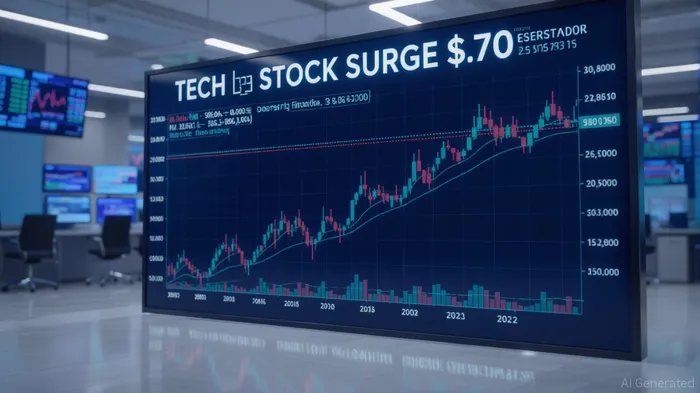
The year 2025 has emerged as a pivotal moment in global markets, marked by a paradoxical mix of optimism and caution. While investor sentiment surveys reveal a cautious optimism—particularly in sectors like commercial real estate and technology—the broader market has entered a state of overbought conditions, raising red flags for contrarian investors. This article examines the current landscape through the lens of historical precedents and technical indicators, offering actionable strategies for portfolio positioning in an environment where extreme bullishness may mask underlying fragility.
The Contrarian Case for Caution
According to the SGX Global Market Sentiment Report Q3 2025, business confidence has declined for three consecutive quarters, with proprietary trading firms experiencing the steepest drop[1]. Yet, this pessimism contrasts sharply with the Real Estate Roundtable Sentiment Index, which surged 13 points to 67, reflecting optimism about stabilizing asset values[2]. Such divergences underscore a fragmented market psychology, where sector-specific euphoria may be decoupling from macroeconomic realities.
Meanwhile, technical indicators paint a similarly mixed picture. The Relative Strength Index (RSI) for large-cap tech stocks has frequently entered overbought territory (above 70), signaling potential short-term corrections[3]. Breadth indicators, such as the advance-decline line, also show new highs, suggesting broad-based participation in the rally[3]. However, these metrics must be interpreted with care. As Fidelity's analysis warns, US economic expansion remains vulnerable to inflationary pressures driven by tariffs and tight labor markets[5].
Historical Precedents and the Overbought Trap
History offers cautionary tales for investors who ignore overbought conditions. The dot-com bubble of 2000, for instance, saw the Shiller P/E ratio reach unsustainable levels before collapsing[3]. Similarly, the 2008 financial crisis and the 2020 pandemic-driven bear market were preceded by overbought conditions, albeit triggered by external shocks. In 2022, rapid Federal Reserve rate hikes led to a 25.4% decline in the S&P 500[1]. As of Q3 2025, the S&P 500 has already entered correction territory, declining 10.1% from its peak, with concerns about a potential bear market growing[1].
These episodes highlight a critical pattern: overbought markets often serve as precursors to corrections, but not all corrections evolve into prolonged bear markets. Since World War II, only 25% of corrections have escalated into bear markets, with the average correction lasting four months and declining 14%[1]. However, the current environment—marked by geopolitical tensions, tariff uncertainties, and fragile earnings growth—suggests a higher risk of a deeper downturn.
Portfolio Positioning for a Contrarian Investor
For investors seeking to navigate this landscape, contrarian strategies must prioritize flexibility and risk mitigation. First, diversification into undervalued sectors—such as energy, industrials, and value-oriented equities—can provide a counterbalance to overbought growth stocks. Second, tactical use of options strategies, such as covered calls and bull call spreads, can hedge against volatility while capitalizing on short-term momentum[3]. Third, maintaining a cash buffer (20–30% of the portfolio) allows for opportunistic "buy-the-dip" scenarios, particularly if markets correct further.
State Street's Q3 2025 forecasts emphasize uncertainty around tariff policies but express optimism for medium-term growth in US and European markets[4]. This duality suggests a phased approach: locking in gains on overbought positions while allocating to sectors poised to benefit from policy-driven tailwinds.
Conclusion
The 2025 market environment demands a disciplined contrarian mindset. While investor sentiment and technical indicators suggest a fragile equilibrium, history reminds us that overbought conditions often precede corrections. By leveraging historical precedents, technical analysis, and strategic diversification, investors can position their portfolios to weather volatility while capitalizing on mispriced opportunities. As the adage goes, “Bull markets rise on hope, but bear markets fall on fear.” In 2025, the challenge lies in distinguishing hope from hubris—and acting accordingly.







Comentarios
Aún no hay comentarios