
Investor Sentiment and Market Volatility: Navigating the Storm of Political Uncertainty and Economic Anxiety
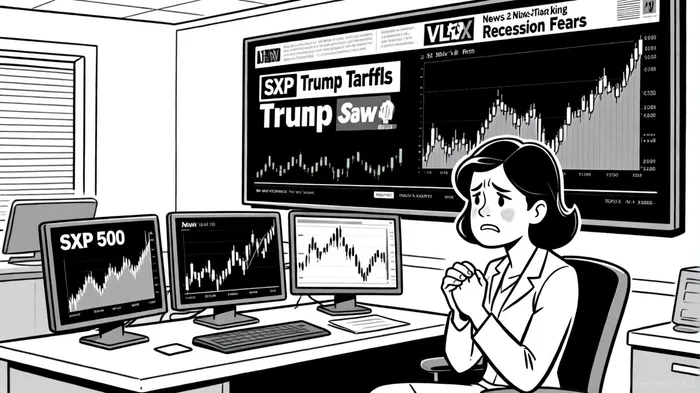
The U.S. market is in a tailspin, and it's not just the numbers that tell the story—it's the anxiety etched into every investor's decision. According to a report by Reuters/Ipsos, President Donald Trump's approval rating has dipped to 42% in late September 2025, with 56% of Americans disapproving of his overall performance[1]. The real kicker? His economic leadership is under fire, with only 36% of respondents approving of his handling of the economy and a mere 30% backing his approach to the cost of living[1]. This isn't just political theater; it's a seismic shift in public sentiment that's reverberating through financial markets.
The data paints a grim picture. The U.S. job market has been revised downward, with 911,000 fewer jobs added in the 12 months through March 2025 than previously estimated[1]. Meanwhile, 61% of Americans now believe the country is headed for a recession within the next year[3]. These fears are not unfounded. The VIX, the so-called "fear index," has nearly doubled in the past month, hitting levels not seen since August 2025[3]. Treasury markets aren't immune either—the MOVE index, which gauges bond market volatility, is at a four-month high[3].
What's driving this volatility? Trump's aggressive tariff policies are a major culprit. A Reuters/Ipsos poll reveals that 52% of Americans disapprove of his handling of international trade, while half believe raising tariffs would worsen inflation[2]. The market's reaction has been visceral. On April 3, 2025, the S&P 500 lost $2 trillion in value in a single day, with global equities shedding $10 trillion over three days as tariff fears escalated[4]. Investors are now scrambling to rebalance portfolios, with defensive sectors like utilities and consumer staples gaining traction[4].
The Federal Reserve isn't standing idly by. Its September 2025 FOMC projections show inflation remaining stubbornly high at 3.1% for 2025, with real GDP growth projected at a tepid 1.6%[5]. Financial markets have priced in a 50-basis-point cut in the federal funds rate by year-end, betting that the Fed will pivot to ease inflationary pressures[5]. But as the Fed's own notes caution, rising uncertainty—whether from tariffs, geopolitical tensions, or domestic policy shifts—has already imposed significant costs on investment and hiring[2].
History offers a cautionary tale. Studies of U.S. presidential and midterm elections from 1992 to 2024 show that abnormal market volatility spikes in the months leading up to elections, only to subside post-outcome[1]. Yet 2025 feels different. The combination of Trump's executive overreach—such as deploying troops into cities and freezing university funding—has left many Americans uneasy about the expansion of presidential power[3]. This unease is spilling into markets, where policy uncertainty has triggered a "wait-and-see" approach among firms and households[2].
For investors, the path forward is clear but fraught. Diversification is no longer optional—it's a necessity. As BlackRock notes, portfolios must now account for geopolitical risks and volatility through lower-volatility equity strategies and tactical allocations to alternatives[4]. Gold, once a niche play, has emerged as a stable haven as foreign investors flee U.S. Treasuries[4]. Meanwhile, sectors insulated from tariffs—like technology and cybersecurity—are attracting capital[1].
In this climate, patience is a virtue. The Fed's tools are limited, and political uncertainty shows no sign of abating. As one analyst put it, "Markets are pricing in a world where nothing is certain—but everything is possible." For now, the message is simple: stay nimble, stay informed, and brace for more turbulence.







Comentarios
Aún no hay comentarios