
Investor Protection in the Tokenization Era: Mitigating Cryptocurrency Fraud Risks
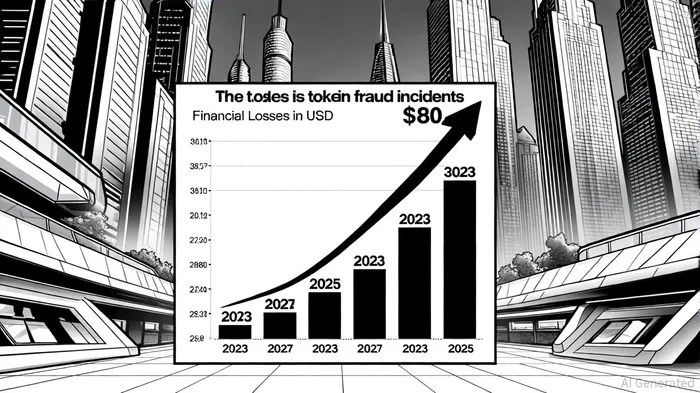
The tokenization era, spanning 2023–2025, has redefined the financial landscape, with institutions and regulators increasingly embracing digital assets. By early 2025, 76% of firms had integrated crypto into their portfolios, and 66% of traditional finance (TradFi) entities engaged with Decentralized Finance (DeFi) [1]. The launch of U.S. spot BitcoinBTC-- and Ether ETFs in 2024 further cemented crypto's legitimacy, enabling its inclusion in retirement accounts and pension funds [2]. Yet, this rapid adoption has coincided with a surge in fraud. Recent data reveals over 3,800 significant token fraud events between 2023 and 2025, resulting in losses exceeding $80 billion [3]. These figures underscore a critical challenge: how to balance innovation with investor protection in an era where technological complexity and regulatory gaps create fertile ground for exploitation.
The Fraud Landscape in the Tokenization Era
The tokenization era has introduced novel risks, including rug pulls, fraudulent stablecoins, and unregulated tokenized securities. A notable case is the collapse of Argentina's $LIBRA cryptocurrency, which was marketed as a tool for small businesses but ended in failure when its founders abandoned the project, leaving the asset worthless [4]. Such incidents erode public trust and highlight the need for robust safeguards.
The U.S. Federal Bureau of Investigation (FBI) reported a year-over-year increase in token fraud through 2022 [3], a trend that has only accelerated. The rise of tokenized real-world assets (RWAs), such as fractionalized real estate and carbon credits, has further expanded the attack surface. For instance, platforms offering tokenized real estate must navigate stringent SEC regulations, including the Howey Test, which determines whether a token qualifies as an investment contract [5].
Investor Protection: Regulatory and Technological Solutions
Regulatory bodies and industry stakeholders have responded with frameworks to mitigate risks. The U.S. Securities and Exchange Commission (SEC) has clarified that tokenized securities remain subject to existing federal laws, emphasizing the need for compliance with the Securities Act of 1933 [6]. In real estate tokenization, platforms must implement Know Your Customer (KYC) and Anti-Money Laundering (AML) protocols, investor accreditation systems, and transaction monitoring to detect suspicious activities [5].
Technological solutions are also emerging. Regulatory sandboxes, such as those in the European Union and Singapore, allow businesses to test tokenization models under controlled environments, identifying risks before widespread adoption [6]. Additionally, global initiatives like the UNCITRAL Model Law aim to harmonize cross-border standards, ensuring consistency in investor protections [6].
Case Studies: Lessons from the Frontlines
The U.S. GENIUS Act of 2025 exemplifies proactive regulation. By requiring payment stablecoins to be fully backed by low-risk assets like U.S. treasuries, the Act aims to prevent depegging events that destabilize markets [7]. It also mandates monthly audits and transparency in reserve composition, addressing concerns about issuer accountability [7].
In emerging markets, Ghana's 2024 Digital Asset Guidelines propose a framework to combat fraud by regulating Virtual Asset Service Providers (VASPs). These guidelines mandate customer due diligence (CDD), transaction monitoring, and collaboration between the Bank of Ghana and the SEC to ensure a coordinated approach [8]. While still in their early stages, these measures signal a commitment to balancing innovation with consumer protection.
The Path Forward
The tokenization era presents unprecedented opportunities but demands equally unprecedented vigilance. As institutions continue to allocate capital to digital assets—nearly half of hedge funds now hold crypto—regulators must ensure that investor protections evolve alongside the technology [1]. This includes clarifying the legal status of tokens, enforcing transparency in tokenized securities, and leveraging global frameworks to address cross-border challenges.
For investors, due diligence remains paramount. Understanding the regulatory environment, scrutinizing token projects for compliance, and utilizing platforms with robust AML/AML protocols can mitigate risks. As the industry matures, the interplay between innovation and regulation will define the resilience of the tokenized financial ecosystem.






Comentarios
Aún no hay comentarios