
Investor Protection in the Age of Digital Deception: Navigating AI-Driven Crypto Scams and the SEC's Response
The rise of artificial intelligence (AI) has ushered in a new era of innovation, but it has also empowered fraudsters to weaponize generative AI tools for cryptocurrency scams at an unprecedented scale. Between 2023 and 2025, AI-driven crypto scams surged by 456%, leveraging deepfakes, phishing, and AI-generated personas to deceive investors. These scams exploit the very technologies that promise to revolutionize finance, creating a paradox where the tools of progress become instruments of deception. For investors, the stakes have never been higher.
The AI-Driven Scam Landscape: Methods and Magnitude
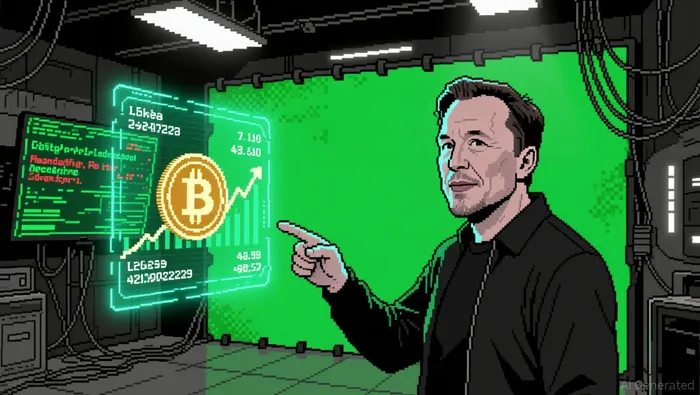
Scammers have weaponized AI to create hyper-realistic deepfakes of public figures, including Elon Musk and Jensen Huang, to promote fraudulent crypto projects. In one case, a deepfake video of Musk endorsing a "crypto giveaway" on YouTube led to over $5 million in losses according to reports. Similarly, live deepfakes of company executives during video calls have defrauded businesses of millions, as seen in a 2024 Hong Kong incident according to data. Beyond impersonation, AI tools generate convincing phishing websites, fake trading platforms, and AI-themed branding (e.g., "Quantum AI") to mimic legitimacy according to findings.
The financial toll is staggering. A 2025 report estimates that deepfakes accounted for 40% of high-value crypto scams in 2024, resulting in $4.6 billion in losses. Vishing (voice phishing) and malvertising campaigns further amplify the threat, with scammers using AI to clone voices and distribute cloaked content that appears benign to investigators. For example, a Spanish scam in 2025 used AI-generated ads with false celebrity endorsements to defraud 200 victims of 19 million EUR.
The SEC's Regulatory and Enforcement Response
The U.S. Securities and Exchange Commission (SEC) has responded to this crisis with a dual strategy: enforcement actions and investor education. In late 2025, the SEC filed charges against AI Wealth Inc., Lane Wealth Inc., and Morocoin Tech Corp., which defrauded investors of $14 million using AI-generated investment tips and fake trading platforms. These platforms, operating via WhatsApp groups, promised "risk-free" returns but conducted no real trading.
To address systemic risks, the SEC established the Cyber and Emerging Technologies Unit (CETU) in early 2025, focusing on AI-related misconduct and investor protection. The agency also restructured its enforcement approach by creating the Crypto Task Force, which prioritizes structured rulemaking over aggressive crackdowns. This shift reflects a broader regulatory strategy to foster innovation while safeguarding investors.
The SEC's 2025 examination priorities explicitly highlighted AI, cybersecurity, and crypto as key areas of focus. Examiners now scrutinize firms' AI-related disclosures, emphasizing transparency in how AI tools are used in trading or advisory services. Additionally, the SEC issued no-action letters in 2025 to clarify crypto custody and tokenization rules, reducing enforcement risks for startups while maintaining investor safeguards.
Investor Education: A Critical Defense
While regulatory actions are essential, the SEC has also prioritized educating investors about AI-driven scams. The Office of Investor Education and Assistance issued alerts warning the public to verify the legitimacy of platforms and avoid unsolicited investment offers. Animated public service campaigns, such as "Don't Open the Door to Scammers," highlight the risks of relationship-based fraud, where scammers build trust before extracting funds.
The SEC also emphasizes tools like scam-alert.io for checking wallet addresses and encourages investors to report suspicious activity according to guidance. For example, red flags include guaranteed returns, AI bots in WhatsApp groups, and fake government filings. By arming investors with knowledge, the SEC aims to reduce the success rate of scams.
Challenges and the Path Forward
Despite these efforts, challenges persist. AI's rapid evolution outpaces regulatory frameworks, and scammers exploit global jurisdictional gaps. The SEC's focus on "AI washing" - where companies make misleading claims about AI capabilities - highlights the need for clearer disclosure standards. Meanwhile, blockchain intelligence platforms like TRM Labs and Chainalysis are integrating AI to trace funds and detect fraud patterns, but individual vigilance remains critical.
For investors, the message is clear: verify, question, and report. Tools like scam-alert.io and resources from Investor.gov can help identify red flags. As AI-driven scams grow more sophisticated, the SEC's role in balancing innovation and protection will be pivotal.
Conclusion
The age of digital deception demands a proactive approach to investor protection. While AI has democratized access to financial tools, it has also democratized fraud. The SEC's enforcement actions, regulatory clarity, and education initiatives are vital, but they must be complemented by individual due diligence. As the line between innovation and deception blurs, investors must remain vigilant-because in the world of crypto, the most advanced technology is no match for a skeptical mind.







Comentarios
Aún no hay comentarios