
Investor Preparedness in a Politically Fractured Environment: Navigating U.S. Government Shutdown Risks
Investor Preparedness in a Politically Fractured Environment: Navigating U.S. Government Shutdown Risks
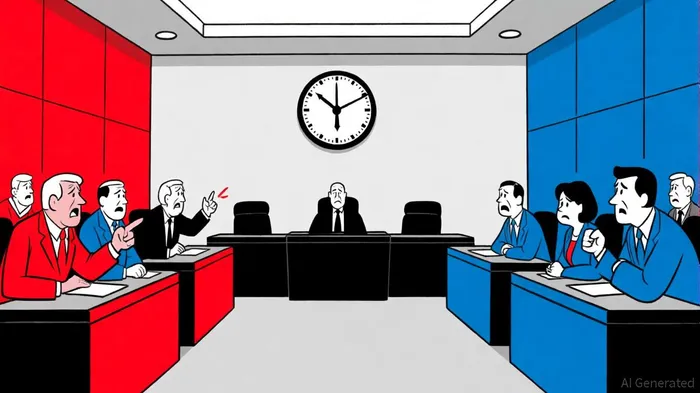
The U.S. government shutdown looms as a persistent specter in 2025, driven by a deeply polarized Congress and a Republican-controlled executive branch. With House Speaker Mike Johnson adopting a confrontational stance-leveraging AI-generated rhetoric to target Democratic leaders-the likelihood of a funding agreement appears increasingly precarious. According to a PBS NewsHour report, the inability to secure bipartisan support for a spending bill has created a high-stakes standoff, where Democrats hold critical leverage due to the 60-vote threshold required to pass a funding extension. This political stalemate not only threatens essential programs like the WIC initiative but also risks destabilizing the Affordable Care Act's (ACA) enhanced subsidies, which are set to expire at year-end, a point emphasized in the PBS analysis.
Historical Market Resilience: Lessons from Past Shutdowns
While the prospect of a shutdown raises alarm, historical data suggests that financial markets have historically demonstrated remarkable resilience. A study by Landmark Wealth Management reveals that the S&P 500 has averaged nearly flat performance during past shutdowns since 1976, with gains recorded in over half of the cases; the PBS fact-check summarizes some of these dynamics. For instance, during the 35-day 2018–2019 shutdown-the longest in U.S. history-the index surged over 10%, buoyed by the Federal Reserve's dovish monetary policy. Similarly, the 16-day 2013 shutdown saw the S&P 500 rise by 3.1%.
Fixed income markets have also shown adaptability, with Treasuries acting as a safe-haven asset during periods of political uncertainty. MFS Investment Management notes that 10-year Treasury yields typically decline by 2–5 basis points during shutdowns, reflecting investor flight to stability. However, prolonged shutdowns could theoretically pressure the U.S. credit rating if fiscal governance is perceived as unstable, though they might also catalyze long-term fiscal reforms-a concern raised in the PBS coverage.
Investor Strategies: Mitigating Risk in a Fractured Landscape
For investors, the key lies in maintaining a long-term perspective and avoiding overreactions to short-term volatility. Fidelity Institutional advises that diversified portfolios can weather temporary disruptions, as broader market trends are driven by corporate earnings and global macroeconomic factors rather than Washington dysfunction. However, sector-specific risks persist: companies reliant on government contracts, such as defense contractors or healthcare providers tied to ACA subsidies, may face short-term dislocations-an effect also noted in MFS's analysis.
Opportunistic investors might consider tactical adjustments. For example, defense and government contracting sectors could present undervaluation risks during a shutdown, as market overreactions create buying opportunities for fundamentally sound companies, a dynamic discussed in the MFS piece. Additionally, a strategic tilt toward Treasuries or high-quality bonds could hedge against near-term uncertainty, given their historical role as safe-haven assets, as highlighted by MFS.
The ACA Subsidy Conundrum: A Double-Edged Sword
The ACA's enhanced subsidies, which are set to expire by year-end, represent a critical focal point in the shutdown debate. Democratic proposals to make these subsidies permanent could face Republican opposition, citing trillion-dollar cost estimates, a contention examined in the PBS reporting. If not extended, enrollees-particularly in rural areas-could see out-of-pocket costs rise by 79% to 114%, creating socioeconomic ripple effects that indirectly impact market stability, according to the PBS coverage. Investors in healthcare stocks or insurers may need to monitor this issue closely, as policy outcomes could reshape industry dynamics.
Conclusion: Preparing for the Inevitable
While the U.S. government shutdown remains a political flashpoint, history suggests that markets are more resilient than they appear. Investors should prioritize diversification, long-term horizons, and sector-specific hedging strategies to navigate the uncertainty. As the 2025 fiscal deadline approaches, staying informed about legislative developments-particularly regarding ACA subsidies and bipartisan negotiations-will be critical. In a fractured political environment, preparedness is not just prudent-it is imperative.







Comentarios
Aún no hay comentarios