
Investor Optimism Peaks, Stocks Typically Fall 2.5% in Month After Signal
U.S. stock market investors are riding a wave of bullish sentiment, but could a contrarian indicator be on the horizon?
In October, global investor optimism saw its largest jump since June 2020, fueled by Federal Reserve rate cuts, China's stimulus measures, and growing expectations of a soft landing for the U.S. economy, according to a survey from Bank of America (BofA) of fund managers.
The survey revealed "the biggest jump in investor optimism since June 2020, driven by these positive economic factors. Equity allocations surged nearly threefold from the previous month, reaching a net 31% overweight, while bond allocations experienced a record shift to a net 15% underweight.
BofA also noted that its broadest measure of investor sentiment—based on cash levels, equity allocations, and economic growth expectations—rose sharply from 3.8 to 5.6, marking the largest monthly increase since June 2020.
However, the sharp drop in cash levels has triggered the first contrarian sell signal since last June, based on the bank's proprietary metrics. BofA warned, Since 2011, there have been 11 prior 'sell' signals, which saw global equity (ACWI) returns decline by an average of 2.5% one month after, and 0.8% three months after, the 'sell' signal was triggered. This points to potential downside risk for global equities, as reflected by the MSCI All-World Index.
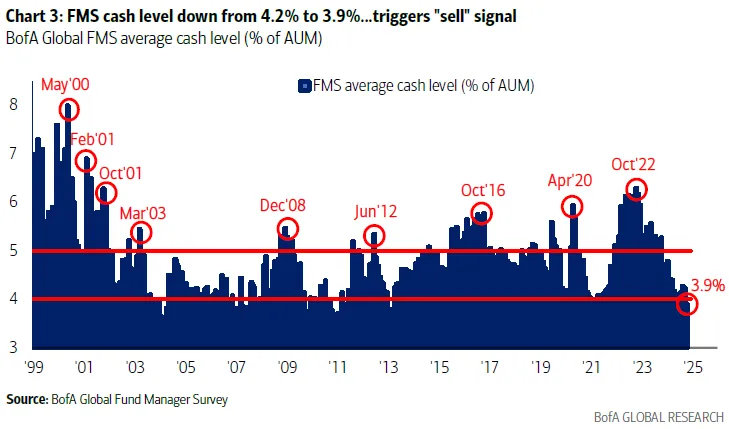 Despite the current wave of optimism, the emergence of this contrarian signal could suggest that caution is warranted for investors.





Comentarios
Aún no hay comentarios