
Investor Caution and Due Diligence in China's Expanding Transportation Sector
The Hongqi Bridge Collapse: A Case of Unforeseen Risks
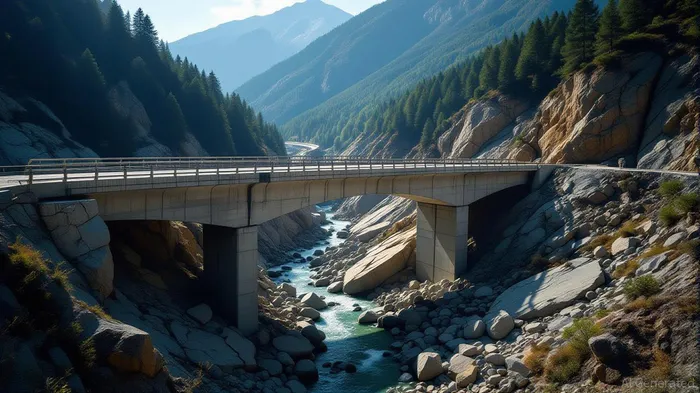
The Hongqi Bridge, part of National Highway 317 linking central China to Tibet, collapsed on November 11, 2025, after authorities had already closed it the previous day due to visible cracks and ground shifts in adjacent mountain slopes, according to a Times Now News report. The bridge's approach structure gave way as landslides, exacerbated by heavy rainfall and unstable terrain, caused the roadbed to collapse into a valley below, as noted in a DevDiscourse analysis. While no casualties were reported-thanks to the prior closure-the incident has sparked widespread concern about the durability of infrastructure in geologically fragile regions.
Experts point to a combination of factors: the bridge's location in a seismically active area, the speed of construction, and potential gaps in design or oversight, according to a Newsweek article. According to a Times Now News piece, the collapse highlights the risks of prioritizing timelines over thorough geological evaluations, particularly in mountainous zones where terrain instability is a known hazard.
Regulatory Scrutiny and the Absence of Policy Clarity
In the aftermath, Chinese authorities have intensified inspections of infrastructure projects in high-risk areas, but concrete policy changes remain elusive. A Reuters analysis notes that while regulators have emphasized "enhanced safety protocols," there is no public evidence of systemic reforms to address root causes such as inadequate site assessments or contractor accountability, as reported in a Reuters article. This ambiguity leaves investors in a precarious position: without clear regulatory frameworks or transparency in project management, it is difficult to assess the true risks associated with infrastructure-linked assets.
The lack of detailed official statements further complicates the picture. Unlike the 2024 collapse of Baltimore's Key Bridge, where the U.S. National Transportation Safety Board (NTSB) issued a public report and mandated vulnerability assessments for 68 other bridges, as reported in a CBS News article, China's response to the Hongqi incident has been opaque. This opacity raises questions about the reliability of safety assurances and the potential for similar failures in other projects.
Investor Confidence: A Delicate Balancing Act
The transportation infrastructure sector in China has historically attracted robust investment, driven by state-backed initiatives like the Belt and Road Initiative. However, the Hongqi Bridge collapse has introduced a new layer of caution. According to a The Economic Times article, the incident has "sparked questions about the long-term viability of infrastructure projects in geologically unstable areas" and may influence investor sentiment toward large-scale construction ventures.
While specific stock market data on the incident's impact is currently unavailable, broader trends suggest a growing emphasis on risk mitigation. For instance, companies like Solaris Energy Infrastructure, which focus on power solutions for data centers and industrial clients, have seen increased investor interest as demand shifts toward projects with clearer technological and environmental safeguards, as highlighted in a Marketscreener presentation. This divergence highlights a key takeaway: investors are increasingly favoring infrastructure assets with demonstrable resilience and transparency over those perceived as high-risk or speculative.
The Path Forward: Due Diligence in a High-Stakes Environment
For investors considering exposure to China's transportation sector, the Hongqi Bridge collapse serves as a stark reminder of the importance of due diligence. Key considerations include:
1. Geological Assessments: Prioritize projects with comprehensive site evaluations, particularly in mountainous or seismically active regions.
2. Regulatory Transparency: Favor companies and projects operating under clear, publicly disclosed safety standards and oversight mechanisms.
3. Contractor Track Records: Scrutinize the history of construction firms, focusing on their adherence to quality control and past performance in challenging environments.
As China continues to expand its infrastructure footprint, the balance between ambition and prudence will define the sector's future. The Hongqi Bridge collapse is not an isolated event but a symptom of broader challenges in managing infrastructure risk. For investors, the lesson is clear: in emerging markets, the road to growth is best navigated with a keen eye on safety, sustainability, and accountability.







Comentarios
Aún no hay comentarios