
Investment Resilience in a Fractured Global Trade Environment: Trump's Tariffs and the Crypto Market
The global trade landscape in 2025 is defined by a fractured equilibrium, with Donald Trump's aggressive tariff policies reshaping economic and geopolitical dynamics. From 2017 to 2021, Trump's trade war laid the groundwork for a new era of protectionism, but his 2025 escalation-featuring 100% tariffs on critical software imports from China and 34% reciprocal tariffs on the EU-has pushed markets into uncharted territory. For crypto investors, this environment demands a reevaluation of risk, resilience, and hedging strategies.
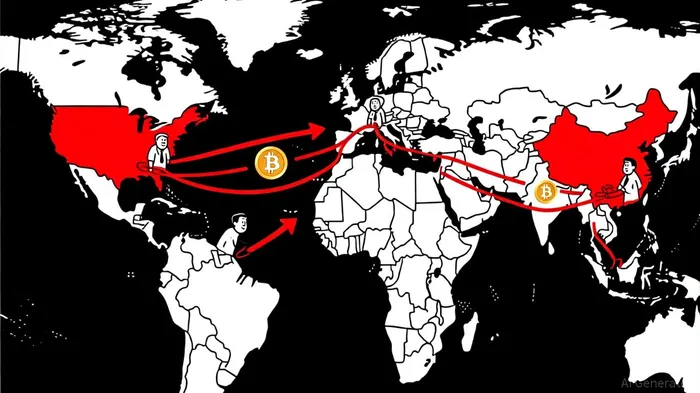
The Tariff Shockwave: Economic and Market Implications
Trump's 2025 tariff regime, characterized by a 10% global baseline and country-specific spikes (e.g., 34% on China, 27% on India), has disrupted supply chains and inflamed inflationary pressures. According to a Yale Budget Lab report a Yale Budget Lab report, these policies could raise U.S. consumer prices by 1.4–5.1%, disproportionately affecting lower-income households. For the crypto market, the most immediate impact came in October 2025, when Trump's 100% tariff on Chinese software imports triggered an 8.4% drop in BitcoinBTC-- to $104,782 and a $16 billion liquidation of leveraged long positions, according to a Forbes analysis a Forbes analysis. This volatility underscores crypto's sensitivity to geopolitical policy shifts, even as its decentralized nature theoretically insulates it from fiat-driven risks.
The ripple effects extend beyond price swings. Crypto mining operations in the U.S., reliant on imported hardware, now face a 50% tariff on Chinese equipment, threatening cost structures and operational viability, according to an Aurpay analysis an Aurpay analysis. This has accelerated a migration of mining power to regions with lower import barriers, risking centralization and network security vulnerabilities, as noted in a Newshub analysis a Newshub analysis.
Hedging in the Age of Geopolitical Uncertainty
As traditional safe-haven assets like gold and the U.S. dollar face headwinds, investors are increasingly turning to crypto-based strategies to navigate Trump-era trade tensions. A study in Economic Modelling a study in Economic Modelling notes that while Bitcoin's volatility limits its effectiveness as a pure hedge, crypto futures and stablecoins offer nuanced tools for managing risk.
- Futures and Leverage Management: Traders have adopted perpetual futures contracts to hedge spot positions. For example, investors holding Bitcoin opened short positions with 1–5x leverage during the October 2025 selloff, mitigating losses, as reported by a Phemex blog a Phemex blog.
- Dollar-Cost Averaging (DCA): Amid sharp price corrections, DCA strategies allowed investors to accumulate BTC and ETH at discounted rates, capitalizing on market dislocations, according to a CCN guide a CCN guide.
- Stablecoins and DeFi: With traditional banking systems strained by trade war-related transaction costs, stablecoins like USDCUSDC-- and decentralized finance (DeFi) protocols have gained traction as alternatives for cross-border settlements, per a Gate article a Gate article.
However, these strategies are not without pitfalls. The October 2025 crash revealed the fragility of leveraged positions, with platforms like Hyperliquid reporting $1.2 billion in losses within hours of the tariff announcement, according to the Forbes analysis. This highlights the need for disciplined risk management in a market where geopolitical shocks can trigger cascading liquidations.
The Path Forward: Resilience Through Diversification
The Trump tariff cycle has exposed crypto's dual role as both a victim and a tool of geopolitical risk. While its price volatility remains a liability, its censorship-resistant properties and 24/7 liquidity make it a compelling addition to diversified portfolios. Investors must balance exposure to crypto with traditional safe havens and macroeconomic hedges, such as gold or Treasury bonds, to navigate a world where trade wars and policy uncertainty are the new normal.
Conclusion
Trump's tariff policies have created a fractured global trade environment, but they have also catalyzed innovation in crypto-based risk management. For investors, the lesson is clear: resilience lies not in avoiding volatility but in mastering it. By combining crypto's unique attributes with time-tested hedging strategies, portfolios can weather the storms of geopolitical uncertainty-and emerge stronger on the other side.






Comentarios
Aún no hay comentarios