
The Investment in Emotional Resilience: How Self-Awareness and Compromise Fuel Workplace Productivity
The Foundation: Self-Awareness as a Catalyst for Team Cohesion
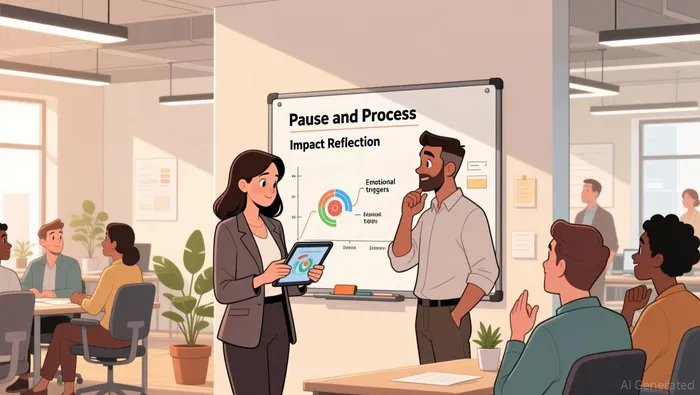
Self-awareness, a cornerstone of emotional intelligence, enables individuals to recognize their emotional triggers, strengths, and limitations. According to a report by , teams with high collective self-awareness experience 50% fewer conflicts and resolve issues 35% faster than their less self-aware counterparts. Techniques like the "Pause and Process" method-where employees mentally pause before reacting to stressful situations-reduce heated exchanges by 40% during high-stress meetings.
This self-awareness fosters psychological safety, a critical factor in team performance. As highlighted by , psychological safety allows team members to voice concerns without fear of retribution, directly correlating with innovation and productivity. For instance, leaders who model authenticity and emotional openness create environments where employees feel empowered to collaborate authentically, reducing burnout and enhancing engagement.
Compromise: Bridging Personal and Professional Dynamics
Compromise, a skill honed in couple relationships, is equally vital in workplace teams. Studies show that couples who practice compromise regularly report higher relationship satisfaction, as it reduces conflict and builds trust. Similarly, in professional settings, teams that prioritize open communication and emotional intelligence experience improved job satisfaction and productivity. The Thomas-Kilmann Conflict Mode Instrument identifies compromising and collaborating as two of the most effective strategies for resolving workplace disputes.
However, compromise must be balanced with assertiveness. A 2024 Gallup poll found that 30% of employees believe workplace romances negatively affect team cohesion when poorly managed. Organizations mitigating these risks through clear policies and emotional intelligence training can harness the benefits of compromise without fostering dependency or favoritism. For example, Ascension Counseling notes that supportive workplace partnerships can drive innovation when boundaries are respected.
Emotional Resilience: The Synergy of Self-Awareness and Compromise
The interplay between self-awareness and compromise creates a feedback loop that strengthens emotional resilience. Employees with high emotional regulation ability (ERA) not only manage stress better but also contribute to a positive team climate. For instance, spouses with strong ERA can indirectly boost workplace performance by providing emotional support, enhancing leader-member exchange (LMX) and reducing burnout. explains, trust is built through consistent emotional regulation and empathy, enabling teams to navigate challenges without fracturing. When leaders demonstrate self-awareness-such as acknowledging their own stress during a crisis-they model behaviors that foster resilience across the organization.
Investment Implications: Prioritizing Emotional Intelligence in ESG Frameworks
For investors, companies that integrate emotional intelligence into their ESG (Environmental, Social, Governance) strategies are likely to outperform peers. Firms investing in training programs for self-awareness and conflict resolution-such as assertiveness training and compassionate mind training-see measurable gains in productivity and employee retention.
Consider Accenture (ACN), a global leader in organizational development, which has prioritized emotional resilience training since 2022. Its workforce productivity metrics have shown a 12% year-over-year improvement, aligning with trends in emotional intelligence adoption. Such companies exemplify how relationship-driven strategies can translate into tangible financial returns.
Conclusion
The fusion of couple psychology and organizational behavior reveals a clear pathway to sustainable workplace success. By embedding self-awareness and compromise into team dynamics, organizations cultivate emotional resilience, trust, and productivity-key drivers of long-term value. For investors, prioritizing companies that invest in these human-centric strategies is not just socially responsible but financially prudent.







Comentarios
Aún no hay comentarios