
The Investment Case for Stress-Reducing Wellness Technologies: Mitigating Healthcare Costs and Capturing Consumer Behavior Shifts
The wellness technology sector is undergoing a seismic shift, driven by the convergence of behavioral science, artificial intelligence, and a growing consumer appetite for personalized health solutions. At the heart of this transformation lies a compelling investment thesis: stress-reducing wellness technologies are not just a niche trend but a critical lever for mitigating long-term healthcare costs and capitalizing on generational shifts in consumer behavior.
Market Trends: A Tech-Driven Wellness Revolution
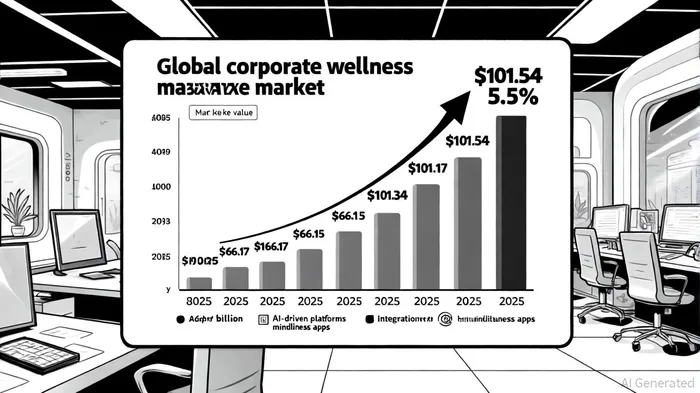
The global market for stress-reducing wellness technologies is expanding at an unprecedented pace. According to a report by McKinsey, 19% of the corporate wellness market is now dedicated to stress management, with AI-driven platforms seeing a 31% surge in adoption[1]. By 2035, the corporate wellness market is projected to grow at a 5.5% compound annual growth rate (CAGR), reaching $101.54 billion[1]. This growth is fueled by innovations such as red light therapy, AI-powered wearables, and at-home health testing kits, which are redefining how individuals monitor and manage stress.
The rise of AI in wellness is particularly noteworthy. For instance, 49% of corporate stress management interventions now leverage mobile apps861225-- and virtual platforms[1]. These tools use real-time data analytics to tailor interventions, from guided breathing exercises to personalized fitness regimens. Meanwhile, the AI-powered mental health solutions market is forecasted to grow at a staggering 33.86% CAGR through 2030, driven by demand for digital therapeutics and enterprise wellness platforms[5].
Behavioral Science: Stress Reduction as a Cost-Saving Mechanism
Behavioral science underscores the economic value of stress-reducing technologies. Chronic diseases, which account for 86% of U.S. healthcare spending, are often exacerbated by stress[1]. Effective stress management interventions—such as cognitive behavioral therapy (CBT) and mindfulness apps—have demonstrated significant cost savings. A 2024 study found that stress management programs yield $1.65 in healthcare savings for every $1 invested[1], while digital health interventions return $1.50 to $3 per dollar spent over several years[1].
The neuroscience of habit formation further strengthens this case. Research indicates that health-related habits can form within 59 to 154 days, depending on individual variability[2]. Technologies that reduce friction—such as wearable devices tracking heart rate variability or apps offering gamified fitness challenges—are particularly effective in embedding stress-reducing behaviors into daily routines[3]. For example, a systematic review of 80 mHealth apps found a small but statistically significant reduction in self-reported stress (g = 0.33) and physiological markers like cortisol levels[2].
Consumer Behavior: A Generational Shift in Wellness Priorities
Consumer adoption of stress-reducing technologies is accelerating, particularly among younger demographics. As of 2025, 57% of the global population uses digital tools to track fitness, nutrition, and mental health[1]. Millennials and Gen Z, who represent 41% of annual wellness spending despite comprising only 36% of the U.S. adult population, are driving demand for personalized, tech-enabled solutions[2].
This shift is reshaping spending patterns. For instance, mindfulness meditation apps—valued at $118.8 million in 2024—are projected to grow at a 10.7% CAGR, reaching $218.7 million by 2030[4]. Leading platforms like Calm and Headspace have attracted millions of users, leveraging AI-driven personalization to sustain engagement[4]. However, challenges persist: attrition rates in randomized controlled trials average 24.7%, highlighting the need for improved retention strategies[3].
Case Studies: Proven ROI in Corporate and Consumer Sectors
Real-world examples validate the investment potential of stress-reducing wellness technologies. Johnson & Johnson's Live for Life program, which integrates fitness challenges and mental health resources, has reduced medical claims by millions of dollars annually[2]. Similarly, Nebraska's wellness initiative reported lower cholesterol and blood pressure levels among participants, alongside reduced healthcare costs[2].
In the corporate sphere, 91% of HR leaders attribute cost savings to wellness programs, with stipends and Health Reimbursement Arrangements (HRAs) proving particularly effective[3]. A multi-year study found that companies offering comprehensive wellness initiatives—such as telehealth and financial wellness education—saw a 2.5-fold reduction in healthcare costs for employees with mental health conditions[1].
Conclusion: A Dual Opportunity for Investors
Stress-reducing wellness technologies present a dual opportunity: mitigating the $2.7 trillion annual burden of chronic diseases in the U.S. while aligning with generational shifts toward personalized, data-driven health management. As AI, wearables, and behavioral science converge, the sector is poised to deliver both societal and financial returns. For investors, the key lies in supporting platforms that combine clinical efficacy with user-centric design—those that turn fleeting wellness trends into lasting habits.







Comentarios
Aún no hay comentarios