
The Investment Case for Meal Kit Services: Why HelloFresh is a Strategic Play in the Evolving At-Home Dining Sector
The global meal kit market is undergoing a transformative phase, driven by a confluence of consumer demand for convenience, health-conscious eating, and sustainability. By 2025, the market is projected to reach USD 32.40 billion, with a compound annual growth rate (CAGR) of 13.96% expected to propel it to USD 105.03 billion by 2034. Another forecast suggests an even more aggressive expansion, with a CAGR of 17.1% pushing the market to USD 76.7 billion by 2034. These figures underscore a sector ripe for investment, particularly for companies like HelloFresh, which has positioned itself as a leader through innovation, customer-centric strategies, and environmental stewardship.
Consumer Demand: A Shift Toward Health, Time-Saving, and Personalization
The modern consumer's priorities are reshaping the at-home dining landscape. Busy professionals and families increasingly seek solutions that balance nutrition with time efficiency. Ready-to-cook meal kits dominate the market with a 60% share in 2024, driven by the need for meals that require minimal preparation. HelloFresh capitalizes on this trend by offering over 100 weekly rotating meal options, including vegetarian, pescatarian, and family-friendly choices. This variety is complemented by customization features, such as swapping proteins or upgrading ingredients, allowing users to tailor meals to dietary preferences and health goals.
Personalization is not just a buzzword but a strategic imperative. 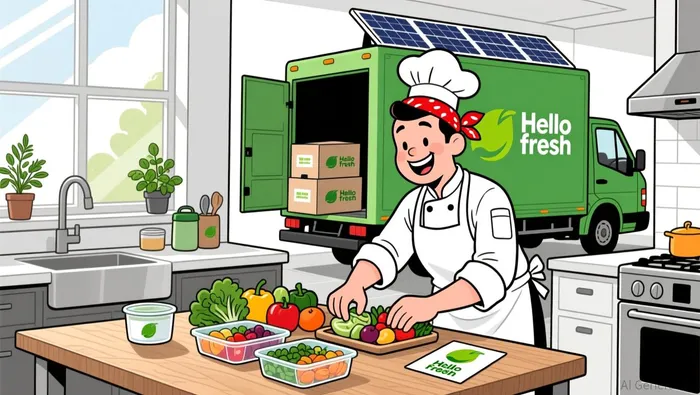 HelloFresh's intuitive ordering platform enables users to select meals based on dietary needs, household size, and even flavor preferences according to a 2025 survey. This level of customization aligns with broader consumer trends, where 68% of users cited "personalized meal options" as a key factor in choosing a meal kit service.
Convenience: Time Efficiency and Streamlined User Experience
Convenience remains the cornerstone of the meal kit industry. HelloFresh's focus on reducing prep time is a critical differentiator. The company's meals are designed to be ready in under 20 minutes, a feature that resonates with time-constrained consumers. This efficiency is amplified by pre-portioned ingredients and clear, step-by-step instructions, minimizing the cognitive load associated with cooking.
Cost is another factor often scrutinized in the meal kit sector. HelloFresh addresses this by offering competitive pricing, particularly for new subscribers. For example, a two-meal-per-week plan for two people starts at $56.95, with discounts available for multi-week commitments. While some critics argue that meal kits are pricier than traditional grocery shopping, HelloFresh's value proposition-reduced food waste, portion control, and time savings-often offsets the upfront cost.
Sustainability: A Competitive Edge in an Eco-Conscious Market
Sustainability is no longer a peripheral concern but a core driver of consumer choice. HelloFresh has embedded eco-friendly practices into its operations, from sourcing to packaging. Nearly all of its packaging is recyclable, and meals arrive in individual brown paper bags, reducing clutter and waste according to company data. The company's U.S. facilities have achieved a 63% reduction in carbon emissions since 2019 by transitioning to 100% renewable energy and adopting energy-efficient technologies according to official reports.
HelloFresh's sustainability efforts are further validated by third-party certifications. Its distribution centers are certified under BRCGS Storage & Distribution standards, a globally recognized benchmark for food safety. Additionally, an independent life cycle assessment (LCA) conducted by Quantis-a third-party sustainability consultancy-has evaluated the environmental footprint of HelloFresh's meal kits, ensuring transparency and adherence to international standards according to company documentation.
The company has also set ambitious carbon reduction goals, aiming to cut emissions from production facilities by 66% per euro of revenue compared to a 2019 baseline by 2025. These initiatives align with growing consumer demand for sustainable brands, where 72% of 2025 survey respondents indicated they prioritize companies with strong environmental practices.
Addressing Critiques: Balancing Growth and Responsibility
Critics of meal kit services often highlight cost, prep time, and environmental impact. HelloFresh's "ReFresh" strategy, which prioritizes customer retention over aggressive acquisition, has led to a 9.5% revenue decline in Q2 2025 but also reduced customer churn and improved meal ratings. This shift reflects a long-term vision to build a loyal customer base rather than chasing short-term volume.
Environmental concerns are mitigated by HelloFresh's commitment to reducing food waste by 52% in production facilities by 2025 according to company goals. The company also partners with ethical suppliers and invests in renewable energy, reinforcing its role as a responsible player in the food industry according to sustainability reports.
Conclusion: A Strategic Investment in the Future of At-Home Dining
The meal kit market's growth trajectory, fueled by convenience, personalization, and sustainability, positions HelloFresh as a compelling investment. Its ability to adapt to consumer trends-whether through customizable menus, time-efficient solutions, or eco-friendly practices-demonstrates a forward-thinking approach. While challenges like cost and competition persist, HelloFresh's strategic focus on retention, innovation, and sustainability creates a durable competitive advantage. For investors seeking exposure to the evolving at-home dining sector, HelloFresh offers a well-positioned bet on the future of food.







Comentarios
Aún no hay comentarios