
Investing in Sustainable Urban Infrastructure as a Climate Mitigation Strategy
Decentralized Energy Systems: Resilience and ROI
Decentralized energy systems, including microgrids and prosumer-driven models, are reshaping urban energy landscapes. By reducing transmission losses and enhancing grid resilience, these systems lower operational costs while enabling communities to generate and manage their own power. For instance, Copenhagen's decentralized energy infrastructure has achieved an 80% reduction in emissions since 1990, while New York City's initiatives have cut municipal energy expenditures by 20%.
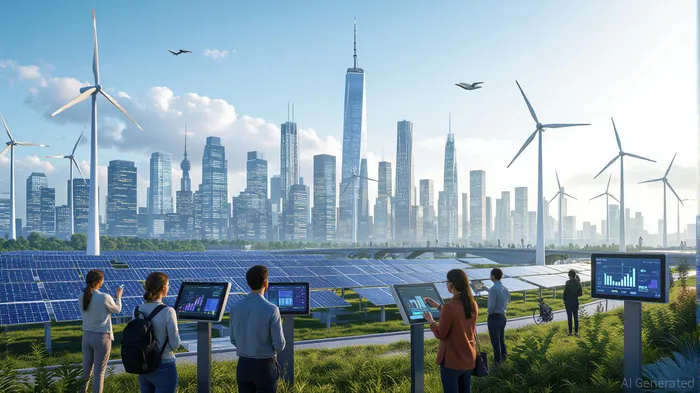 The integration of renewables like solar and wind further amplifies these benefits. A 2023 study highlights that decentralized systems can deliver ROI of 18–30% through the Ecosystem Economics of Mutuality (EEoM) model, which prioritizes multi-capital reinvestment cycles in regenerative industries. This approach outperforms conventional ESG funds and aligns with global sustainability targets. Cities like Barcelona and Tampere are pioneering circular energy systems, producing e-methane and hydrogen from CO₂ emissions, thereby transforming waste into valuable resources.
Solar-Powered Transit: A Triple Win for ESG
Solar-powered transit systems are emerging as a cornerstone of urban decarbonization. By replacing fossil-fuel-dependent public transport with solar energy, cities reduce emissions while cutting energy costs. For example, Newark, Norfolk, and Tucson have implemented solar-powered transit projects that lower municipal energy expenditures by 20%. These systems also address social equity by improving access to clean energy in underserved communities.
From an ESG perspective, solar transit aligns with environmental goals (carbon reduction), economic goals (job creation in renewable sectors), and governance goals (transparent, community-driven energy policies). The IPCC underscores the urgency of such transitions, noting that global emissions must peak before 2025 and be nearly halved by 2030 to meet climate targets. Solar transit, therefore, is not just an environmental imperative but a strategic investment in long-term urban resilience.
Behavioral Interventions: The Human Factor in Energy Efficiency
Even the most advanced technologies require human cooperation to maximize their impact. Behavioral economics offers tools to nudge energy-conscious behaviors, enhancing the effectiveness of green infrastructure. A 2024 study in Romania demonstrated that framing energy savings in terms of health benefits-rather than economic or environmental ones-reduced electricity consumption by 2.9–4.3% across 30,000 households. Similarly, social comparison interventions, which inform users about their energy use relative to neighbors, have proven effective in cities like Monaco, where randomized trials showed measurable reductions in consumption.
These interventions are particularly critical in low-income communities, where energy poverty and behavioral biases like myopia can hinder adoption. Tailored approaches, such as collective health messaging, not only improve efficiency but also foster social equity. By integrating behavioral insights into urban planning, cities can amplify the ROI of physical infrastructure investments.
The IPCC's Urgent Call and the Path Forward
The IPCC's 2023 report leaves no room for complacency: global emissions must peak by 2025, and net-zero pathways require a 63–76% reduction by 2050. Decentralized systems, solar transit, and behavioral interventions are not optional-they are essential components of any viable climate strategy. For investors, these sectors represent a unique confluence of risk mitigation, regulatory tailwinds, and scalable returns.
Cities are already leading the way. Tampere's circular energy systems, Barcelona's grid modernization, and New York's emission cuts demonstrate that the transition is both feasible and profitable. As the UN emphasizes, policies promoting renewables and efficiency are accelerating the shift from fossil fuels. Investors who act now will not only contribute to climate goals but also position themselves to capitalize on the trillion-dollar opportunities in sustainable urban infrastructure.
Conclusion
The case for investing in sustainable urban infrastructure is clear. Decentralized energy systems, solar-powered transit, and behavioral interventions offer a triple win: environmental impact, social equity, and financial returns. With the IPCC's timeline tightening and ESG frameworks evolving, the window to act is narrowing. For investors, the message is unequivocal: the future of urban energy is decentralized, renewable, and human-centered.







Comentarios
Aún no hay comentarios