
Investing in the Skies: Securing Aviation's Future Through Drone Detection and Air Traffic Management
The aviation industry stands at a crossroads. As drones proliferate-from delivery bots to surveillance tools-the risks they pose to public safety, critical infrastructure, and air traffic management have become impossible to ignore. According to a Grand View Research report (Grand View Research report), the global drone detection market was valued at USD 729.8 million in 2024 and is projected to grow at a staggering compound annual growth rate (CAGR) of 29.0% through 2030. This surge reflects a market grappling with urgent vulnerabilities: unauthorized drone incursions at airports, smuggling operations near power plants, and the existential challenge of integrating unmanned systems into crowded urban skies. For investors, the intersection of security and innovation presents a compelling opportunity.
The Rise of Drone Detection: A Market Fueled by Necessity
The urgency driving drone detection technologies is rooted in real-world crises. In 2024, a series of drone-related incidents at European airports-including a near-miss with a commercial airliner-sparked regulatory overhauls and a rush to adopt advanced detection systems. Radar remains the dominant technology, capturing 42% of the market in 2024, but its evolution with artificial intelligence (AI) and machine learning (ML) is redefining the sector, as the Grand View Research report notes. These enhancements allow systems to distinguish between a flock of birds and a rogue drone, reducing false alarms and improving response times.
Key players like Lockheed MartinLMT--, Raytheon, and DroneShield are leading the charge, leveraging partnerships with governments and airports to deploy integrated systems that combine radar, acoustic sensors, and GPS tracking, according to the Grand View Research report. For example, Fortem Technologies' AI-powered "SkyWatch" platform not only detects drones but also identifies their operators, offering a layer of accountability previously absent in the industry, the Grand View Research report highlights. Investors should note that the market's growth is not just technological but regulatory: stricter airspace rules in controlled zones are creating a "pull" for solutions that ensure compliance.
Air Traffic Management for Drones: The Next Frontier
While drone detection addresses immediate threats, the broader challenge lies in managing the skies themselves. The global Unmanned Traffic Management (UTM) market, valued at USD 1.1 billion in 2024, is expected to grow at a CAGR of 19.4% through 2034, according to a GM Insights report (a GM Insights report). This expansion is driven by the rise of urban air mobility (UAM)-think drone deliveries, aerial ambulances, and even passenger drones-and the need to prevent mid-air collisions in congested airspace.
AI and 5G are the twin engines of this transformation. UTM platforms like Airmap and Leonardo's systems use machine learning to process real-time data from thousands of drones, optimizing flight paths and resolving conflicts autonomously, the GM Insights report explains. Meanwhile, 5G's low-latency connectivity ensures seamless communication between drones and ground stations, a critical factor for time-sensitive operations like emergency response. The software segment of the UTM market, which accounts for 48% of revenue, is particularly attractive, as it underpins everything from regulatory compliance to dynamic rerouting, the GM Insights report finds.
North America currently leads the UTM market, capturing 35.5% of revenue in 2024, thanks to its technological infrastructure and forward-leaning policies, the GM Insights report states. However, the Asia-Pacific region is fast catching up, with countries like India and Japan investing heavily in drone logistics and smart city initiatives, the GM Insights report adds. For investors, this geographic diversification suggests opportunities in both established and emerging markets.
Vulnerabilities and the Path Forward
Despite these advancements, gaps remain. Current systems struggle with detecting small, stealthy drones or managing high-density drone traffic in urban areas. Moreover, the lack of a unified global regulatory framework creates fragmentation, complicating cross-border operations. Yet these challenges are not insurmountable. Companies prioritizing R&D-such as Thales and DJI-are already testing next-generation solutions, including swarm detection algorithms and blockchain-based authentication protocols, the Grand View Research report notes.
The integration of drone detection and UTM systems is another critical trend. As airports and critical infrastructure sites adopt holistic security platforms, the demand for interoperable technologies will soar. For instance, a 2025 pilot program at Heathrow Airport demonstrated how linking drone detection with UTM systems reduced response times to threats by 60%, a finding reported by the Grand View Research report. Such synergies highlight the value of investing in firms that offer end-to-end solutions.
Conclusion: A Sky Full of Opportunities
The aviation security landscape is evolving at breakneck speed, and investors who act now stand to benefit from a market poised for exponential growth. Drone detection and UTM technologies are no longer niche-they are foundational to the future of air travel, logistics, and urban infrastructure. With AI, 5G, and regulatory tailwinds accelerating adoption, the time to invest is clear. As one industry analyst put it, "The skies are no longer empty. They're the next frontier of innovation-and risk."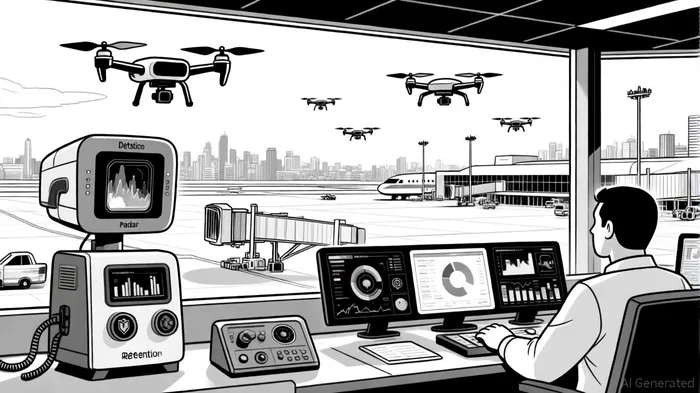





Comentarios
Aún no hay comentarios