
Investing in Resilient Founders: Lessons from Chung Ju-Yung and the Hyundai Story
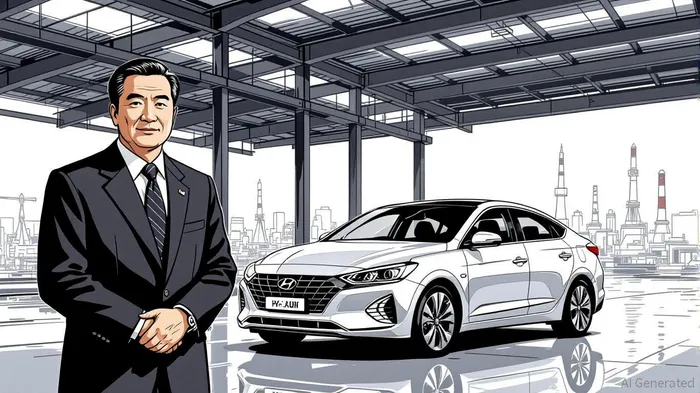
In the annals of business history, few stories rival the meteoric rise of Hyundai under . From a humble farmer's son in post-war Korea to the architect of a global industrial empire, Chung's journey is a masterclass in resilience, strategic foresight, and values-driven leadership. For investors, his legacy offers a blueprint for identifying founders who not only survive crises but emerge stronger, building enterprises that outperform peers by decades.
The Crucible of Adversity: How Chung Built Resilience into Hyundai's DNA
Chung Ju-Yung's leadership was forged in the fires of economic turmoil. During the 1997 , while competitors slashed R&D budgets to preserve cash, . This commitment to innovation positioned the company as a pioneer in hydrogen and electric vehicle (EV) technologies—sectors that now define the future of mobility. By 2025, , cementing its status as a global leader in clean energy.
The 2008 further tested Chung's resolve. Executives shared meals with workers, adopted cost-saving measures like double-sided printing, and prioritized cash flow preservation. Yet, even in lean times, Hyundai reinvested savings into R&D and employee training. This “strategic frugality” allowed the company to outperform peers during recovery, .
The GRIT Framework: Four Pillars of Enduring Leadership
Chung's success stemmed from a philosophy encapsulated in the GRIT framework: Growth, R&D reinvestment, Innovation, and Trust.
- Growth through Diversification: By expanding into construction and shipbuilding, Hyundai insulated itself from sector-specific downturns. This cross-industry strategy ensured stability even as automotive markets fluctuated.
- R&D Reinvestment: Maintaining R&D spending during crises positioned Hyundai to lead in emerging technologies. By 2025, , a testament to long-term thinking.
- Innovation as a Core Value: Chung's emphasis on innovation wasn't just about products—it was about processes. AI-driven manufacturing and modular design principles reduced costs while accelerating time-to-market.
- via People-Centric Culture: Profit-sharing schemes, open communication, and treating employees as partners fostered loyalty and productivity. .
Actionable Criteria for Spotting the Next “Chung Ju-Yung”
For investors seeking to identify resilient founders in emerging markets, Chung's story offers a checklist:
- : Look for leaders who maintain R&D and innovation budgets during downturns. .
- High : A strong ESG score correlates with long-term resilience. .
- Strategic Frugality: Founders who reinvest savings into innovation rather than cutting costs for short-term gains tend to build more durable enterprises.
- .
The : Why Resilient Founders Outperform
Chung Ju-Yung's legacy is not just a corporate success story—it's a case study in how leadership traits translate to market outperformance. . For example, TSMCTSM-- and Samsung, both influenced by Chung's philosophy, .
Emerging markets, in particular, offer fertile ground for spotting the next Chung Ju-Yung. Founders who navigate hyperinflation, political instability, or resource scarcity while maintaining a long-term vision often build enterprises with structural advantages. Consider the rise of African tech startups led by founders who prioritized employee training and R&D during economic downturns—these companies are now outpacing global competitors in AI and fintech.
Conclusion: Building Portfolios for the Long Haul
The Hyundai story underscores a timeless truth: resilient founders don't just survive—they redefine industries. By focusing on leaders who combine strategic frugality, innovation, and a people-centric culture, investors can uncover undervalued enterprises poised to thrive in uncertainty. As the world grapples with climate change, geopolitical shifts, and technological disruption, the next generation of Chung Ju-Yungs will emerge—not in boardrooms, but in the grit and determination of those who refuse to let adversity define them.
For investors, the lesson is clear: back the builders, not just the trends. The future belongs to those who, like Chung Ju-Yung, turn crises into catalysts for enduring value.







Comentarios
Aún no hay comentarios