
Investing in Resilient Businesses: Lessons from Hyundai's Chung Ju-Yung on Leadership and Long-Term Growth
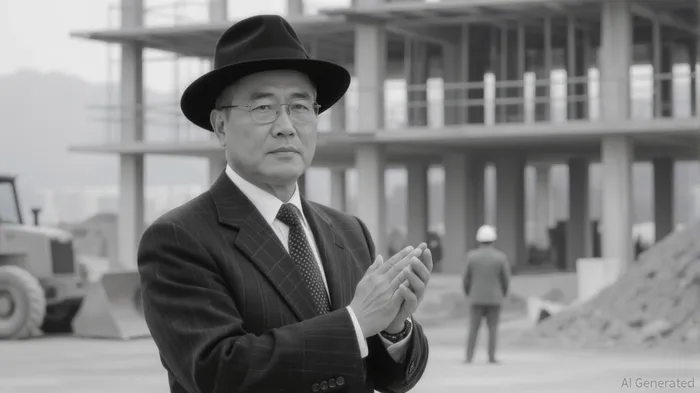
In the annals of business history, few leaders have left as indelible a mark as Chung Ju-Yung, the visionary founder of Hyundai. His journey from post-war South Korea to global industrial861072-- prominence offers a masterclass in how founders' mental models and operational discipline can drive sustainable business success—and, by extension, investor returns. For today's investors, the lessons from Chung's philosophy are not just historical curiosities but actionable frameworks for identifying companies poised to thrive in an era of volatility and disruption.
The Three Pillars of Resilience: Execution, Frugality, and People-First Culture
Chung Ju-Yung's leadership was anchored in three principles that remain relevant across industries and geographies:
Relentless Execution
Chung's mantra of “shortening the time” prioritized speed and efficiency. In 1965, he made a bold $8 million investment in 2,000 advanced construction machines—a decision that seemed risky in a post-war economy but ultimately positioned Hyundai as a leader in infrastructure and manufacturing. This focus on agility and precision allowed Hyundai to outpace competitors and scale rapidly.Operational Frugality
Frugality was not a cost-cutting tactic for Chung but a moral and strategic imperative. He mandated that employees use both sides of paper, avoided unnecessary expenditures, and reinvested profits into innovation. This discipline ensured that Hyundai could weather economic downturns while maintaining long-term growth.People-First Leadership
Chung treated employees as partners, not tools. Profit-sharing models, free meals, and a culture of mutual trust fostered loyalty and innovation. His belief in the “power of the human spirit” translated into a workforce that viewed the company's success as their own.
The GRIT Framework: Growth, Recognition, Inspiration, Trust
Chung's philosophy can be distilled into a GRIT framework, a model that modern investors should recognize in today's high-performing companies:
- Growth: Strategic investments in infrastructure and innovation (e.g., Hyundai's pivot to automotive manufacturing).
- Recognition: Acknowledging employee contributions through profit-sharing and empowerment.
- Inspiration: Cultivating a culture of relentless improvement and shared purpose.
- Trust: Building long-term relationships with stakeholders through transparency and ethical practices.
Modern Parallels: Founder-Led Companies and Asymmetric Returns
The principles that built Hyundai's resilience are echoed in today's most successful founder-led companies. Consider Tesla, whose CEO Elon Musk has championed frugality in operations while reinvesting billions into AI-driven manufacturing. Similarly, Amazon has leveraged a people-first culture and relentless execution to dominate e-commerce and cloud computing. These companies, like Hyundai, prioritize long-term value over short-term gains, a strategy that has delivered asymmetric returns for investors.
For instance, Tesla's stock surged 500% from 2023 to 2025, driven by its disciplined approach to scaling production and its founder's vision for electrification. Amazon's operating margin, meanwhile, has consistently outperformed peers by maintaining a lean cost structure while reinvesting in automation and logistics.
Investment Implications: How to Apply Chung's Legacy
For investors seeking resilience, the key lies in identifying companies that embody Chung's principles:
- Operational Frugality: Look for firms that avoid unnecessary costs while strategically investing in innovation. For example, NVIDIA has maintained high margins by focusing on R&D for AI and semiconductors, avoiding bloated overhead.
- People-First Cultures: Companies with profit-sharing models, low turnover, and high employee satisfaction (e.g., Salesforce) tend to outperform peers in innovation and customer loyalty.
- Execution-Driven Leadership: Founders who prioritize speed and precision—such as Jeff Bezos at Amazon—often build organizations capable of adapting to market shifts.
Conclusion: Building Portfolios for the Long Run
Chung Ju-Yung's legacy is a testament to the power of values-driven leadership. His ability to balance frugality with bold investments, and his unwavering focus on people and execution, created a business that not only survived but thrived through decades of economic cycles. For investors, the takeaway is clear: resilient businesses are built by founders who prioritize long-term value, operational discipline, and human capital.
In an era where short-termism often dominates, the principles of Chung Ju-Yung offer a roadmap for identifying companies that will compound value over time. By investing in businesses that mirror his GRIT framework, investors can build portfolios that endure market turbulence and capitalize on the next wave of innovation.
This article is intended for informational purposes only and does not constitute financial advice. Always conduct due diligence before making investment decisions.







Comentarios
Aún no hay comentarios