
Investing in High-End Fashion Brands Favored by Taylor Swift and Her Stylist
The intersection of celebrity influence and luxury fashion has long been a driver of brand value and consumer demand. Taylor Swift, a global cultural icon, has cemented her role as a tastemaker through strategic collaborations and stylistic choices that elevate brands like Gucci, Miu Miu, Christian Louboutin, and Vivienne Westwood. While direct financial metrics tied to her influence remain elusive, the broader market dynamics and brand visibility generated by her partnerships suggest a compelling investment narrative for fashion houses aligned with her aesthetic.
The Power of Celebrity Endorsement in Luxury Fashion
Taylor Swift's collaborations with luxury brands are not merely transactions; they are cultural events. Her custom-designed stage outfits from Christian Louboutin and Vivienne Westwood, for instance, have sparked viral social media discussions, amplifying brand awareness among her 200 million+ global fanbase. This kind of engagement translates into intangible yet critical value for luxury houses-namely, heightened brand equity and aspirational appeal. According to a report by , such visibility often precedes measurable sales growth, even if the direct correlation is not immediately quantifiable.
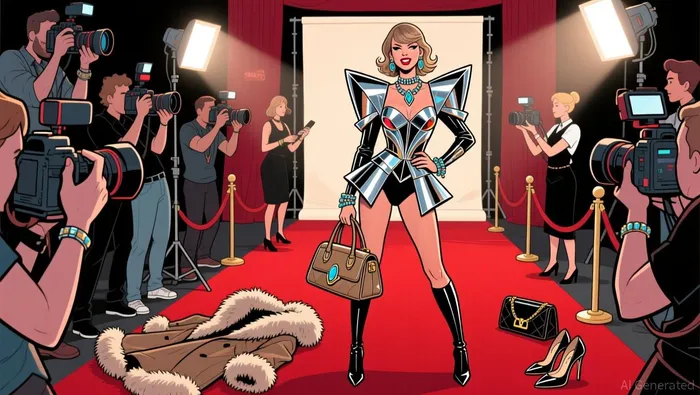
Swift's stylist, known for curating looks that blend nostalgia with modernity, has further solidified the relevance of these brands. Gucci and Miu Miu, for example, have been prominently featured in high-profile styling credits, and . These placements reinforce the brands' positions in the luxury market, particularly among Gen Z and millennial consumers, who prioritize digital engagement and storytelling.
Market Realities: Challenges and Opportunities
The luxury fashion sector in 2025 is navigating a complex landscape. While the broader market is projected to grow to $418.89 billion by 2028, driven by rising disposable incomes and digital commerce, individual brands face headwinds. Gucci, for instance, reported a 20% revenue decline in Q2 2025, reflecting a broader industry-wide "structural demand problem". Similarly, Miu Miu's growth slowed to 40% in the same period, down from 93% in 2024 according to the same report. These trends underscore the importance of differentiation and cultural relevance in sustaining brand momentum.
However, brands that align with celebrity-driven narratives-like those favored by Swift-appear better positioned to weather these challenges. Vivienne Westwood's bold designs, for example, have resonated with Swift's artistic identity, creating a symbiotic relationship that elevates both the brand and the artist. Meanwhile, Christian Louboutin's red-soled shoes, often seen in Swift's public appearances, continue to dominate conversations around luxury footwear, a category expected to grow steadily due to their status as "must-have" items.
Investment Potential: Balancing Risk and Resilience
For investors, the key lies in identifying brands that leverage celebrity influence to build long-term equity rather than relying on short-term hype. Hermès, for instance, has demonstrated resilience in 2025, with an 18% increase in brand value, thanks to its focus on heritage and exclusivity. While not directly tied to Swift, this success highlights the importance of storytelling and craftsmanship-qualities that brands like Miu Miu and Gucci are also emphasizing through their collaborations with Swift as documented in .
The risk, however, is significant. The luxury market is highly fragmented, with 67% of the market held by smaller or niche brands. Additionally, challenges like counterfeiting and gray market sales threaten brand integrity. Investors must weigh these risks against the potential rewards of backing brands that align with cultural movements. For example, Miu Miu's recent focus on Gen Z consumers-through campaigns featuring Swift's aesthetic-positions it to capitalize on the next wave of luxury demand according to consumer insights from .
Conclusion: A Strategic Play for the Future
Taylor Swift's influence on high-end fashion is a testament to the power of celebrity in shaping consumer behavior. While direct financial data linking her collaborations to sales spikes remains scarce, the sustained media presence and brand alignment with her image suggest a strategic advantage. For investors, the opportunity lies in supporting brands that not only ride the wave of celebrity culture but also adapt to evolving consumer priorities, such as sustainability and digital engagement as noted in .
In a market where "structural demand" is waning according to industry analysis, the ability to capture cultural relevance-through partnerships with icons like Swift-may prove to be the most valuable asset of all.







Comentarios
Aún no hay comentarios