
Investing in the Future: Strategic Positioning in the Global Robotaxi Market and AI-Driven Gig Economy
The global robotaxi market is on the cusp of a transformative decade, driven by rapid advancements in autonomous vehicle (AV) technology, the rise of electric vehicles (EVs), and the integration of artificial intelligence (AI) into mobility ecosystems. For investors, this convergence of innovation and demand presents a compelling opportunity-but one that requires careful strategic positioning.
Market Growth and Key Drivers
The robotaxi market is projected to grow at an explosive rate, with multiple authoritative sources forecasting a compound annual growth rate (CAGR) exceeding 50% over the next decade. By 2030, the market is expected to reach USD 43.76 billion, up from an estimated USD 1.95 billion in 2025 according to Markets and Markets. Another report suggests an even steeper trajectory, projecting a 2034 market size of USD 188.91 billion at a CAGR of 52.54%. These figures underscore the sector's potential, fueled by three core drivers:
1. Technological Advancements: Innovations in Level 4 and Level 5 automation, AI, and real-time sensor fusion have enhanced the reliability and scalability of robotaxi services according to Grand View Research.
2. Sustainability Imperatives: The shift to EVs for robo-taxis aligns with global decarbonization goals and offers cost advantages for fleet operators according to Precedence Research.
3. Regulatory Support: Governments in the U.S., China, and the UAE are creating frameworks to accelerate AV testing and deployment according to Fortune Business Insights.
Strategic Partnerships and Key Players
- Waymo and Baidu Apollo lead in operational scale, with Waymo reporting 14 million robotaxi trips in 2025 and Baidu's Apollo Go achieving profitability in cities like Wuhan according to CNBC. Baidu's collaboration with UberUBER-- to deploy driverless vehicles in international markets highlights the importance of cross-border partnerships according to Reuters.
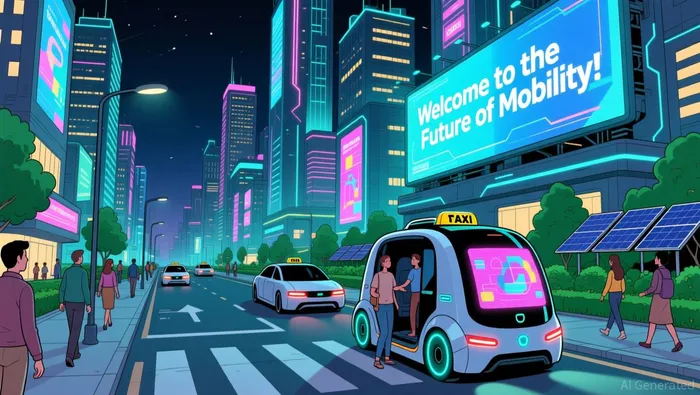 Uber is transitioning from a gig economy platform to a mobility infrastructure provider. Its alliances with Baidu, LucidLCID--, and Nuro aim to deploy 20,000 robotaxis by 2026, while its partnership with Nvidia to launch 100,000 robotaxis by 2027 underscores the role of AI-driven platforms according to EV.com.
 - NIO and Cruise are also making strategic moves. NIO's investments in green hydrogen and AI-driven robotics, coupled with its global expansion into Europe and Asia, position it as a key player in sustainable mobility according to The EV Report. Meanwhile, Cruise's collaboration with Uber to integrate autonomous Chevy Bolts into the Uber app marks a pivotal step in mainstreaming AVs according to Fast Company.
AI-Driven Gig Economy Integration
The integration of robotaxes into the gig economy is redefining labor dynamics. Platforms like Uber are leveraging AI to optimize fleet management and reduce costs. However, platforms are also exploring new revenue streams for gig workers, such as AI data labeling tasks according to CNBC. For investors, this duality-technological efficiency versus labor disruption-requires balancing short-term gains with long-term social and regulatory risks.
Investment Opportunities and Risks
The robotaxi market offers multiple entry points for investors:
- Hardware Providers: Companies supplying LiDAR, sensors, and EVs (e.g., Nvidia, Lucid) are critical to the infrastructure layer according to Software Senti.
- Software Platforms: AI-driven mobility solutions, such as Nvidia's DRIVE AGX and Baidu's Apollo, enable scalable autonomy according to Endroid.
- Mobility-as-a-Service (MaaS) Operators: Firms like Uber and Waymo are building ecosystems that integrate robotaxes with public transit and smart city infrastructure according to Markets and Markets.
However, risks remain. Regulatory uncertainty, high capital expenditures, and public skepticism about safety could delay adoption. For instance, Cruise faced setbacks in 2023 after an incident involving a pedestrian, highlighting the need for robust safety protocols.
Conclusion
The robotaxi market is a high-growth, high-stakes arena where technological innovation, strategic partnerships, and regulatory agility will determine success. Investors should prioritize companies with strong AI capabilities, scalable infrastructure, and diversified revenue streams. While the gig economy's transformation poses challenges, it also creates opportunities for platforms that can adapt to a hybrid model of human and autonomous labor. As the market matures, early movers with a clear vision for sustainable urban mobility will likely dominate the next decade.





Comentarios
Aún no hay comentarios