
Investing in the Future: How STEM Education and Workforce Development Are Fueling Tech-Driven Growth
A Booming Market with Clear Trajectory
The STEM education market is surging, with the K-12 segment alone projected to reach $49.88 billion in 2025, growing at a compound annual rate of 13.5% from 2024 to 2025. By 2029, this figure is expected to balloon to $84.24 billion, driven by digital resources, AI integration, and a heightened focus on STEM skills for economic competitiveness. North America dominates the market, but the Asia-Pacific region is the fastest-growing, reflecting a global shift in demand for tech-savvy talent.
This growth isn't just about numbers-it's about necessity. As industries like semiconductors and renewable energy scale, the U.S. faces a critical shortage of domestic STEM workers. Currently, 45% of STEM employees with doctoral degrees are foreign-born, underscoring the urgency to cultivate homegrown talent.
Bridging the Gap: Education Meets Industry Needs
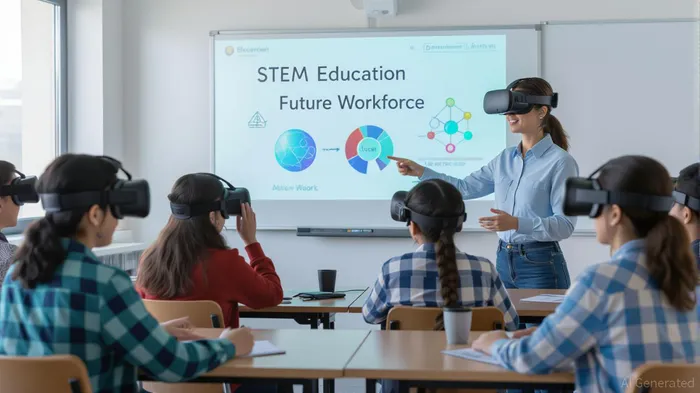 Educational institutions are no longer siloed entities; they're now key players in aligning curricula with industry demands. Programs emphasizing hands-on learning, mentorship, and partnerships with tech firms are gaining traction. For example, the National Academies' K–12 STEM study highlights the need to address rural education gaps, such as limited broadband access, while proposing federal and state-level solutions to improve workforce outcomes.
The U.S. Department of Education's "YOU Belong in STEM" initiative is a case in point. By promoting inclusive access and funding programs for underrepresented groups, it aims to diversify the STEM pipeline. Such efforts are critical, as mentorship has been shown to significantly improve teacher retention and student engagement in STEM fields.
Federal Policies: Catalysts for Investment
Recent federal legislation is turbocharging STEM workforce development. The CHIPS and Science Act and Inflation Reduction Act are creating a goldmine of opportunities. For instance:
- The CHIPS for America Fund allocates $39 billion to boost semiconductor production, indirectly funding apprenticeships and training programs.
- The Inflation Reduction Act incentivizes clean energy jobs, aligning training with industry needs through the America's Talent Strategy.
- The Infrastructure Investment and Jobs Act (IIJA) allows states to use transportation funds for workforce development, including electric vehicle technician training.
These policies aren't just about subsidies-they're about building a skills-based economy. States like Alabama and Mississippi have already integrated their Perkins CTE and WIOA programs, creating cohesive talent systems aligned with employer needs.
High-Growth Sectors and EdTech Innovators
Investors should zero in on sectors where STEM education intersects with emerging technologies. Generative AI is reshaping fields like data science, healthcare, and manufacturing, creating a surge in demand for AI-literate workers. Similarly, STEM jobs are expanding into non-traditional industries, such as construction and finance, highlighting the interdisciplinary nature of tech-driven growth.
EdTech startups are capitalizing on this demand. In 2025, PhysicsWallah (AI-driven test prep) raised $210 million, while Squirrel AI (adaptive learning) secured $35 million. Platforms like MagicSchool AI, which provides K-12 teaching tools, and RevisionDojo (AI-powered content generation) have also attracted significant Series funding. These companies exemplify the shift toward scalable, tech-enabled solutions for STEM education.
The Bottom Line: Where to Invest
For investors, the message is clear: STEM education and workforce development are not just social imperatives-they're high-conviction investment opportunities. Key areas to target include:
1. EdTech platforms leveraging AI for personalized learning and teacher support.
2. Apprenticeship programs aligned with federal incentives, particularly in semiconductors and clean energy.
3. Rural STEM initiatives addressing broadband and curriculum gaps, which are critical for long-term workforce equity.
As the U.S. aims to produce an additional million STEM graduates by 2033, the intersection of education and industry will only grow more vital. The time to act is now-before the next wave of tech-driven industries leaves the unprepared behind.







Comentarios
Aún no hay comentarios