
Investing in the Future: Oilfield Water-Treatment Technologies as a Strategic Opportunity
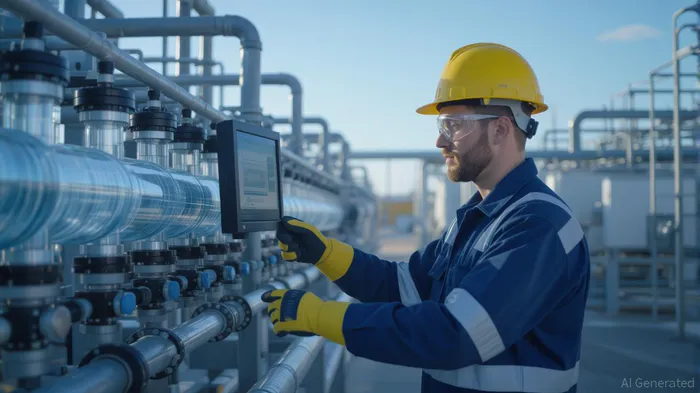
The U.S. oil production industry is at a crossroads. As the Permian Basin surges toward 6.5 million barrels of oil per day (bopd) in 2025, it simultaneously generates 20 million barrels of produced water daily—a figure projected to rise to 26 million by 2030 [1]. This deluge of wastewater, laden with high salinity and dissolved solids, has strained traditional disposal methods like saltwater disposal wells (SWDs), which face growing scrutiny over seismic risks and regulatory constraints [1]. For investors, the crisis presents a paradox: a sector grappling with environmental and logistical challenges is also fueling a surge in innovation, creating fertile ground for strategic investments in oilfield water-treatment technologies.
The Scale of the Challenge
Produced water management has become the Permian Basin's most pressing issue. Operators are increasingly adopting recycling as a cost-effective alternative to disposal, with reuse costs ranging from $0.15 to $0.20 per barrel compared to $0.25 to $1 for disposal [1]. However, the high salinity of produced water—often exceeding 200,000 parts per million—limits the economic viability of recycling. Current technologies struggle to desalinate water efficiently, leaving operators reliant on a hybrid model that balances recycling with injection [1]. This gap underscores the urgency for advanced solutions.
Technological Innovations and Market Growth
The industry's response has been a wave of technological innovation. AI-driven analytics and real-time monitoring systems are now optimizing water allocation and mitigating seismic risks by identifying high-pressure zones [1]. Companies like B3 Insight are pioneering data intelligence platforms to manage water logistics, while Select Water Solutions has developed the Tide line, engineered to handle produced water's chemical complexities [3]. Meanwhile, modular treatment units like the “H2O Warrior” enable on-the-fly recycling, reducing the need for costly holding tanks [4].
Market projections validate this momentum. The global oilfield water-treatment service market is valued at $35.6 billion in 2025, with a projected compound annual growth rate (CAGR) of 4.2% through 2033 [5]. The produced water treatment subsector, valued at $8.16 billion in 2023, is expected to grow at 7.8% CAGR, reaching $13.71 billion by 2030 [5]. These figures reflect not only rising production volumes but also the adoption of advanced filtration (e.g., nanocomposite membranes), electrocoagulation, and AI-driven automation [4].
Regulatory Tailwinds and Strategic Partnerships
Regulatory shifts are further accelerating the transition. In March 2025, the U.S. Environmental Protection Agency (EPA) announced revised wastewater discharge rules for oil and gas extraction, modernizing 1979-era standards to encourage beneficial reuse of treated water for agriculture, power generation, and industrial cooling [6]. This aligns with broader federal initiatives, such as the Biden administration's Greenhouse Gas Reduction Fund, which allocates resources for clean water infrastructure [2].
Strategic partnerships are amplifying these trends. Chevron and Aquatech International have deployed modular treatment units in the Permian Basin, enabling 90% water reuse [7]. Pioneer Natural Resources has invested $1 billion in pipelines and recycling facilities, achieving 95% reuse rates [7]. Meanwhile, startups like Liberty Energy and Eden GeoPower are disrupting the space with mobile recycling solutions and electric extraction technologies, respectively [7].
Investment Opportunities and Risks
For investors, the sector offers a mix of established players and high-growth startups. Midstream companies like WaterBridge and Deep Blue are expanding capacity for water transportation and treatment, while tech-focused firms such as Gravity Water Midstream are scaling modular processing units [4]. The rise of ESG-driven capital further tilts the playing field, as regulators and investors prioritize water stewardship.
However, risks persist. The high capital intensity of advanced treatment technologies and the variability of produced water quality could strain smaller firms. Additionally, regulatory uncertainty—particularly in states like Texas and New Mexico—requires careful due diligence.
Conclusion
The U.S. oilfield water-treatment sector is no longer a niche concern but a linchpin of the energy transition. As produced water volumes outpace disposal capacity, the industry's pivot to recycling and advanced treatment technologies is inevitable. For investors, the path forward lies in backing companies that combine technical innovation with strategic partnerships—those poised to turn a crisis into a $50-billion opportunity.







Comentarios
Aún no hay comentarios