
Investing in Food Safety Tech: A Growing Necessity in a Post-Shredded Cheese Recall World
Market Growth and Technological Innovation
The global food safety testing market is expanding rapidly, driven by regulatory pressures, consumer demand for transparency, and the financial fallout from recalls. According to Grand View Research, the market size was valued at USD 24.37 billion in 2024 and is projected to reach USD 48.01 billion by 2033, growing at a compound annual growth rate (CAGR) of 7.8%. Rapid testing technologies, such as PCR-based assays and isothermal amplification methods like LAMP, are leading this growth, with a CAGR of 8.4% and a market size of USD 11.79 billion in 2025. These tools enable faster, more accurate detection of pathogens, allergens, and chemical contaminants compared to traditional microbiological methods, which still dominate 55.5% of the market according to market analysis.
Automation and artificial intelligence (AI) are further transforming the landscape. According to Towards FNB, over 60% of AI adoption in food manufacturing in 2025 is focused on real-time quality inspection and contamination detection. AI-driven platforms now analyze production line data to identify anomalies, while blockchain-based traceability systems, such as Ecotrace, enable real-time root cause analysis across supply chains according to industry reports. 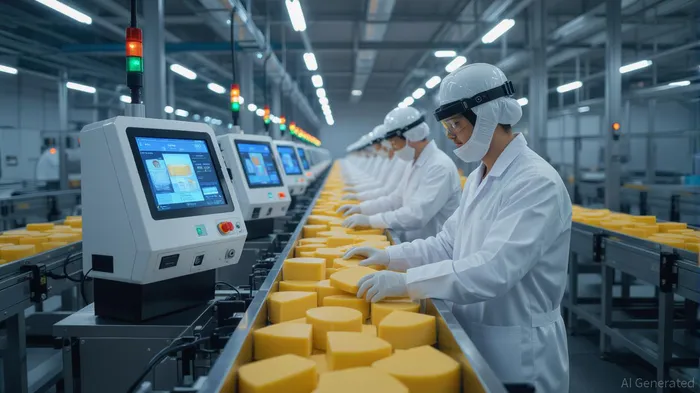 . Portable and handheld testing devices are also gaining traction, offering on-site detection of contaminants like pathogens and chemical residues according to market research.
Key Players and Emerging Startups
The market is dominated by established players such as Eurofins Scientific, SGS, and Bureau Veritas, which leverage advanced technologies like PCR, chromatography, and mass spectrometry to ensure compliance with global standards according to industry analysis. Thermo Fisher ScientificTMO-- and Mérieux NutriSciences are also pivotal, offering analytical tools and specialized microbiological testing services according to market reports. Meanwhile, startups like Trustwell and Plasma Fresh are disrupting the space with digital compliance platforms and cold plasma-based in-line cleaning solutions according to start-up insights.
Emerging innovations are particularly notable in the dairy sector, where nearly 400 recalls were recorded in the first quarter of 2025 alone. Companies like FluiDect are developing biosensor technology for real-time pathogen detection, while Bio2coat is pioneering natural edible coatings to prevent contamination in fresh produce and dairy. These advancements not only mitigate recall risks but also align with evolving regulatory frameworks, such as the FDA's Digital Food Traceability Rule set to take effect in 2026 according to industry experts.
Regulatory and Financial Drivers
The financial stakes of food safety are immense. Recalls can cost companies an estimated $10 million per incident, with reputational damage compounding direct losses. The Great Lakes Cheese Co. recall, for instance, highlights the scale of financial exposure, as the company faced product withdrawals across major retailers like Aldi, Walmart, and Target according to news reports. Regulatory bodies are now pushing for stricter compliance, with the FDA emphasizing the need for real-time monitoring and data-driven quality control according to regulatory analysis.
Investors are taking note. The surge in food safety tech adoption is not merely a response to recalls but a strategic imperative to meet consumer expectations for transparency and safety. As supply chains grow more complex, the ability to detect contaminants early-whether through AI, biosensors, or blockchain-has become a competitive advantage according to market insights.
Conclusion: A Lucrative Investment Horizon
The 2025 shredded cheese recall serves as a stark reminder of the vulnerabilities in food manufacturing. However, it also illuminates a golden opportunity for investors. With the market projected to nearly double in a decade and regulatory frameworks tightening, food safety tech is transitioning from a compliance tool to a core business asset. Startups and established firms alike are capitalizing on this shift, offering solutions that reduce recall risks, enhance brand trust, and ensure regulatory compliance. For investors, the message is clear: the future of food safety is not just about preventing contamination-it's about investing in technologies that redefine how food is produced, monitored, and trusted.





Comentarios
Aún no hay comentarios