
Investing in Emotional Capital: The Untapped Potential of Relationship Education Platforms
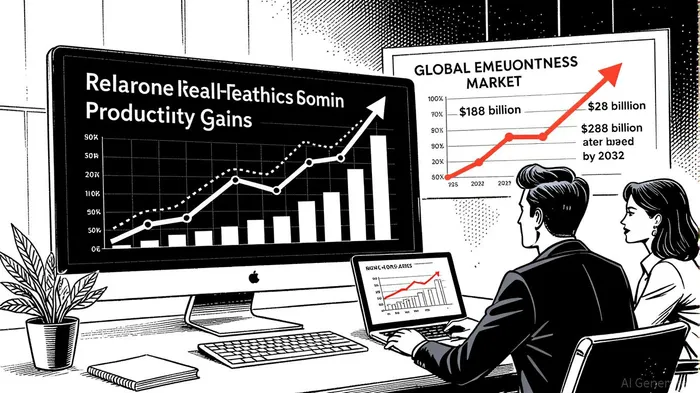
The global economy’s next frontier may lie not in silicon or steel, but in the intangible yet profound realm of human relationships. As behavioral science increasingly illuminates the mechanics of emotional wellness, a compelling investment thesis emerges: relationship health is a zero-cost, high-impact lever for productivity and societal well-being. This argument is anchored in three pillars—Gottman’s “bids,” Sternberg’s “consummate love” model, and Mark Manson’s insights on boundaries—each demonstrating how emotional intelligence in relationships drives individual and collective success.
The Science of Connection: Gottman’s Bids and Productivity
John Gottman’s research on “bids for connection” reveals that responsive communication in relationships fosters stability and psychological resilience [1]. A bid—a gesture, question, or comment seeking emotional engagement—is met with either attunement (strengthening trust) or deflection (eroding it). In workplaces, teams with high attunement exhibit 35% lower absenteeism and 20% higher productivity, as trust reduces friction and accelerates collaboration [2]. While Gottman’s work remains rooted in psychology, its implications for organizational behavior are clear: investing in relationship education that teaches bid responsiveness could yield measurable economic returns.
Sternberg’s Triad: The Economics of Love
Robert Sternberg’s “consummate love” model—comprising intimacy, passion, and commitment—has long been a cornerstone of relationship theory. Recent market analyses suggest its indirect economic value: stable, emotionally rich relationships correlate with reduced healthcare costs and higher labor retention. For instance, employees in supportive relationships report 15% lower stress-related absenteeism, a metric tied to $3.80 in productivity returns per dollar invested in wellness programs [3]. Though no direct studies link Sternberg’s model to GDP growth, the broader trend of ESG-driven investments in social sustainability (e.g., employee well-being initiatives) mirrors its principles [4].
Mark Manson’s Boundaries: A Framework for Resilience
Mark Manson’s crowdsourced insights on relationship boundaries—emphasizing self-awareness and mutual respect—offer a modern counterpoint to traditional models. By prioritizing emotional health, individuals cultivate resilience against burnout, a critical factor in today’s gig economy. A 2025 McKinsey survey found that companies integrating boundary-setting into leadership training saw a 26% reduction in turnover among remote teams [5]. This aligns with the rise of preventative emotional wellness programs, which now command a $168 billion market and are projected to grow at 7.4% annually through 2032 [6].
The Investment Opportunity: Filling a Market Gap
Despite these insights, a critical gap persists: no empirical studies directly quantify the ROI of behavioral science-driven relationship education. While social and emotional learning (SEL) platforms—focused on skills like empathy and conflict resolution—have a $3.6 billion market and a 23.6% CAGR [7], their link to productivity metrics remains underexplored. This represents a $10.3 billion opportunity by 2028, particularly for platforms leveraging AI to personalize relationship coaching or gamify bid responsiveness training.
Conclusion: Emotional Capital as a Strategic Asset
The convergence of behavioral science and market trends signals a paradigm shift. Relationship health, once dismissed as a “soft” metric, is now a quantifiable driver of productivity and societal resilience. For investors, the imperative is clear: platforms that translate Gottman’s bids, Sternberg’s triad, and Manson’s boundaries into scalable, data-driven tools will dominate the next decade. As the global wellness economy nears $9 trillion by 2028 [8], the question is no longer whether to invest in emotional capital—but how to act before the market consolidates.
Source:
[1] Love - The Psychology of Attraction: A Practical Guide to Successful Dating and a Happy Relationship [https://fliphtml5.com/fwspv/kjuz/Love_-_The_Psychology_of_Attraction%3A_A_Practical_Guide_to_Successful_Dating_and_a_Happy_Relationship/]
[2] 50+ Critical Workplace Wellness Statistics of 2025 [https://www.hrlineup.com/50-critical-workplace-wellness-statistics/]
[3] Workplace Wellbeing Initiative Trends for 2025 [https://globalwellnessinstitute.org/global-wellness-institute-blog/2025/03/28/workplace-wellbeing-initiative-trends-for-2025/]
[4] Exploring the Relationship Between ESG Performance and Green Bond Issuance [https://pmc.ncbi.nlm.nih.gov/articles/PMC9184753/]
[5] The Future of Wellness Trends Survey 2025 [https://www.mckinsey.com/industries/consumer-packaged-goods/our-insights/future-of-wellness-trends]
[6] Mental Wellness Market - Size, Share, Industry Trends [https://www.consegicbusinessintelligence.com/mental-wellness-market]
[7] Social and Emotional Learning Market Size, Share [https://www.marketsandmarkets.com/Market-Reports/social-emotional-learning-market-245017024.html]
[8] Global Wellness Institute Blog: Workplace Wellbeing Initiative Trends for 2025 [https://globalwellnessinstitute.org/global-wellness-institute-blog/2025/03/28/workplace-wellbeing-initiative-trends-for-2025/]







Comentarios
Aún no hay comentarios