
Investing in Digital Procurement and Supply Chain Resilience for 2026: The AI and Sustainability Imperative
The global supply chain landscape is undergoing a seismic shift. Geopolitical tensions, climate disruptions, and evolving consumer expectations have forced companies to rethink how they source, produce, and deliver goods. In this new era, resilience is no longer optional-it is existential. For investors, the intersection of artificial intelligence (AI) and sustainability-focused leadership in procurement and supply chain management represents a compelling opportunity to future-proof portfolios. By 2026, the market for AI-driven procurement tools is projected to grow at a 12% CAGR, reaching $23.01 billion, while sustainability initiatives are delivering measurable ROI, with 82% of companies reporting economic benefits from decarbonization efforts averaging $221 million per firm.
AI-Driven Procurement: The New Backbone of Resilience
AI is no longer a buzzword-it is the operating system of modern supply chains. Companies like UnileverUL--, WalmartWMT--, and Siemens have already adopted AI-powered platforms such as Scoutbee and SAPSAP-- IBP to diversify supplier networks, simulate disruptions, and optimize inventory in real time according to industry analysis. These tools provide predictive analytics that identify risks before they materialize. For example, GigaSpaces' eRAG platform enables businesses to run simulations on variables like tariffs and lead times, adjusting operations within minutes.
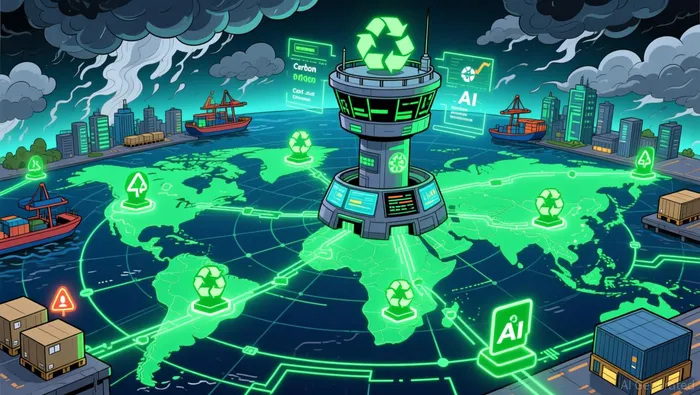 The financial rationale is clear. A 2025 PwC survey found that 57% of supply chain leaders have integrated AI into their operations, with the technology reducing procurement cycle times by 30–40% and cutting costs by millions annually. By 2026, agentic AI systems will further accelerate this trend, with tools capable of rerouting shipments, renegotiating contracts, and even monitoring deforestation risks in real time.
Sustainability as a Strategic Advantage
Sustainability is no longer a compliance checkbox; it is a competitive differentiator. Regulatory frameworks like the EU's Carbon Border Adjustment Mechanism (CBAM) and the Eco-Design for Sustainable Products Regulation (ESPR) are forcing companies to embed sustainability into their DNA. Border States reduced lead time errors by 31% using AI-driven lead time prediction, while also cutting expedited shipping and lowering its carbon footprint. Toyota's "resilience intelligence" hub, which combines AI with supplier and logistics data, has avoided production shortfalls by preemptively shifting orders.
The ROI of sustainability is becoming undeniable. According to a 2026 Deloitte report, 82% of companies now see tangible economic benefits from decarbonization, with some reaping returns exceeding 10% of annual revenue. Circular economy practices-designing for durability, repairability, and recyclability-are not only reducing waste but also cutting material costs. For instance, a global fast-food chain slashed costs by €3.2 million annually by identifying alternative suppliers through AI procurement software.
The Synergy of AI and Sustainability
The true power of AI lies in its ability to amplify sustainability efforts. Agentic AI systems are now monitoring supplier compliance, flagging risks, and recommending corrective actions in real time. Digital product passports, mandated by EU regulations, are enabling end-to-end traceability of materials and emissions, ensuring transparency from raw material to resale. These tools are not just mitigating risks-they are creating new revenue streams. For example, a pharmaceutical company used AI-enabled contract management to accelerate drug development, reducing time-to-market by months.
Regulatory momentum is accelerating this shift. By 2026, 94% of supply chain leaders plan to use AI or generative AI for decision support, while 76% see potential for agentic AI in supplier relationship management. The integration of AI and sustainability is also driving nearshoring and regional diversification, with companies shifting production closer to demand centers to reduce both costs and carbon footprints.
Market Growth and Investment Opportunities
The financial case for investing in AI-driven procurement and sustainability is robust. The AI in supply chain market is projected to grow at a 42.7% CAGR, expanding from $7.3 billion in 2024 to $63.8 billion by 2030. Meanwhile, the procurement software market is expected to reach $18.28 billion by 2032 at a 10.8% CAGR, driven by automation, predictive analytics, and sustainability integration.
Investors should also note the growing demand for "sustainable" procurement. Companies that fail to align with ESG standards risk losing market share. Over 60% of CEOs now rank customer demand as a top driver of their sustainability agendas, with B2B buyers increasingly prioritizing partners with verified sustainability credentials.
Challenges and the Path Forward
Despite the promise, challenges remain. Data governance, supplier engagement, and impact measurement are complex hurdles. However, forward-thinking companies are addressing these by standardizing KPIs, building unified data platforms, and embedding sustainability into decision-making frameworks. For investors, the key is to target firms that are not just adopting AI but are redefining supply chains through innovation.
The 2026 landscape will reward those who act decisively. As AI and sustainability converge, the companies that lead in these areas will not only survive disruptions but thrive in them. For investors, the message is clear: the future of supply chains is digital, resilient, and green.







Comentarios
Aún no hay comentarios