
Investing in Alabama's Rural Tech Development: A Blueprint for Public-Private Partnerships in Underserved Markets
In the heart of rural Alabama, a transformative economic strategy is unfolding. The Alabama Rural Tech Development Initiative (ARTDI) has emerged as a national model for leveraging public-private partnerships (PPPs) to bridge infrastructure gaps, stimulate job creation, and address systemic inequities in underserved markets. With over $7 billion in investments directed toward rural areas since 2020 and a 2024 surge of $1.2 billion creating nearly 9,000 jobs[1], the state is proving that strategic collaboration between government, corporations, and nonprofits can unlock value in regions long overlooked by traditional capital markets.
The PPP Framework: A Strategic Ecosystem
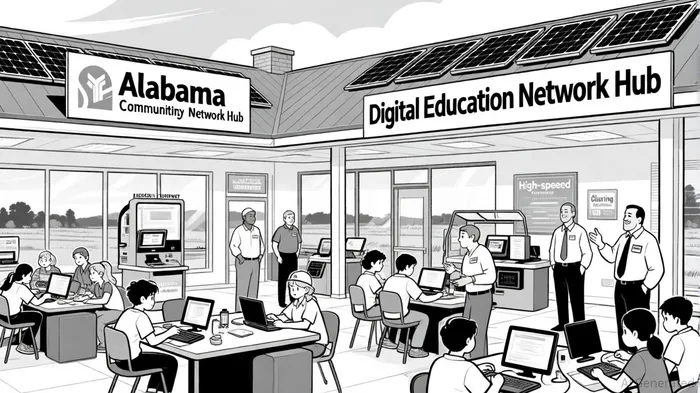
At the core of ARTDI's success is its structured approach to PPPs, which combine state funding, private-sector innovation, and community-driven execution. A prime example is the Alabama Digital Education Network (ADEN), a $16 million initiative launched in 2025 with support from AppleAAPL-- and Alabama Power[1]. This partnership delivers tech training and broadband access to the Black Belt region, a historically underserved area with high poverty rates. By anchoring digital learning hubs in libraries, schools, and historically Black colleges like Alabama State University, ADEN addresses both the digital divide and workforce readiness[1].
The state's legislative leadership has further institutionalized this model. Alabama Senate President Pro Tem Garlan Gudger's Alabama Rural Roadmap Initiative emphasizes infrastructure, workforce training, and economic development through cross-sector collaboration[3]. Meanwhile, federal programs like the USDA's Rural Energy for America Program (REAP) and the $1.4 billion Broadband, Equity, Access, and Deployment (BEAD) program[3] provide critical funding for last-mile broadband projects, renewable energy systems, and community facilities. These programs are administered by the Alabama Department of Economic and Community Affairs (ADECA), ensuring alignment with state priorities.
Case Studies: Measurable Impact in Action
The Lockheed Martin hypersonic technology project in Lawrence County exemplifies how PPPs attract high-tech manufacturing to rural areas. By pairing state incentives with corporate R&D, the project has positioned Alabama as a leader in advanced defense technologies[1]. Similarly, Pine Gate Renewables' $350 million solar farm in Escambia County[1] and Two Rivers Lumber Co.'s $115 million sawmill in Coosa County[1] highlight the role of private capital in scaling infrastructure projects that create local jobs and reduce supply chain bottlenecks.
ADEN's impact is equally compelling. By integrating Apple's curriculum with Alabama Power's fiber-optic infrastructure, the initiative has already enabled digital learning in communities with less than 30% broadband access prior to 2020[4]. This aligns with broader state efforts to reduce the percentage of residents without high-speed internet from 16% in 2017 to 6% in 2024[2], a transformation fueled by $1.4 billion in BEAD funding and $191 million from the Capital Project Fund (CPF) program[2].
Financial Mechanisms and Risk Mitigation
Alabama's approach to PPPs is underpinned by a layered funding strategy. State-level grants, such as those from the Alabama RC&D Councils[2], prioritize projects that enhance human and natural resources, while federal programs like the Rural Community Development Initiative (RCDI) provide low-cost loans for housing and economic development[5]. For investors, this diversification reduces risk by ensuring projects are backed by multiple revenue streams and long-term policy commitments.
The SEID grant program, which allocated $1.18 million in 2024 to mental health and infrastructure projects in Brundidge and Brantley[4], further illustrates how targeted public funding can catalyze private investment. By addressing social determinants of economic growth-such as healthcare access and community resilience-these initiatives create a more attractive environment for corporate partners.
The Investor's Perspective: Opportunities and Considerations
For investors, Alabama's rural tech ecosystem offers several advantages. First, the state's bipartisan support for infrastructure development ensures policy continuity, reducing regulatory uncertainty. Second, the focus on "last-mile" broadband projects-such as those funded by BEAD-aligns with national trends toward digital equity, creating long-term value in both social and financial terms. Third, the emphasis on workforce training through ADEN and Innovate Alabama[4] mitigates labor shortages in advanced manufacturing and renewable energy sectors, enhancing the ROI for industry players.
However, challenges remain. Rural projects often face higher deployment costs and longer timelines than urban counterparts. Investors must also navigate complex grant application processes, such as ADECA's BEAD program, which prioritizes affordability, labor practices, and deployment speed[1]. Despite these hurdles, the potential for scalable impact-both in terms of economic growth and social equity-makes Alabama's model a compelling case study for replication elsewhere.
Conclusion: A Model for the Future
Alabama's Rural Tech Development Initiative demonstrates that underserved markets are not inherently unprofitable-they simply require innovative structures to unlock their potential. By combining public funding, private-sector expertise, and community engagement, the state has created a blueprint for sustainable rural development. For investors seeking high-impact opportunities, the message is clear: where there is collaboration, there is growth.





Comentarios
Aún no hay comentarios