
Investing in AI-Powered Nonprofits: A Strategic Opportunity for Impact and Scalability
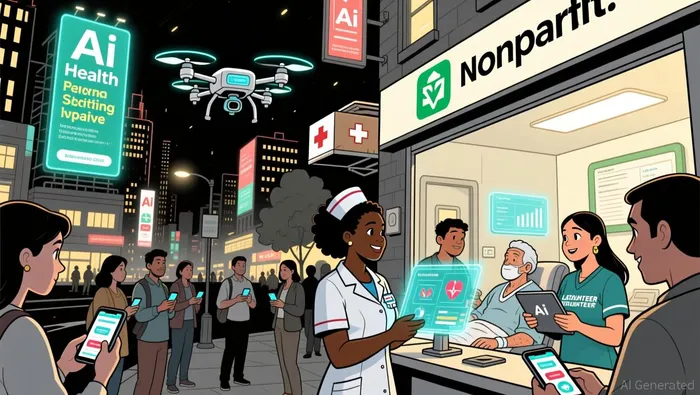
The intersection of artificial intelligence and social good is no longer a distant vision-it's a tangible, urgent frontier. As nonprofits grapple with systemic challenges like climate change, healthcare access, and education inequality, AI offers a transformative toolkit to scale impact. Yet, the sector remains starved for capital, talent, and infrastructure. For philanthropists and impact investors, this gap represents a golden opportunity: to fund the next generation of AI-powered nonprofits (APNs) and catalyze a wave of scalable, data-driven social solutions.
The Landscape: AI Adoption in Nonprofits-Promise and Pain Points
According to a report by Fast Forward, AI adoption in the nonprofit sector has surged from 13% in 2024 to over 50% in 2025. However, this progress is uneven. A staggering 92% of nonprofits report feeling unprepared for AI, with 60% expressing uncertainty or mistrust. Despite these hesitations, 41% believe AI could "greatly benefit" their organizations, particularly in fundraising (36% potential) and internal productivity (35%).
The barriers are clear: 48% of APNs cite costs as their biggest challenge, while 84% demand additional funding to scale. Smaller organizations, which make up 48% of AI-powered nonprofits (employing 10 or fewer people), face even steeper hurdles. These nonprofits are often mission-driven innovators, but without capital, their tools remain underdeveloped. For example, only 35% of AI-assisted nonprofits have policies for responsible AI use, compared to 69% of those building their own solutions. This gap highlights the need for strategic funding to ensure ethical, sustainable AI deployment.
Case Studies: Scaling Impact with AI
Visilant, a nonprofit leveraging AI to diagnose eye conditions in India, exemplifies the potential of AI-native social enterprises. By using smartphone technology and machine learning, Visilant has expanded from screening a few hundred patients to reaching millions with the same resources. This "transformative scale" without additional capital is a blueprint for AI's role in global health.
Similarly, Climate TRACE-a coalition using satellites and AI to track global emissions in real time-demonstrates how data-driven tools can democratize environmental accountability. According to the Fast Forward report, AI is not just a cost-saving tool; it's a multiplier for mission impact.
The Investment Case: ROI and ROSI
The financial and social returns of AI adoption are compelling. Nonprofits using AI for fundraising report 20–30% increases in donations through predictive analytics and personalized outreach. Operational efficiency gains are equally striking: AI automation saves 15–20 hours weekly on administrative tasks, while real-time program monitoring improves resource allocation.
Quantifying social impact, the Return on Social Investment (ROSI) metrics for AI-driven nonprofits in 2025 reveal a 300–500% improvement in cost-effectiveness ratios. These figures aren't just numbers-they represent lives transformed, ecosystems preserved, and systemic inequities addressed.
Bridging the Funding Gap: A Call for Strategic Philanthropy
The Fast Forward 2025 AI for Humanity Report outlines a roadmap for funders. It emphasizes a "pay-what-it-takes" approach, treating AI infrastructure as a core operating cost rather than a discretionary expense. This includes grants for talent, training, and open-source tool development. For instance, 43% of AI-powered nonprofits open-source their tools, fostering collaboration. Philanthropy can accelerate this by funding shared platforms and cross-sector partnerships.
Moreover, 70% of APNs incorporate community feedback to refine their tools. Investors must prioritize organizations that embed equity into their AI design, such as Tarjimly, which provides translation services to refugees. By funding these "AI for humanity" initiatives, capital can drive both measurable impact and scalable solutions.
Conclusion: The Time to Act Is Now
The nonprofit sector stands at a crossroads. AI adoption is accelerating, but without capital, technical expertise, and ethical frameworks, its potential will remain unrealized. For impact investors and philanthropists, the opportunity is clear: fund the infrastructure, talent, and tools that will turn early-stage APNs into global forces for good.
As the Fast Forward report concludes, "AI is not a luxury-it's a necessity for solving the world's most pressing challenges." The question isn't whether to invest in AI-powered nonprofits. It's how quickly we can act.







Comentarios
Aún no hay comentarios