
The Intersection of Oncology Innovation and Climate-Driven Health Crises
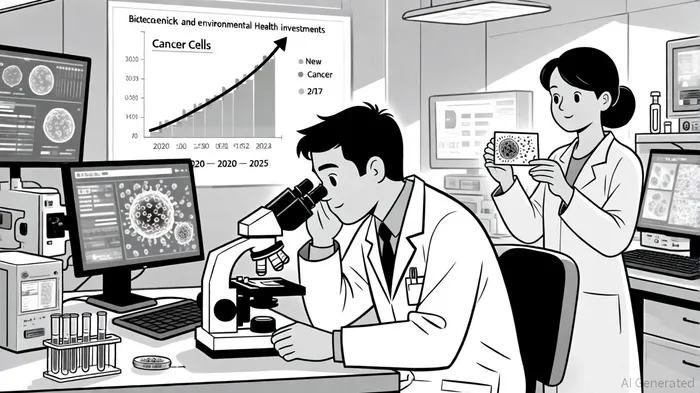
The global health landscape is undergoing a seismic shift as the dual crises of cancer and climate change converge. Air pollution, a second-leading cause of lung cancer mortality worldwide[1], is intensifying alongside climate-driven disruptions such as wildfires, extreme heat, and food insecurity. This intersection demands urgent action—and presents a compelling investment opportunity in biotech and environmental health solutions. The recent collaboration between the Lung Cancer Research Foundation (LCRF) and Oncology Advocates United for Climate and Health – International (OUCH-I) exemplifies this urgency, funding a $200,000, two-year initiative to study how climate factors influence lung cancer risk, treatment, and outcomes[1]. Such partnerships underscore a growing recognition: addressing climate-driven health risks is inseparable from advancing oncology innovation.
The LCRF-OUCH-I Collaboration: A Model for Integrated Research
The LCRF-OUCH-I Research Grant Program, supported by AstraZenecaAZN--, is a landmark effort to bridge environmental science and oncology. By examining how air pollution and climate change exacerbate lung cancer—through mechanisms like carcinogenic particulate matter and delayed diagnoses during climate-related disasters—the initiative aims to develop mitigation strategies[1]. This collaboration aligns with broader trends: LCRF's 2025 funding expansion includes Team Science awards and Early Career Investigator grants, signaling a systemic shift toward interdisciplinary research[6]. For investors, this signals a maturing market where climate-conscious oncology research is no longer niche but essential.
Market-Ready Solutions: Biotech's Dual-Pronged Approach
Biotech companies are increasingly addressing both cancer and climate risks through market-ready innovations. For example:
- Treeline Biosciences has raised $1.1 billion to advance precision oncology therapies, including BCL6 degraders and pan-KRAS inhibitors[2]. Its climate-aligned operations reflect a sector-wide trend toward carbon-neutral manufacturing.
- Spiber (Japan) produces bio-based materials like Brewed Protein™, reducing reliance on petrochemicals and animal agriculture while supporting regenerative farming[6].
- TurtleTree (Singapore) commercialized precision-fermented lactoferrin in 2025, offering a vegan alternative to dairy that cuts emissions and water use[6].
- String Bio (India) converts methane—a potent greenhouse gas—into protein for animal feed, cutting emissions while addressing nutritional gaps[6].
These companies exemplify a new paradigm: therapies and technologies that tackle cancer while mitigating climate harm. For instance, Monte Rosa Therapeutics' molecular glue degraders, which target cancer-driving proteins, are developed alongside sustainability-focused manufacturing processes[5]. Similarly, Exact Sciences is expanding its non-invasive cancer diagnostics portfolio, reducing healthcare's carbon footprint through early detection[5].
Climate-Health Synergies: Economic and Investment Imperatives
The economic stakes are staggering. A World Economic Forum report estimates that climate-related health risks could cost the global economy at least $1.5 trillion in lost productivity by 2050, particularly in agriculture, construction, and healthcare[3]. This creates a dual imperative: investing in climate resilience and oncology innovation to avert both human and financial crises.
Recent funding trends validate this logic. In Q3 2025, Treeline Biosciences secured $200 million in a Series A extension, while Strand Therapeutics raised $153 million for programmable mRNA therapies[2]. Climate-health startups like ECOshifter (AI-driven climate risk mapping) and Vycarb (oceanic carbon capture) are also attracting capital, reflecting investor appetite for solutions at the nexus of these crises[4].
Strategic Investment: Prioritizing Urgency and Readiness
Investors should prioritize companies with:
1. Proven Climate-Health Linkages: Firms like String Bio and Spiber demonstrate how climate mitigation directly reduces cancer risk by curbing pollution and resource depletion.
2. Scalable Technologies: Biodegradable bioplastics (e.g., Bluepha's marine-degradable materials[6]) and AI-driven diagnostics (e.g., Chai Discovery's antibody design platform[2]) offer high-growth potential.
3. Strategic Partnerships: Collaborations between biotech and Big Pharma (e.g., Protagonist Therapeutics and Johnson & Johnson[3]) accelerate commercialization.
Conclusion: A New Frontier for Impact Investing
The convergence of oncology and climate science is no longer theoretical—it is a $trillion-dollar opportunity. The LCRF-OUCH-I collaboration, alongside market-ready innovations from Treeline, Spiber, and others, illustrates how strategic investments can address both crises simultaneously. For investors, the message is clear: the future of healthcare lies in solutions that heal patients and the planet.





Comentarios
Aún no hay comentarios