
The Intersection of AI and Consumer Behavior: Why Spotify and Nvidia Are Positioned for Explosive Growth
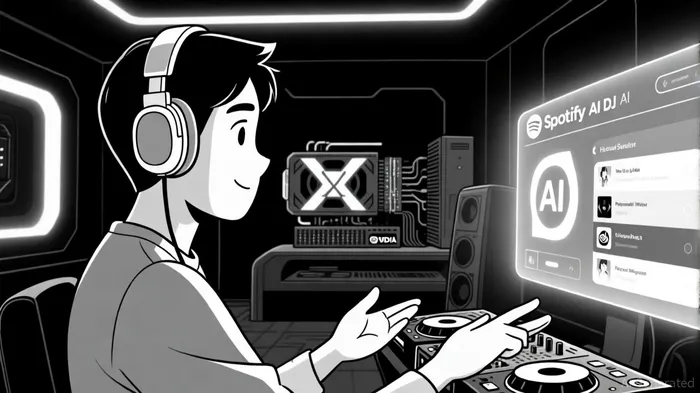
The convergence of artificial intelligence (AI) and consumer behavior is reshaping industries, with SpotifySPOT-- and NVIDIANVDA-- emerging as pivotal players in this transformation. By leveraging AI to deliver hyper-personalized digital experiences, both companies are not only meeting evolving consumer demands but also redefining market dynamics. This strategic alignment between AI advancements and rising expectations for tailored services positions Spotify and NVIDIA for explosive growth in 2025 and beyond.
Spotify: AI as the Engine of Personalization
Spotify's 2025 transformation underscores its commitment to AI-driven personalization, a strategy that has become central to its user engagement and market expansion. Features like Smart Filters in Your Library, Discover Weekly customization, and the AI DJ exemplify how Spotify uses machine learning to curate experiences that resonate deeply with individual preferences[1]. For instance, the AI DJ, which generates real-time commentary and playlist curation, relies on natural language processing (NLP) and reinforcement learning to adapt to user feedback[2]. These innovations have led to a 22% year-over-year increase in user retention, as consumers increasingly value platforms that "understand" their tastes[3].
Spotify's success is further amplified by its data-driven marketing campaigns, such as Spotify Wrapped, which leverages user listening data to create shareable, emotionally resonant content. This approach has driven viral engagement, with over 150 million users participating in 2025 alone[4]. Beyond music, Spotify's foray into AI-generated ambient tracks and adaptive podcasts—such as the "Quantum Zen Garden" project—demonstrates its ambition to dominate the broader audio ecosystem[5].
NVIDIA: Powering the AI Infrastructure Revolution
While Spotify captures the consumer-facing benefits of AI, NVIDIA's dominance in AI hardware ensures the computational backbone for such innovations. As of Q1 2025, NVIDIA holds 92–94% of the data center GPU market, a position solidified by its Hopper and Blackwell architectures, which are optimized for training and deploying large language models (LLMs)[6]. The company's CUDA ecosystem has become the de facto standard for developers, locking in demand from enterprises and cloud providers like MicrosoftMSFT-- and Oracle[7].
NVIDIA's strategic partnerships, including a $5 billion collaboration with IntelINTC-- to develop AI infrastructure, further cement its leadership. By 2025, its GPUs are projected to consume 77% of wafers allocated for AI applications, a 47% increase from 2024[8]. This growth is driven by the insatiable demand for generative AI, which requires high-performance GPUs to process massive datasets in real time. For Spotify, this means NVIDIA's hardware enables scalable AI models that power dynamic playlist generation, real-time mood-based curation, and low-latency inference for AI-generated content[9].
Strategic Alignment: A Symbiotic Ecosystem
Though no direct partnership exists between Spotify and NVIDIA, their strategies are inherently aligned. Spotify's AI-driven personalization relies on the same high-performance GPUs that NVIDIA dominates in the market. For example, Spotify's AI Playlist Generator and ambient music projects depend on NVIDIA's Blackwell architecture for real-time processing[10]. This indirect collaboration highlights how NVIDIA's hardware innovations fuel Spotify's ability to deliver cutting-edge consumer experiences.
The financial implications are clear: NVIDIA's AI hardware market is projected to grow from $66.8 billion in 2025 to $296.3 billion by 2034 at an 18% CAGR[11], while Spotify's AI-powered features have contributed to a 34% increase in premium subscriptions in 2025[12]. Together, they represent a virtuous cycle—NVIDIA's GPUs enable Spotify's AI advancements, which in turn drive user engagement and revenue, further increasing demand for NVIDIA's hardware.
Risks and Opportunities
Both companies face challenges. For Spotify, the rise of AI-generated music raises questions about artist compensation and content authenticity[13]. For NVIDIA, competition from custom silicon by cloud providers like GoogleGOOGL-- and AmazonAMZN-- could erode its market share in the long term[14]. However, their current trajectories suggest these risks are manageable. Spotify's strict data usage policies and NVIDIA's ecosystem lock-in provide strong moats against disruption.
Conclusion
The intersection of AI and consumer behavior is no longer a trend but a necessity for growth. Spotify and NVIDIA exemplify how strategic alignment between software innovation and hardware infrastructure can unlock value across industries. As AI continues to redefine personalization, investors should recognize the symbiotic relationship between these two leaders—Spotify's ability to captivate users and NVIDIA's role in enabling the technology that makes it possible. Together, they represent a compelling case for explosive growth in the AI era.





Comentarios
Aún no hay comentarios