
Interpreting Insider Sales: Is Old Second Bancorp's Director Sale a Signal or a Red Herring?
The recent sale of 12,500 shares by Old Second BancorpOSBC-- director John Ladowicz for $250,000 has sparked debate among investors about its significance. While some view it as a bearish signal, others argue it may reflect broader market dynamics rather than a lack of confidence in the bank. To assess whether this transaction is a meaningful indicator or a red herring, it is essential to contextualize the sale within Old Second Bancorp's 2025 performance, regulatory trends in insider trading, and the behavioral patterns of retail investors.
The Transaction in Context
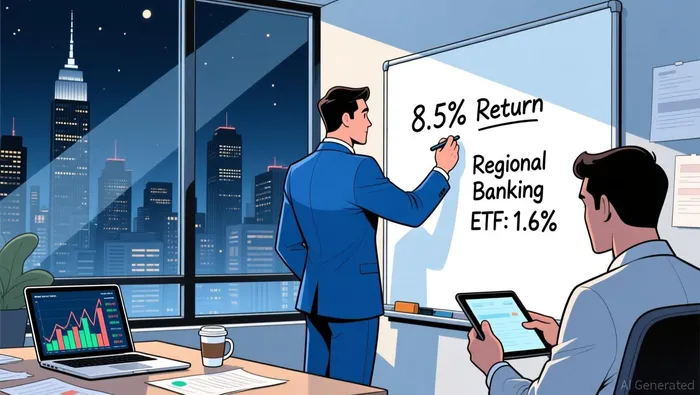
Ladowicz's sale occurred through his IRA-managed indirect holdings, leaving his direct ownership of over 36,121 shares unaffected. This distinction is critical: indirect sales often align with long-term wealth management strategies rather than short-term market timing. Meanwhile, Old Second Bancorp's 2025 performance has been mixed. The bank reported a $12 million decline in net income compared to the second quarter of 2025 due to the integration of Evergreen Bank Group, yet its stock delivered an 8.5% total return year-over-year as of December 9, 2025. Additionally, first-quarter 2025 net income rose by $720,000 from the previous quarter, driven by reduced credit losses and interest expenses. These figures suggest that while the bank faces integration challenges, its stock has outperformed regional banking peers, such as the State Street SPDR S&P Regional Banking ETF, which returned just 1.6% over the same period.
Insider Behavior and Regulatory Frameworks
Recent academic research highlights that insiders often time trades around spikes in retail investor attention, selling shares when public interest is high and repurchasing when it wanes . This behavior, though legal, can create misleading signals for retail investors who interpret insider sales as direct indicators of company health. For example, a Virginia Tech study found that insiders at publicly traded companies frequently exploit periods of heightened retail attention-often driven by social media trends-to execute transactions . In Old Second Bancorp's case, the December 9 sale coincided with a period of moderate retail interest, but the bank's stock had already outperformed regional banking benchmarks. This raises the possibility that Ladowicz's transaction was part of a pre-planned strategy rather than a reaction to near-term performance.
Regulatory changes further complicate the interpretation of insider sales. The SEC's 2022 amendments to Rule 10b5-1, designed to curb opportunistic trading, have led insiders to cluster sales beyond 90-day thresholds or adopt longer cooling-off periods . While these reforms have improved shareholder value by deterring short-term manipulation, they may also reduce the informational value of insider trades. For instance, Ladowicz's sale could fall within a pre-scheduled trading plan established before the integration of Evergreen Bank Group, making it less indicative of current sentiment.
Implications for Retail Investors
Retail investors must approach insider sales with caution, as these transactions often reflect complex motivations. A Sensamarket analysis notes that retail traders frequently misinterpret insider activity as direct buy or sell signals, overlooking the fact that many trades are tied to compensation structures or long-term planning . In Old Second Bancorp's case, the director's indirect sale through an IRA underscores the importance of distinguishing between strategic wealth management and market timing.
Moreover, retail investors' momentum-driven behavior-exacerbated by social media and viral trends-can amplify the impact of insider sales. For example, post-pandemic retail participation has led to concentrated trading in speculative stocks, often irrespective of fundamentals . This dynamic creates a feedback loop where insider sales may be misinterpreted as bearish signals, triggering further selling pressure even if the transaction lacks substantive implications.
Conclusion
Old Second Bancorp's director sale should be viewed through a nuanced lens. While the transaction occurred amid mixed financial results, the bank's stock has outperformed regional peers and demonstrated resilience in a challenging interest rate environment. Regulatory frameworks and insider behavior patterns suggest that the sale may reflect long-term planning rather than a lack of confidence. For retail investors, the key takeaway is to avoid impulsive decisions based on isolated insider transactions. Instead, they should integrate such data with broader market trends, company fundamentals, and regulatory context to form a balanced perspective.





Comentarios
Aún no hay comentarios