
The Interplay of Geopolitical Uncertainty and Precious Metals as Faith-Based Hedges in a Deteriorating Moral and Economic Order
In an era marked by geopolitical volatility, economic fragility, and a pervasive erosion of trust in institutional systems, the demand for precious metals-particularly gold and silver-has surged as a tangible hedge against uncertainty. This phenomenon is not merely a financial response but a reflection of deeper moral and spiritual dynamics. As global crises intensify, investors are increasingly turning to assets that align with timeless principles of resilience, stability, and faith.
Market Trends: Precious Metals as Safe-Haven Assets
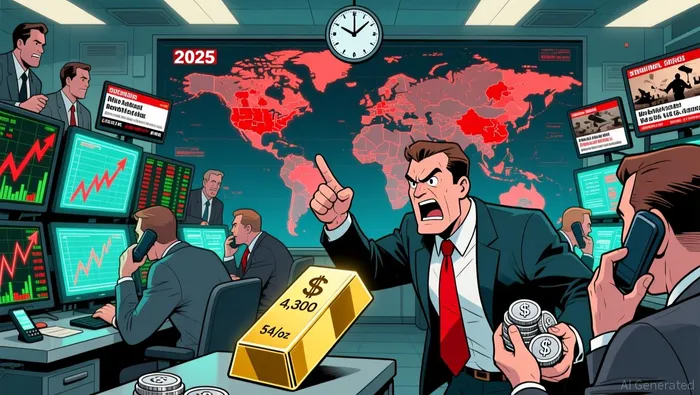
The past five years have witnessed unprecedented demand for gold and silver, driven by geopolitical instability and systemic economic risks. Gold prices reached record highs in 2025, , fueled by central bank purchases and safe-haven demand amid weakening U.S. dollar conditions. Central banks, particularly in emerging markets, in Q3 2025-a 28% increase from the previous quarter-while gold ETFs saw record inflows . Silver, too, has surged to all-time highs, , driven by both industrial demand and its role as a crisis hedge.
Peer-reviewed research underscores gold's enduring role as a hedge during . A study by et al. (2024) found that gold retained its inflation-hedging properties during the pandemic and the Russia-Ukraine war, while silver's performance was less consistent according to research. Similarly, Liu (2025) highlights that geopolitical risks have become a key driver for central banks to increase gold reserves, as confidence in the U.S. dollar wanes. These trends reflect a broader shift toward tangible assets as a counterbalance to intangible, systemically vulnerable financial instruments.
Biblical Parallels: Moral Decay and the Symbolism of Precious Metals
The Bible frequently uses gold and silver as metaphors for both material wealth and spiritual values. In James 5:3, the corrosion of gold and silver is described as a testament to the fleeting nature of earthly riches, warning against the spiritual ruin of hoarding wealth. Similarly, Ezekiel 7:19 depicts the casting of silver and gold in the streets as a symbol of their worthlessness during divine judgment, emphasizing that material treasures cannot provide true security in times of crisis.
Conversely, 1 Corinthians 3:12-13 portrays gold, silver, and precious stones as enduring works built upon the foundation of Christ, which withstand the trials of judgment, while perishable materials are consumed. This contrast between transient and eternal values mirrors the modern investor's dilemma: should one place trust in volatile fiat currencies or in assets that symbolize resilience and moral integrity? The story of , who betrayed Jesus for thirty pieces of silver, further illustrates the dangers of moral decay and the undervaluation of spiritual worth.
Leadership Failure and Systemic Distrust
The interplay between geopolitical instability and precious metals is compounded by systemic distrust in leadership and institutions. As central banks and governments grapple with inflation, debt, and geopolitical conflicts, public confidence in their stewardship erodes. This mirrors biblical narratives where leaders failed to uphold spiritual integrity, leading to societal disillusionment. For instance, the article Christianity in Crisis: 21st Century critiques how financial priorities have overshadowed spiritual values in religious leadership, fostering a crisis of trust.
In this context, the surge in gold and silver demand can be seen as a form of "faith-based investing." Investors are not merely seeking financial returns but aligning their portfolios with principles of moral resilience and long-term stability. The Bible's emphasis on trusting in divine provision-rather than material wealth-resonates with this mindset. and Philippians 4:13 affirm, true strength lies in faith, not in earthly assets.
Conclusion: Investing in Resilience
The current market dynamics and biblical parallels converge on a single truth: in times of moral and economic decay, tangible assets like gold and silver serve as both practical hedges and spiritual symbols. While their physical value is evident in record prices and central bank actions, their deeper significance lies in their alignment with enduring principles of trust, resilience, and faith. As geopolitical uncertainties persist, investors who recognize this duality may find themselves not only safeguarding wealth but also anchoring their decisions in a moral framework that transcends temporal crises.







Comentarios
Aún no hay comentarios